
Introduction
Red light therapy and Botox are increasingly part of the same skincare routines. They address different concerns through different mechanisms - Botox relaxes muscles to reduce dynamic wrinkles; red light therapy supports skin quality, collagen production, and tissue health over time.
The question most people have after a Botox appointment is simple: when is it safe to resume red light therapy, and what does it actually do post-injection?
This guide answers both.
Key Takeaways
- Wait at least 48 hours after Botox before resuming red light therapy - most practitioners recommend 72 hours to be conservative
- Red light therapy at 660nm does not affect the neurotoxin mechanism of Botox and is not contraindicated after the waiting period
- Post-Botox, red light therapy can support skin recovery, collagen production, and reduction in post-injection redness and swelling
- Do not massage, apply heat, or use any device that involves direct facial pressure in the first 24-72 hours after Botox injections
- LED masks (not laser or thermal devices) are the appropriate format - Botox does not preclude light therapy after the waiting period
What Botox Does (and What Red Light Does Differently)
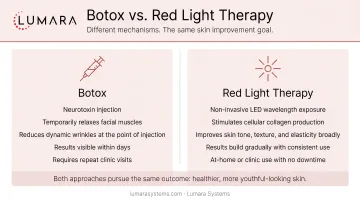
Botox (botulinum toxin type A) is injected into specific facial muscles to temporarily block nerve-muscle communication, reducing the muscle contractions that cause dynamic wrinkles. It takes 3-10 days to reach full effect and lasts approximately 3-4 months.
In the first 24-72 hours after injection, the toxin is settling into the target muscle tissue. During this window, physical pressure, heat, exercise, and lying face-down can theoretically displace the toxin and affect where it settles - which is why practitioners advise avoiding these activities immediately post-injection.
Red light therapy at 660nm works through photobiomodulation: light absorbed by skin cells supports mitochondrial activity, collagen production, and anti-inflammatory responses. It does not produce heat or physical pressure, and it does not interact with the botulinum toxin mechanism.
The two are complementary: Botox reduces muscle-driven lines; red light therapy improves the overall quality and condition of the skin around those lines.
The Waiting Period: What to Follow
The standard recommendation across most aesthetic practitioners is:
- 24 hours minimum: Avoid all facial devices, heat, massage, and facial pressure
- 48-72 hours: Most practitioners recommend this as the safe window to resume light therapy
- 72 hours: The conservative standard for resuming any facial device, including LED masks
These recommendations are precautionary. The concern is not that red light therapy will deactivate Botox - it will not. The concern is that applying any device or treatment to the face too soon after injection may cause unnecessary tissue disturbance.
After 72 hours, Botox has sufficiently settled and red light therapy can be safely resumed.
What Red Light Therapy Does Post-Botox
After the waiting period, red light therapy offers several relevant post-procedure benefits:
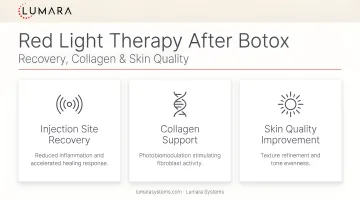
Reduction in injection site redness: The anti-inflammatory effect of 660nm red light can help reduce visible redness and swelling around injection sites more quickly than without treatment.
Collagen support during recovery: Botox does not affect collagen. In fact, some research suggests that over many years of repeated use, reduction of muscle movement may slightly reduce collagen stimulation in those areas. Red light therapy provides ongoing collagen support during and between Botox cycles.
Overall skin quality improvement: Botox addresses wrinkle mechanics. Red light therapy addresses skin texture, tone, and resilience - for more on what consistent use delivers, see red light therapy mask results. Using both consistently means treating the skin at both the structural (muscle) and cellular (dermal) level.
Support for post-injection skin healing: Any injection involves minor tissue disruption. Red light therapy's cellular repair support may help the skin around injection sites recover more comfortably.
How to Integrate Red Light Therapy with Your Botox Routine
Before Botox:
- Continue your normal red light therapy routine up to the day of your appointment
- No specific prep required from the red light side
Days 1-3 post-Botox:
- Pause red light therapy (and all facial devices, heat, massage)
- Follow your injector's standard post-care instructions
Day 3+ (72 hours post-injection):
- Resume red light therapy at your normal frequency
- Resume your normal skincare routine
- No special modifications to the red light protocol are needed
Between Botox appointments:
- Use red light therapy 3-5 times per week as your normal routine
- The collagen and skin quality benefits compound over time, improving the overall context in which Botox works
Who Should Exercise Additional Caution
Most people who use Botox can safely resume red light therapy after 72 hours. Additional caution is appropriate for:
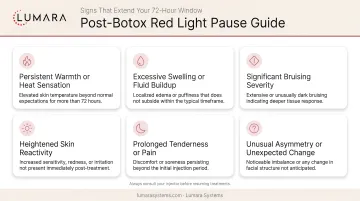
- Anyone with known photosensitivity or on medications that cause photosensitivity
- Skin that has reacted unusually to the Botox injections (unusual bruising, swelling, or reactions)
- Anyone who has had filler or other injectable procedures at the same session - consult with your injector on timing
If you are uncertain, ask your injector directly. Red light therapy (LED, not laser) is generally considered compatible with injectable procedures after the standard recovery window.
Frequently Asked Questions
How long after Botox can I use red light therapy?
Wait at least 48-72 hours. Most aesthetic practitioners recommend 72 hours as the conservative standard before resuming any facial device. After this window, red light therapy is safe to resume.
Does red light therapy affect Botox results?
No. Red light therapy at 660nm does not interact with the botulinum toxin mechanism. It will not move the toxin, reduce its effect, or alter how it settles. After the 72-hour settling period, the two can be used together safely.
Can red light therapy help with Botox bruising?
Red light therapy has documented anti-inflammatory and circulation-supporting effects. Many users report that resuming red light therapy after the 72-hour window helps reduce post-injection bruising and redness more quickly. This is consistent with the general wound healing and anti-inflammatory evidence base.
Can I use a red light LED mask after Botox?
Yes, after the 72-hour waiting period. LED masks deliver light without pressure, heat, or vibration, making them more appropriate post-Botox than devices that involve contact or thermal energy. Avoid applying the mask before the 72-hour window has passed.
Does red light therapy reduce Botox longevity?
There is no evidence that red light therapy affects how long Botox lasts. The toxin's mechanism (blocking neuromuscular junctions) is unaffected by red light photobiomodulation.
Should I do red light therapy before or after Botox appointments?
Continue your normal red light therapy routine up to the appointment. Pause for 72 hours post-injection. Resume normally after that. There is no advantage to scheduling red light therapy specifically before a Botox appointment.
Two Different Tools. Better Together.
Botox addresses dynamic wrinkles through muscle relaxation. Red light therapy addresses skin quality through cellular support. Used together with appropriate timing, they treat different aspects of the same overall goal.
After the 72-hour window, resume your red light therapy routine as normal. Lumara's VISO LED Mask - 660nm, 470 micro-LEDs, full-face coverage, FDA cleared - is built for exactly the consistent daily routine that maximizes the long-term benefit of combining both approaches.