Introduction
You've invested in a red light therapy mask — or you're about to — and the question burning in the back of your mind is the same one everyone has: will this actually work? The gap between purchase and visible results is where most users lose confidence, abandoning their device before it has a chance to deliver.
Red light therapy is a cumulative, cellular-level process. It rewards patience and consistency, not quick fixes.
This guide covers what the research actually shows about red light therapy mask results, including realistic timelines and practical protocols to help you get the most from your device. No hype, no overnight promises.
TLDR
- Red light therapy masks use 630–660nm wavelengths to stimulate cellular repair, boost collagen, and reduce dermal inflammation
- Early anti-inflammatory effects (calmer, less red skin) typically appear within 2–4 weeks
- Visible texture and tone improvements emerge between weeks 3–6 with regular use
- Firmer skin, faded scars, and softened fine lines develop around weeks 8–12 with continued use
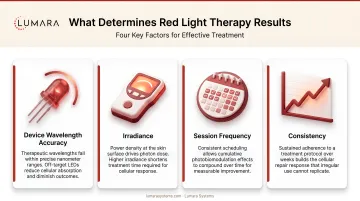
- Consistent sessions (3–5 per week) and accurate wavelength delivery are what separate real results from disappointment
How Red Light Therapy Masks Actually Work
Red light therapy — also called photobiomodulation or low-level light therapy (LLLT) — uses specific wavelengths of visible red and near-infrared light to penetrate skin and trigger biological repair processes. Unlike UV light, which damages skin, red light activates cellular regeneration without causing harm.
The core mechanisms:
- 630–660nm red light: penetrates 1–2mm into the dermis, absorbed by mitochondrial cytochrome c oxidase to boost ATP production and stimulate collagen and elastin from fibroblasts
- 800–850nm near-infrared light: reaches deeper tissue (up to 5mm), supporting structural repair and improving microvascular blood flow
- Anti-inflammatory response: reduces inflammatory markers and modulates immune response — early users often notice calmer, less reactive skin before any visible structural changes appear

Ablative treatments damage skin to force a healing response. RLT works differently — it activates your skin's own regenerative systems. This is why results build gradually over weeks rather than appearing overnight; the process is cellular, not cosmetic.
A Realistic Results Timeline: What to Expect Week by Week
The question everyone asks: when will I actually see something? The answer depends on your skin type, the concern you're treating, device quality, and how consistently you use it. Here's what clinical data and user feedback reveal.
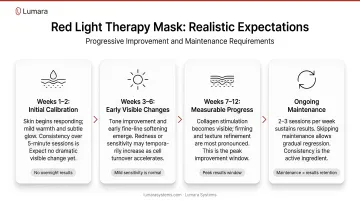
Weeks 1–2: Calmer, Less Reactive Skin
What happens first:
- Reduced redness and irritation
- Slight improvement in skin hydration
- A subtle "reset" feeling — skin feels less inflamed
The anti-inflammatory effect of RLT is taking hold. Research shows that red light modulates cytokines and microvascular blood flow, which calms reactive skin quickly. Collagen-level change hasn't started yet, but the foundation for deeper repair is being laid.
Weeks 3–6: Texture, Tone, and Glow
Visible improvements that emerge with sustained use:
- Smoother skin texture
- More even tone
- Fewer active breakouts
- Overall improved radiance
By week three, fibroblasts have been steadily producing new collagen and surface-level cellular turnover is accelerating — which is why these improvements show up first in texture and tone. Clinical trials using blinded photographic scoring confirm this pattern consistently.
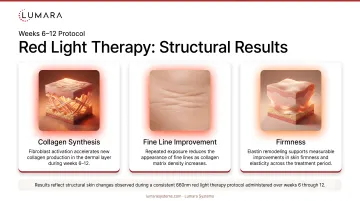
Weeks 6–12: Firming, Fine Lines, and Deeper Repair
Deeper structural changes that manifest after consistent collagen stimulation:
- Softer fine lines
- Improved skin firmness and elasticity
- Early fading of acne scars or hyperpigmentation
A randomized controlled trial demonstrated up to a 36% reduction in wrinkle depth after 12 weeks of consistent red light therapy. These results require at least 6 weeks of regular use before they appear.

Results beyond 12 weeks can continue to improve, but maintenance sessions are necessary. Skin continues to age, and previous gains can recede without upkeep.
Red Light Therapy Mask Results by Skin Concern
Different skin concerns respond at different rates and to different depths of light penetration. Here's what to expect based on your primary goal.
Anti-Aging: Fine Lines and Firmness
Red light therapy is particularly well-suited for anti-aging because it directly stimulates collagen and elastin synthesis. Clinical evidence shows improvements in wrinkle depth, skin plumpness, and firmness, with studies reporting significant elasticity gains measured by Cutometer after 8–12 weeks.
Expected timeline:
- Surface texture improvements: 3–6 weeks
- Visible fine line softening: 6–10 weeks
- Firmness and elasticity gains: 8–12+ weeks
Deeper lines take longer than surface texture improvements. If you're targeting moderate-to-deep wrinkles, expect a minimum 12-week commitment before assessing results.
Acne and Breakouts
Red light reduces the inflammation driving acne lesions and promotes faster healing of existing blemishes. Unlike blue light (415nm), which targets acne-causing bacteria directly, red light's role is anti-inflammatory and reparative, not antibacterial.
That distinction matters when reading the research. Clinical trials using combined red and blue light therapy showed up to a 77% reduction in inflammatory acne lesions at 12 weeks. Red light alone won't eliminate acne bacteria, but it significantly calms inflammation and accelerates healing.
Expected timeline:
- Reduced inflammation around active breakouts: 2–4 weeks
- Fewer new lesions: 4–8 weeks
- Improved post-acne healing: 6–10 weeks
Redness, Rosacea, and Uneven Tone
RLT's anti-inflammatory and circulation-boosting effects help calm chronic redness and rosacea flare-ups. By modulating vascular response and reducing inflammatory markers, red light therapy contributes to more even skin tone over time.
Expected timeline:
- Reduced baseline redness: 2–4 weeks
- Fewer rosacea flare-ups: 4–8 weeks
- More even tone: 6–12 weeks
Scarring and Wound Healing
By activating cell repair processes and increasing local circulation, red light therapy can accelerate healing of post-acne scars, surgical scars, and minor wounds. Research confirms that photobiomodulation enhances tissue repair and reduces scar formation when used consistently during the healing window.
Expected timeline:
- Faster healing of active wounds: 1–3 weeks
- Early scar fading: 6–10 weeks
- Visible scar texture improvement: 10–16 weeks
Under-Eye Area and Dark Circles
The under-eye area has thinner, more delicate skin than most other facial zones. Improved circulation and collagen support from RLT can help brighten dark circles and soften fine lines. That said, this area typically responds more slowly due to reduced dermal thickness and lower fibroblast density.
Expected timeline:
- Slight brightening: 4–6 weeks
- Fine line softening: 8–12 weeks
How to Maximize Your Results with Consistent Use
Consistency is the single biggest factor separating users who see results from those who don't. Here's how to optimize your protocol.
Frequency and Session Discipline
- Research suggests 3–5 sessions per week at 10–20 minutes per session is the effective range for most at-home masks
- Infrequent use is the primary reason people fail to see results
- Over-treating doesn't meaningfully accelerate outcomes due to the biphasic dose response of photobiomodulation — more isn't always better

Skin Prep for Optimal Light Penetration
- Cleanse before every session — no makeup, sunscreen, or heavy serums between skin and device
- Physical barriers like mineral sunscreen scatter and absorb visible light, reducing photons reaching the dermis
- Avoid using retinol or strong acids immediately before treatment to minimize sensitivity
Post-Session Skincare Pairing
- Apply hyaluronic acid or peptide serums directly after a session
- RLT increases skin permeability and receptiveness to topical actives, boosting absorption
Device Quality and Wavelength Precision
Not all masks are created equal. Clinical trials cite 630–660nm as the optimal wavelength for skin cellular repair. The Lumara Systems VISO mask targets 660nm specifically and uses 5-minute sessions, which reduces the barrier to daily use without compromising the therapeutic dose.
Who Should (and Shouldn't) Use a Red Light Therapy Mask
Who sees the best results:
- People with mild-to-moderate acne
- Those with early-to-moderate signs of aging
- Rosacea-prone or reactive skin
- Anyone committed to consistent use over 8–12 weeks
Red light therapy works for most Fitzpatrick skin types, but those with darker skin tones (Fitzpatrick IV–VI) should note that clinical safety trials show the maximum tolerated dose is lower (320 J/cm²) than for lighter skin (480 J/cm²) due to higher melanin absorption. Overexposure can trigger hyperpigmentation — consult a dermatologist first.
Clear contraindications:
- Lupus or photosensitive skin conditions — red light can worsen light-sensitive disorders; up to 93% of lupus patients show abnormal reactions to visible light
- Photosensitizing medications — certain antibiotics (doxycycline), retinoids, and lithium increase phototoxic risk
- Active skin infections or open wounds — wait for initial closure before using non-sterile at-home devices
- Eye protection required — always follow manufacturer guidelines; masks with near-infrared wavelengths carry a potential thermal risk to the retina, even in consumer-rated (Risk Group 1) devices
RLT works best as a complementary tool alongside your existing skincare routine — not as a replacement for prescription treatments or professional procedures. Expect gradual, cumulative improvements over weeks, not dramatic changes overnight.
Frequently Asked Questions
Do red light therapy masks really work?
Yes — evidence supports red light therapy for improving fine lines, skin texture, acne, and redness. Results depend heavily on consistency of use and device quality. More dramatic results typically require 8–12 weeks of regular sessions at the correct wavelength and dosage.
How long does it take to see results from a red light therapy mask?
Early anti-inflammatory effects (reduced redness, calmer skin) appear in weeks 1–2. Texture and tone improvements emerge in weeks 3–6. Deeper structural results — firming, line softening, scar fading — develop around weeks 8–12 with consistent use.
How often should I use a red light therapy mask?
3–5 sessions per week is the range most supported by clinical studies. Consistency matters more than session length — skipping weeks slows progress because collagen synthesis and cellular repair need continuous, repeated signaling to compound.
Does red light therapy help heal scabs?
Yes — RLT activates cellular repair, increases local blood flow, and reduces inflammation, all of which support faster healing of scabs and minor wound sites. It should not be used on open wounds or active infections due to the risk of bacterial spread.
Can you use a red light therapy mask if you have lupus?
No — lupus causes abnormal light sensitivity, and even visible red wavelengths can trigger flares. Always consult a dermatologist before using any light-based device if you have lupus or other photosensitive conditions.
What wavelength is best for red light therapy masks?
630–660nm is the most studied range for skin repair and anti-aging results. Near-infrared (830nm+) reaches deeper tissue layers — check that any device you consider lists its exact wavelength output.