Introduction
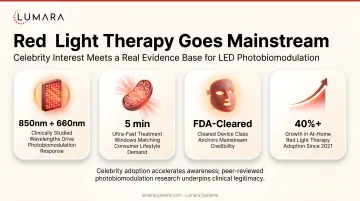
When Seth Meyers and Sabrina Carpenter casually strapped on glowing red light therapy masks mid-game during their December 2025 "Day Drinking" segment on Late Night with Seth Meyers, viewers had questions. The sight of two celebrities wearing futuristic LED face masks between cocktails sparked widespread curiosity about them—specifically, what these devices actually do and whether they're just another celebrity gimmick.
Those masks are legitimate skincare technology, increasingly used by dermatologists, aestheticians, and at-home users for measurable skin improvements. This article covers what red light therapy masks do, what the science says about their benefits, and how to use one effectively.
TLDR
- Red light therapy masks use 660nm wavelengths to penetrate skin and stimulate cellular activity
- They reduce fine lines, calm acne inflammation, and improve skin tone through consistent use
- Results require 3-5 sessions weekly over 8-12 weeks — expect gradual, cumulative improvement
- FDA-cleared versions of the masks featured on Late Night are now available for home use
- When choosing a mask, prioritize verified 660nm output, 5-minute session capability, and a splash-safe build
What Is a Red Light Therapy Mask?
Red light therapy—also called photobiomodulation—is a non-invasive treatment that uses low-level red wavelengths of light to penetrate the skin's surface and stimulate biological processes at the cellular level. Unlike UV light, which damages skin, red light at specific wavelengths (typically 630–660nm) triggers repair mechanisms without heat or harm.
LED face masks are the at-home version of technology originally developed for clinical and medical settings. They deliver targeted wavelengths directly to the face through embedded LEDs, designed to fit the contours of your skin for consistent coverage. The global LED face mask market is projected to reach $655.6 million by 2030, growing at 11.9% annually as the technology transitions from professional clinics to daily home use.
Red light therapy masks work best as a daily-use skincare tool, not a one-time treatment. Like sunscreen or moisturizer, their benefits compound gradually through consistent use over time.
Key Benefits of Red Light Therapy Masks
The benefits below are tied to measurable skin outcomes backed by peer-reviewed research. Each depends on consistent use at the correct wavelength (660nm) and session duration, not sporadic application.
Collagen Stimulation and Anti-Aging
Red light at 660nm penetrates the dermis and stimulates fibroblast activity—the cells responsible for producing collagen and elastin, the proteins that keep skin firm and plump. This happens through a mild cellular stress response that signals the body to repair and rebuild, gradually increasing dermal density.
A clinical study using 660nm LED light showed a 31% increase in type-1 procollagen and an 18% decrease in collagen-degrading MMP-1 enzymes — with over 90% of participants showing reduced wrinkle depth after 12 treatments. A separate randomized trial using 633nm LED light demonstrated up to a 36% reduction in wrinkles and a 19% increase in skin elasticity after eight sessions over four weeks.

Outcomes to watch for:
- Reduced appearance of crow's feet, forehead lines, and nasolabial folds
- Improved skin firmness when touched
- More even skin texture over time
- Visible reduction in fine lines around eyes and mouth
This benefit is most relevant for adults in their 30s and beyond as natural collagen production slows, or for anyone dealing with post-sun damage or thinning skin from previous procedures.
Acne Reduction and Skin Clarity
Red light therapy reduces inflammation in the skin — a key driver of acne flare-ups — and supports faster healing of active breakouts without harsh chemicals. It penetrates sebaceous gland tissue and modulates the inflammatory response, reducing redness and swelling around acne lesions while promoting tissue repair.
A randomized split-face trial using red light alone (15 minutes twice daily for 8 weeks) showed significant improvement in both noninflammatory and inflammatory lesion counts compared to untreated skin. A home-use device study combining 660nm red light with 420nm blue light demonstrated a 77% reduction in inflammatory acne lesions and a 54% reduction in noninflammatory lesions after 12 weeks of twice-daily use.
Outcomes to watch for:
- Reduced redness around active breakouts
- Faster resolution of pimples (days instead of weeks)
- Fewer new lesions forming over a treatment period
- Less post-inflammatory hyperpigmentation (dark spots left after pimples heal)
This applies most directly to adults with mild to moderate inflammatory acne who want a non-medicated option alongside their existing skincare routine.
Skin Tone and Texture Improvement
Beyond acne and aging, red light therapy stimulates circulation and cellular turnover at the skin's surface, leading to more even tone, reduced redness from rosacea or sensitivity, and smoother texture. Increased microcirculation delivers more oxygen and nutrients to skin cells, accelerating natural renewal and helping fade discoloration like sunspots and uneven pigmentation.
A clinical study using a 630nm LED mask showed that after 28 days of twice-weekly use, participants experienced a 6.8% decrease in cheek roughness, a 28.5% decrease in pore diameter, and a 34.9% decrease in sebum production. Research also confirms that red light stimulation causes immediate increases in local blood flow — which explains the "glow" effect many users notice after a session.
Outcomes to watch for:
- More consistent skin color across the face
- A visible "glow" effect from improved circulation
- Reduced visible pore size
- Smoother texture under makeup or in natural light
For people dealing with dull, tired skin, seasonal skin changes, or post-acne marks, this makes red light therapy a practical non-abrasive complement to exfoliation or vitamin C routines.
What Happens When You Skip Consistent Use
Red light therapy is not a permanent fix after a single course. Its benefits—collagen production, inflammation control, circulation—require ongoing stimulation. Skipping sessions for extended periods causes those gains to gradually reverse.
The common pattern: users who start and stop frequently report inconsistent results and often dismiss the technology as ineffective, when the issue is application consistency rather than the therapy itself. Without a regular rhythm (typically 3-5 sessions per week for maintenance), skin reverts toward its baseline rate of collagen loss and inflammation over weeks to months.
It works the same way exercise does for muscle tone: stop training, and the gains fade. Skin responds to red light on a similar timeline.
How to Use a Red Light Therapy Mask for Best Results
At-home red light therapy masks work best with short, consistent sessions — typically 5-10 minutes on clean, product-free skin. The frequency of use matters more than the duration of any single session.
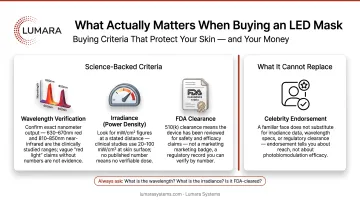
What to look for in a device:
- 660nm wavelength output for clinically relevant red light skin benefits
- Specified irradiance rating (mW/cm²) — not just LED count
- Splash-safe or water-resistant construction for realistic daily use
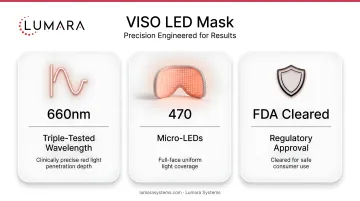
The Lumara Systems VISO mask hits all three of these marks: 660nm precision, 30 mW/cm² optical peak power through 470 micro-LEDs for uniform facial coverage, and a splash-safe build designed around 5-minute daily sessions.
What to avoid:
- Applying active serums or photosensitizing products immediately before use
- Using the mask over broken or compromised skin without medical guidance
- Expecting overnight results without a multi-week commitment
How to build results over time:
- Start with daily sessions for the first 4-6 weeks to build a baseline response
- Move to 3-4 times per week for maintenance after initial results appear
- Track visible changes in photos taken in consistent lighting to accurately assess progress
- Expect skin tone improvements around 4-6 weeks in, with more significant anti-aging results appearing at the 8-12 week mark

Frequently Asked Questions
What red light therapy mask did Seth Meyers wear on Late Night?
The masks worn during the Sabrina Carpenter "Day Drinking" segment were LED red light therapy face masks. One device featured was the Shark CryoGlow iQLED mask, though many similar at-home options exist at various price points, including FDA-cleared devices like the Lumara VISO.
What does a red light therapy mask actually do for your skin?
Red light therapy stimulates collagen production, reduces inflammation, and improves circulation, resulting in firmer skin, fewer breakouts, and a more even tone with consistent use. The 660nm wavelength penetrates the dermis to trigger cellular repair mechanisms without heat or damage.
How long does it take to see results from a red light therapy mask?
Most users begin to notice improvements in skin tone and texture within 4-6 weeks of regular use (3-5 times per week). More significant anti-aging results—like reduced wrinkle depth and increased firmness—typically become visible after 8-12 weeks of consistent sessions.
Is red light therapy safe to use at home every day?
At-home red light therapy masks are generally safe for daily use — they're non-UV and non-thermal, posing no burn risk for most skin types per the American Academy of Dermatology. Avoid use if you're pregnant, taking photosensitizing medications, or have conditions like lupus.
What wavelength should a red light therapy mask use?
630-660nm is the most clinically studied range for skin benefits, with 660nm being the standard for collagen stimulation and anti-inflammatory effects. Always check the listed wavelength before purchasing — devices that omit this detail or use broad-spectrum LEDs may not deliver therapeutic results.
Can red light therapy help with acne?
Yes. Red light reduces inflammation around acne lesions and promotes faster healing. While blue light is more commonly associated with killing acne-causing bacteria, red light alone is effective for calming active inflammation and reducing post-acne marks. Combination devices using both wavelengths show even better results for treating both active breakouts and post-acne marks.