Introduction
One of the most common practical questions about red light therapy is whether the device needs direct skin contact or whether clothing - even thin clothing - affects results.
The short answer is yes, bare skin is necessary for effective red light therapy. The longer answer explains why, and what practically changes about your routine when you understand the physics involved.
Key Takeaways
- Clothing - even thin fabric - significantly reduces the amount of therapeutic light reaching skin tissue
- Red light can penetrate approximately 5-10 mm into the skin, depending on wavelength, power, exposure time, and tissue type; fabric absorbs and scatters the light before it reaches tissue
- Applying lotion, oils, or serums before a session can also reduce light penetration by creating a reflective or absorptive barrier
- Extending session time does not compensate for blocked penetration - the blockage reduces irradiance at the tissue level, not just duration
- For facial use, this means removing all makeup and moisturizer before sessions and ensuring the mask or panel is on clean skin
Why Clothing Blocks Red Light
Light therapy works because photons at specific wavelengths are absorbed by tissue - specifically by chromophores in cells. For this to happen, the photons have to actually reach the tissue.
Fabric - even lightweight, sheer fabric - does two things to light:
- Absorbs it: The fibers absorb some proportion of incoming photons depending on material density and color
- Scatters it: Fibrous structures scatter light in multiple directions, reducing the amount traveling in a direct path toward tissue
The result is that even a thin white cotton T-shirt can reduce the light reaching skin by 50-90% depending on material, color, and weave density. Dark fabrics absorb more. Thick fabrics absorb more. The therapeutic wavelengths (660nm and 850nm) that penetrate skin most effectively are still significantly attenuated by fabric.
What About Products on Skin?
Skin products create a different kind of barrier. Heavy moisturizers, oils, and physical sunscreens (zinc oxide, titanium dioxide) can reflect or scatter incoming light before it penetrates the skin surface.
What reduces penetration:
- Physical sunscreen (zinc oxide, titanium dioxide) - highly reflective
- Heavy occlusive moisturizers and facial oils
- Makeup foundations and powders - pigment absorbs visible light
- Colored sunscreens or tinted moisturizers
- Sensitizing actives like retinoids, AHAs, BHAs, and benzoyl peroxide - pause for 24 hours before sessions
What does not significantly reduce penetration:
- Water-based serums that have been fully absorbed
- Niacinamide, hyaluronic acid, and similar lightweight serums
- Skin that has been cleansed and is free of surface product
The cleaner and more product-free the skin, the more effective each session is.
Why Extending Session Time Does Not Compensate
A common misconception is that wearing clothing during red light therapy is fine as long as you extend the session duration. This does not work.
Irradiance (the amount of light energy per unit area per unit time) is the relevant metric - not total session time. If fabric reduces irradiance at the skin surface by 70%, a session that should take 10 minutes would need to take 33 minutes to deliver the same dose. In practice, the scattering effect of fabric also changes the angle and distribution of light reaching tissue, making the dose calculation even less predictable.
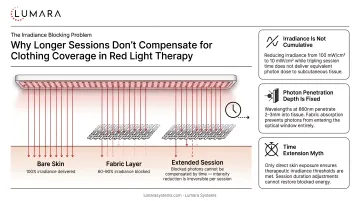
The practical takeaway: commit to bare-skin sessions rather than trying to work around coverage.
Practical Prep for Effective Sessions
Facial sessions:
- Remove all makeup before starting
- Cleanse skin to remove sunscreen, moisturizer, and other products
- Allow skin to dry fully before placing the mask
- Apply skincare products after the session, not before
Body sessions:
- Remove clothing from the treatment area completely
- If treating back or stomach, use a towel to dry any sweat or moisture
- Wait 10-15 minutes after applying lotion or oil before a session, or apply products after
What you can wear:
- Eye protection (required) - designed to allow the device to function while protecting eyes
- Hair ties or clips to keep hair out of the treatment area
The Distance Factor
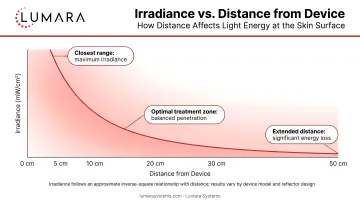
Even without fabric or products, distance from the device affects how much light reaches tissue. Irradiance drops with the square of the distance - doubling your distance from the device reduces irradiance to approximately 25% of what it was at the original distance.
This is why device manufacturers specify a recommended treatment distance. Maintaining that distance consistently across sessions is important for reproducible results.
Frequently Asked Questions
Does red light therapy work through clothing?
Not effectively. Clothing absorbs and scatters light significantly, reducing the irradiance reaching skin to a fraction of what a bare-skin session delivers. Even thin fabric can reduce penetration by 50-90%.
Can I use red light therapy with moisturizer on my face?
Heavy moisturizers and physical sunscreens can reduce light penetration. For best results, apply red light therapy to clean, dry skin and apply moisturizer after the session.
What should I do before a red light therapy session?
Remove clothing from the treatment area, cleanse skin to remove all products, and allow skin to dry. For facial sessions, remove all makeup and skincare products before starting.
Does skin color affect red light therapy effectiveness?
Melanin in darker skin tones absorbs some visible light wavelengths, but 660nm red light penetrates effectively across skin tones. The more significant variable is product and clothing coverage, not skin tone. Bare, clean skin is equally important regardless of skin color.
How does irradiance drop with distance?
Irradiance drops with the square of the distance. At twice the recommended distance, you receive approximately 25% of the intended irradiance. Maintaining the manufacturer's recommended treatment distance is one of the most important protocol variables.
Clean Skin, Correct Distance, Consistent Sessions
The fundamentals of an effective red light therapy protocol are straightforward: bare skin, no product barriers, consistent treatment distance, and regular sessions. Each variable independently affects how much therapeutic light reaches your tissue.
Lumara's VISO LED Mask is designed for direct-to-skin facial contact - full-face coverage, consistent LED-to-skin distance built into the mask geometry, and a 5-20 minute session format on clean skin.