Introduction
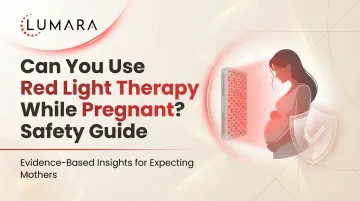
Red light therapy is used increasingly for facial skincare, body recovery, and wellness routines. For users who become pregnant while already using a device, or who are considering starting, the question is the same: is it safe to continue?
The honest answer: the evidence base is insufficient to confirm safety, and most practitioners apply the precautionary principle. This does not mean red light therapy causes harm during pregnancy - it means adequate pregnancy-specific safety data does not exist, and when two lives are involved, caution is the appropriate default.
Key Takeaways
- There is no established evidence of harm from consumer-level red light therapy during pregnancy
- There is also no robust clinical evidence establishing safety - pregnant women are routinely excluded from clinical trials
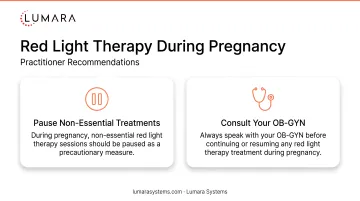
- Most OB-GYNs and practitioners recommend pausing non-essential treatments during pregnancy, applying the precautionary principle
- If use continues with physician approval, avoid any application to the abdomen, pelvis, or lower back
- Face, neck, and extremities are considered lower-risk areas if a physician has approved continued use
- Always consult your OB-GYN before continuing or starting any light therapy during pregnancy
The Evidence Situation
Red light therapy research has not included pregnant participants in clinical trials - this is standard practice across most medical research for obvious ethical reasons. The result is a genuine evidence gap: not "evidence of harm" but "absence of sufficient evidence to confirm safety."
What the existing research does show:
Red light can penetrate approximately 5–10 mm into the skin, depending on wavelength, power, exposure time, and tissue type. Consumer LED devices at standard distances are still very different from clinical laser devices, and pregnancy-specific safety data remains limited. Because of that evidence gap, most practitioners recommend caution, especially around the abdomen, pelvis, and lower back. The physical likelihood of fetal exposure from external consumer red light therapy devices applied at recommended distances is considered low by most practitioners.
An in vitro 2022 study found that 670nm light reduced oxidative markers in preeclamptic placental tissue in laboratory conditions. This finding relates to how red light interacts with mitochondrial function in stressed tissue - it is a mechanistically interesting finding, but it is not a clinical trial and cannot be interpreted as evidence that red light therapy is safe or beneficial during pregnancy.
What Most Practitioners Recommend
The consensus position among OB-GYNs and dermatologists is to pause non-medically necessary cosmetic treatments during pregnancy. This applies to red light therapy regardless of the specific device or application.
The reasoning is precautionary: the absence of evidence of harm is not the same as evidence of absence of harm. With a developing pregnancy, practitioners apply a higher safety threshold than they would for the same intervention in a non-pregnant patient.
This does not mean red light therapy is dangerous during pregnancy. It means the risk-benefit calculation for an elective cosmetic treatment shifts when pregnancy is involved.
If Your Physician Approves Continued Use
Some physicians take a more nuanced position - particularly for patients using facial red light therapy devices for specific skin conditions. If your OB-GYN reviews the device, application, and your specific situation and approves continued use, the following guidelines apply:
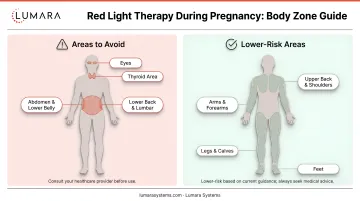
Body areas to avoid entirely during pregnancy:
- Abdomen and stomach
- Pelvis and lower back
- Any area directly overlying the uterus
Lower-risk areas if physician-approved:
- Face and neck
- Hands and feet
- Upper back and shoulders (away from the lumbar region)
For facial mask use specifically, understanding whether to use red light therapy with eyes open or closed is an important safety consideration during any session.
Device considerations:
- Use FDA-cleared devices with verified wavelength output
- Follow manufacturer session time guidance - do not extend sessions beyond recommendations
- Consumer-level LED devices at facial distances present lower theoretical penetration concerns than high-powered clinical devices
Common Mistakes to Avoid
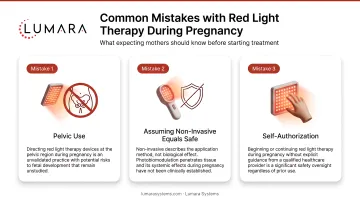
Continuing pelvic or abdominal sessions without physician clearance: This is the highest-concern scenario. Even if you have been using red light therapy on the abdomen for skin or body wellness purposes, this should stop until after delivery and postpartum clearance.
Assuming "non-invasive" means "safe during pregnancy": Many non-invasive treatments are paused during pregnancy as a precautionary measure. Non-invasive does not automatically mean pregnancy-safe.
Self-authorizing continued use based on general internet research: The decision to continue any treatment during pregnancy should involve your own physician who knows your medical history and pregnancy status.
Interpreting absence of harm evidence as evidence of safety: These are not the same. The absence of published case reports of harm from consumer red light therapy in pregnancy does not establish that the treatment is confirmed safe.
After Delivery
Postpartum, most practitioners clear patients for resuming red light therapy once the immediate postpartum recovery period has passed (typically 4-8 weeks for vaginal delivery, 6-12 weeks for caesarean, depending on individual recovery). Breastfeeding does not present specific contraindications for external red light therapy at consumer device levels, but confirm with your physician.
Frequently Asked Questions
Is red light therapy safe during pregnancy?
There is no established evidence of harm at consumer device levels, but there is also insufficient clinical data to confirm safety. Most OB-GYNs recommend pausing non-essential cosmetic treatments during pregnancy as a precautionary measure.
What areas should I avoid treating during pregnancy?
Abdomen, pelvis, and lower back should not be treated with red light therapy during pregnancy. If physician-approved continued use of facial devices is in place, face and neck are lower-risk areas.
Can I use a red light face mask while pregnant?
Only with explicit OB-GYN approval for your specific device and situation. Most practitioners recommend pausing, but some may approve continued facial mask use after reviewing the device and your pregnancy circumstances.
When can I resume red light therapy after delivery?
Most practitioners clear patients for elective cosmetic treatments at the 4-8 week postpartum visit (vaginal delivery) or 6-12 week visit (caesarean). Confirm with your physician based on your individual recovery.
Does red light therapy harm the baby during pregnancy?
There are no published clinical reports of harm from consumer-level red light therapy during pregnancy. However, the absence of reported harm does not constitute confirmed safety - the research simply has not been done in pregnant populations.
Precaution Is Not the Same as Prohibition
Red light therapy is not known to be harmful during pregnancy. The recommendation to pause is precautionary, not based on evidence of risk. If you have questions specific to your situation, your OB-GYN is the right person to consult - not general research or device manufacturer claims.
For postpartum users returning to their skincare routine, Lumara's VISO LED Mask - 660nm, 470 micro-LEDs, FDA cleared - is designed for consistent daily facial use. Those resuming body treatments should also review the difference between infrared and red light therapy to choose the right wavelength for their postpartum goals. Red light at 660nm is also useful for targeting stretch marks at home during the postpartum recovery period.