Red Light Therapy for Brain Inflammation: Complete Guide

Introduction

Brain inflammation has emerged as a primary driver behind cognitive decline, mood disorders, and neurodegenerative disease. Chronic activation of microglia (the brain's immune cells) triggers pro-inflammatory cytokines and oxidative stress that damage neurons and disrupt neural networks — contributing to conditions ranging from traumatic brain injury and Alzheimer's to depression and Parkinson's.

Conventional anti-inflammatory drugs face a fundamental obstacle: the blood-brain barrier blocks 98% of small-molecule drugs from reaching the brain, severely limiting treatment options.

Red light therapy (also called photobiomodulation, or PBM) takes a different route entirely. Using specific wavelengths of red and near-infrared light (600–1100nm), PBM penetrates through the skull to target brain cells directly, activating mitochondrial energy production and triggering anti-inflammatory cascades at the cellular level.

This guide covers the cellular mechanisms behind how red light combats neuroinflammation, which conditions show the strongest research support, and practical protocols for safe, effective use.

TLDR

  • Red and near-infrared light activates cytochrome c oxidase in mitochondria, displacing inhibitory nitric oxide and boosting ATP production
  • Research shows suppression of NF-κB signaling and reduced pro-inflammatory cytokines Research shows suppression of NF-κB signaling and reduced pro-inflammatory cytokines (TNF-α, IL-1β, IL-6)
  • Strongest evidence supports use in traumatic brain injury, Alzheimer's, Parkinson's, and major depression
  • Near-infrared wavelengths (800–1100nm) penetrate deepest into brain tissue
  • 660nm red light targets cortical regions and reduces oxidative stress
  • Safe and non-invasive, but requires consistent use over weeks and should complement, not replace, medical treatment

What Is Brain Inflammation and Why Does It Matter?

Neuroinflammation is the brain's immune response to injury, infection, or chronic stress. When microglia activate, they release pro-inflammatory cytokines (TNF-α, IL-1β, IL-6), reactive oxygen species, and nitric oxide. In acute situations, this response protects the brain. But when inflammation becomes chronic, it turns destructive.

Chronic neuroinflammation is now linked to:

  • Alzheimer's disease (misfolded proteins trigger persistent microglial activation)
  • Parkinson's disease (excessive IL-6, TNF-α, and IL-1β contribute to dopaminergic neuron loss)
  • Traumatic brain injury (inflammation persists long after initial impact)
  • Major depression (elevated inflammatory biomarkers predict antidepressant non-response)
  • Age-related cognitive decline in otherwise healthy individuals

The challenge with conventional treatments comes down to penetration. 100% of large-molecule drugs and over 98% of small-molecule drugs do not cross the blood-brain barrier, which explains why NSAIDs and other anti-inflammatory agents have shown limited success in treating brain conditions.

Red light therapy takes a different route. Near-infrared light physically penetrates the skull to reach brain tissue directly—no barrier to cross.

How Red Light Therapy Targets Brain Inflammation: The Cellular Science

Cytochrome C Oxidase Activation and Nitric Oxide Displacement

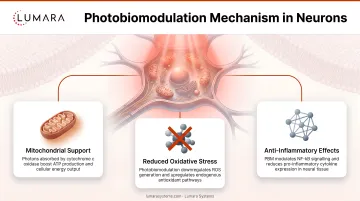
The primary mechanism centers on cytochrome c oxidase (CCO), the terminal enzyme in mitochondria's electron transport chain. In inflamed or hypoxic neural tissue, nitric oxide (NO) binds to CCO and blocks its activity, impairing ATP production.

Red and near-infrared photons (600–1100nm) are absorbed by CCO, displacing this inhibitory NO. This restores electron transport, increases mitochondrial membrane potential, and amplifies ATP synthesis, giving stressed neurons the energy required to repair and resist inflammatory damage.

The Biphasic Dose Response: Why 3 J/cm² Heals and 30 J/cm² Harms

PBM follows a strict biphasic dose-response curve. Studies on primary cortical neurons demonstrate this clearly:

  • 0.3 J/cm²: Significant increase in mitochondrial membrane potential
  • 3 J/cm²: Peak ATP production (twice basal levels)
  • 10 J/cm²: Declining benefits
  • 30 J/cm²: Mitochondrial depolarization and harmful ROS spike

Biphasic dose response curve showing red light therapy energy density effects on neurons

Dosing precision matters. More light is not better.

Retrograde Mitochondrial Signaling and Gene Expression

PBM also triggers secondary messenger cascades. The transient ROS burst and calcium signaling (via TRP ion channels) activate redox-sensitive transcription factors like NF-κB and AP-1. This retrograde mitochondrial-to-nuclear signaling modulates gene expression related to:

  • Neuroprotection and cell survival
  • BDNF production, which supports neuron growth and repair
  • Neurogenesis and synaptic plasticity
  • Reduced pro-inflammatory cytokine output (including IL-6 and TNF-α)

Key Anti-Inflammatory Effects of Red Light Therapy on the Brain

Suppression of NF-κB and Pro-Inflammatory Cytokines

PBM actively suppresses NF-κB signaling pathways, one of the master regulators of neuroinflammation. In animal models of TBI, ischemia, and aging, researchers observed consistent reductions in key inflammatory markers:

  • TNF-α, IL-1β, and IL-6 levels dropped in the cerebral cortex and hippocampus
  • Microglia shifted from the pro-inflammatory M1 phenotype to the anti-inflammatory M2 phenotype
  • Effects were documented across multiple injury and disease models

Neutralizing Amyloid-Beta-Induced Oxidative Stress

In Alzheimer's models, PBM inhibits reactive oxygen species generated by NADPH oxidase in response to amyloid-beta stimulation. Light exposure downregulates inducible nitric oxide synthase (iNOS) in microglia, suppressing the activated immune response that sustains chronic neuroinflammation.

Neuroprotection Through Anti-Apoptotic Signaling

At the cellular level, PBM shifts the balance away from programmed cell death:

Cerebral Blood Flow Enhancement

Transcranial 808nm laser irradiation increased local cerebral blood flow by 30% compared to controls in animal studies. By increasing nitric oxide availability through photodissociation, red light causes vasodilation, improving oxygen and nutrient delivery to inflamed brain tissue.

Four key anti-inflammatory mechanisms of red light therapy on brain tissue infographic

Conditions That May Benefit from Red Light Therapy for Brain Inflammation

Traumatic Brain Injury (TBI)

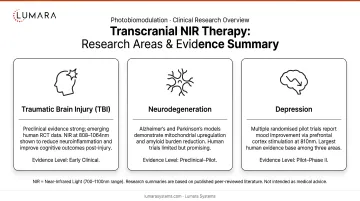
A 2024 double-blind study from Massachusetts General Hospital found that patients receiving 810nm low-level light therapy within 72 hours of moderate TBI showed significantly greater resting-state brain connectivity during acute-to-subacute recovery compared to sham controls.

In chronic mild TBI, 18 sessions of combined 633nm and 870nm LED therapy produced improvements in:

  • Executive function and verbal memory
  • Sleep quality
  • PTSD symptom reduction
  • Cognitive processing speed

Neurodegenerative Diseases: Alzheimer's and Parkinson's

Alzheimer's Disease

660nm PBM reduced amyloid-beta plaques in the hippocampus of 5xFAD mice after daily treatments. Separate research using 632.8nm light showed dramatic reductions in soluble and insoluble Aβ levels by activating SIRT1 and shifting APP processing toward non-amyloidogenic pathways.

Chronic transcranial laser PBM also restored age-related declines in regional CCO activity in aged rats — pointing to mitochondrial repair as a parallel mechanism alongside plaque reduction.

Parkinson's Disease

Deep brain structures like the substantia nigra cannot be reached by transcranial light alone. However, clinical trials using combined intranasal and transcranial delivery (bypassing the skull barrier) have shown promise in improving motor and cognitive outcomes. A randomized feasibility trial using a dual-wavelength helmet (635nm + 810nm) demonstrated safety and motor score improvements.

Depression and Psychiatric Conditions

Neuroinflammation connects neurodegenerative conditions to psychiatric ones — and PBM addresses this shared pathway. Transcranial PBM targeting the prefrontal cortex has produced measurable antidepressant effects in clinical trials:

  • ELATED-2 trial: 823nm LED at 65.2 J/cm² (twice weekly for 8 weeks) produced large effect sizes (Cohen's d = 1.5) in reducing Hamilton Depression Rating Scale scores
  • ELATED-3 trial: Intentional under-dosing failed to separate from sham, proving a minimum therapeutic threshold exists

Research published in Nature Reviews Immunology establishes neuroinflammation as a core driver of depression, which may explain PBM's relevance beyond traditional neurotransmitter models.

Brain Inflammation in Athletes and Cognitive Enhancement

A 2026 University of Utah double-blind trial followed 26 NCAA Division I football players over a 16-week season. Players using 810nm intranasal-transcranial PBM (3 days/week) showed stable neuroinflammation markers on MRI, while the sham group showed significant increases in restricted diffusion imaging (RDI) — a marker of active neuroinflammation from repetitive head impacts.

NCAA football player wearing transcranial near-infrared light therapy helmet device

Beyond contact sports, the cognitive benefits extend to healthy adults. Single-session 1064nm transcranial PBM improved reaction time and short-term memory performance in cognitive testing — without any prior neurological injury as a baseline.

How to Use Red Light Therapy for Brain Inflammation

Delivery Methods and Wavelength Selection

Three main approaches exist:

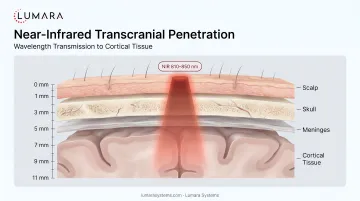
  • Transcranial delivery: Panels or helmets placed on the scalp or forehead target cortical brain regions. Near-infrared wavelengths (800–1100nm) penetrate deepest through the skull, while 660nm red light has documented roles in reducing oxidative stress and supporting BDNF expression.

  • Intranasal delivery: Small devices inserted into the nostril reach subcortical and ventral brain structures that transcranial light cannot access.

  • Combined approaches: Devices integrating both transcranial and intranasal delivery (itPBM) provide the most comprehensive brain coverage.

Understanding Skull Penetration Limits

Only 0.2% to 10% of incident red/NIR light reaches the human cortex through the scalp and skull. Cadaveric studies demonstrate that 808nm light penetrates approximately 40mm into brain tissue, but signal strength drops considerably at depth. This means device power density and wavelength selection are critical factors—consumer-grade panels with low power may not deliver sufficient light to deeper regions.

Session Length, Frequency, and Realistic Protocols

Research protocols typically use:

  • Wavelength: 810nm, 823nm, 830nm, or 1064nm (NIR); 633nm or 660nm (red)
  • Power density: 10–250 mW/cm²
  • Energy density: 10–65 J/cm² per session
  • Duration: 10–30 minutes
  • Frequency: 2–3 times per week (some protocols use daily sessions)

Red light therapy brain protocol parameters including wavelength power density and session frequency

These parameters vary by device type and treatment goal, so matching your device specs to a protocol is worth checking before you start.

Single sessions can produce temporary changes, but sustained neurological benefits accumulate with repeated use over weeks. At-home devices — including Lumara Systems' panels, which are built for 5-minute treatments — lower the barrier to consistency, though longer sessions may be warranted depending on your device's power output.

Important: Consult a healthcare provider before beginning, especially if you have epilepsy or take photosensitizing medications. Start with recommended guidelines—more frequent or longer sessions are not necessarily better due to the biphasic dose response.

Safety, Limitations, and What to Realistically Expect

Safety Profile

PBM using red/near-infrared light does not involve UV radiation and has not been linked to cellular damage at therapeutic doses. Research across hundreds of clinical studies has found minimal adverse effects, most commonly transient headaches, mild fatigue, localized skin warming, or temporary eye strain if proper eyewear isn't used. Large pooled studies in stroke patients showed no significant difference in serious adverse effects or mortality between PBM and control groups.

Regulatory Clarification

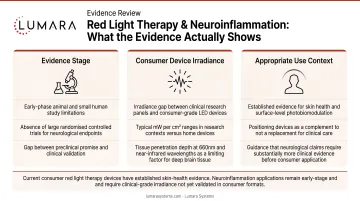
Devices labeled "FDA-cleared" have been evaluated for safety through 510(k) clearance, which verifies substantial equivalence to already-approved devices — not efficacy for disease modification. Clearance for safety does not mean the FDA has approved a device to treat Alzheimer's, Parkinson's, or TBI. Keep this distinction in mind when reviewing device marketing claims.

Contraindications

Standard medical guidelines advise caution or avoidance in:

  • Individuals with epilepsy or seizure disorders
  • Those with photosensitivity conditions
  • Patients taking photosensitizing medications

Anyone in these categories should consult their physician before starting any PBM protocol.

Realistic Expectations

Results are not immediate or guaranteed. Most improvements in clinical studies appear over weeks to months of consistent use. PBM is best understood as a complementary approach — one that works alongside, not instead of, medical treatment.

If you're evaluating a device or protocol, ask your healthcare provider about the specific evidence for your condition. Large-scale trials are still underway, and findings from the next 3-5 years will likely clarify which populations, wavelengths, and treatment durations produce the most reliable results.

Frequently Asked Questions

Does red light therapy reduce inflammation in the brain?

Yes, preclinical and emerging clinical research shows red and near-infrared light therapy can reduce neuroinflammation by suppressing NF-κB signaling, reducing pro-inflammatory cytokines (TNF-α, IL-1β, IL-6), and calming microglial activation. Large-scale human trials are still ongoing.

What does red light therapy do to your brain?

Red light therapy triggers several changes in brain tissue:

  • Activates mitochondrial energy production via cytochrome c oxidase
  • Reduces oxidative stress and neuroinflammation
  • Improves cerebral blood flow
  • Supports neurogenesis and BDNF expression

How long does it take for red light therapy to reduce inflammation?

Some acute effects on inflammation markers can appear within a single session or the first few days. Neurological benefits in clinical research typically appear after several weeks of consistent use — most studies show results at 3–8 weeks.

What is the best light therapy for the brain?

Near-infrared wavelengths (810–1064nm) penetrate deepest through the skull and are most studied for deep brain effects. 660nm red light has documented benefits for cortical regions and reducing oxidative stress. Combined transcranial and intranasal delivery shows the most promise in recent studies.

Is it safe to use red light therapy on the head?

It is considered safe at therapeutic doses, with no UV radiation involved and minimal adverse effects reported across clinical studies. However, individuals with epilepsy, photosensitivity conditions, or those on photosensitizing medications should consult a doctor first.

Can I use NIR every day?

Most research protocols use daily or near-daily sessions (3–7 times per week), which appears safe at recommended doses. The biphasic dose response means more is not always better, so follow your device's guidelines for session length and frequency.