Introduction
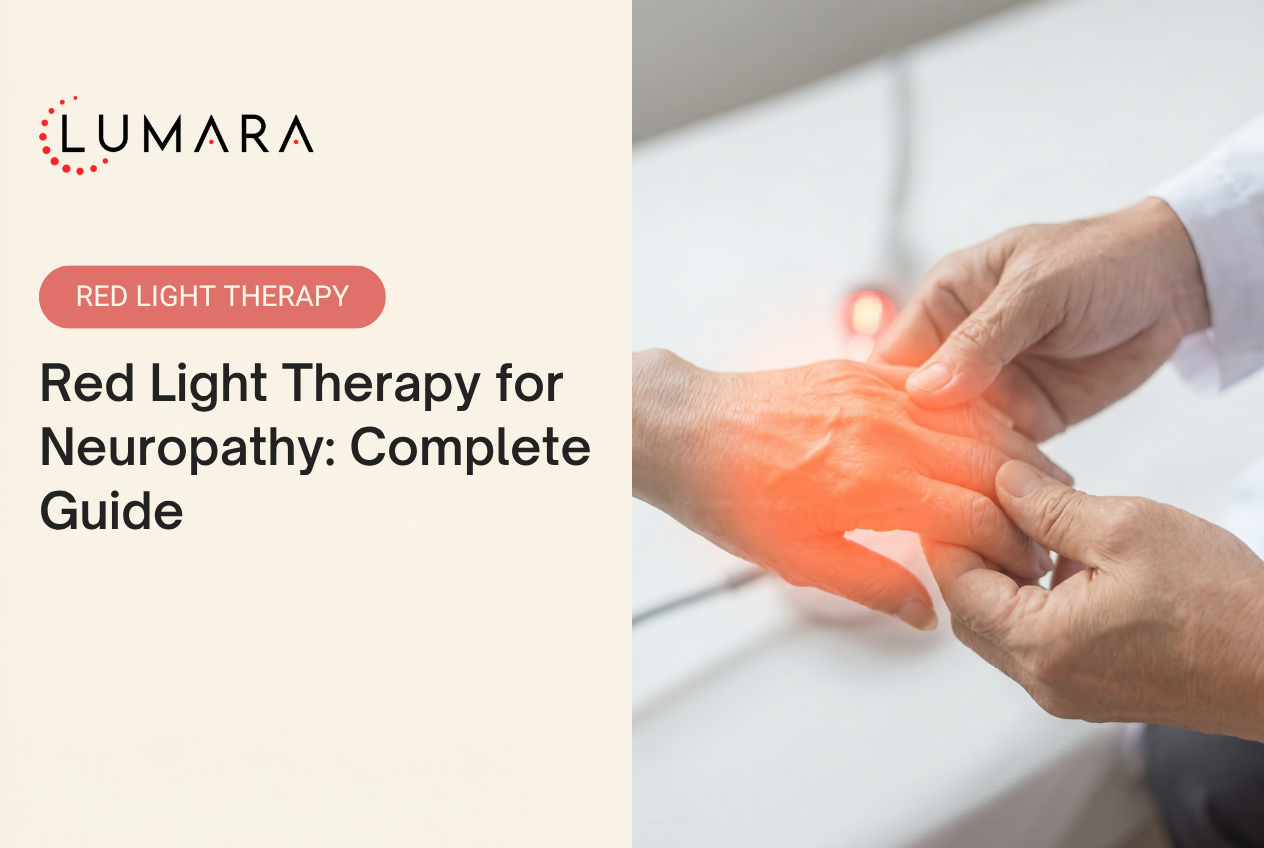
Hand arthritis - whether osteoarthritis or rheumatoid arthritis - produces a specific kind of pain that affects ordinary daily function: grip strength, finger mobility, morning stiffness, and the ability to perform tasks that most people do without thinking.
Red light therapy is used as a non-pharmaceutical adjunct for joint pain and inflammation, and there is a growing evidence base for its application to arthritis in the hands. This guide covers the clinical research, how to evaluate a glove or panel device, and what realistic results look like.
Key Takeaways
- Red light therapy at 660nm and 850nm near-infrared has clinical evidence supporting its use for hand arthritis as a complementary approach
- A 2024 meta-analysis of 22 studies found significant improvements in grip strength and morning stiffness in rheumatoid arthritis; pain reduction results were mixed
- The most relevant wavelength for deep joint tissue is near-infrared (around 850nm); red light (660nm) addresses surface inflammation
- Device quality and full-hand LED coverage are the most important buying factors
- Red light therapy works alongside medical care, not instead of it - inform your rheumatologist before starting
How Red Light Therapy Applies to Arthritis
At the cellular level, red and near-infrared light therapy works through a mechanism called photobiomodulation - specific wavelengths are absorbed by mitochondria in cells, supporting energy production and reducing inflammatory signaling.
For arthritic hands, the mechanism has three relevant pathways:
Anti-inflammatory effect: Red and near-infrared light suppress pro-inflammatory cytokines (TNF-α, IL-6, IL-1β) and promote anti-inflammatory IL-10. This addresses the chronic inflammatory environment that drives joint degradation in both rheumatoid and osteoarthritis.
Improved circulation: Light therapy increases nitric oxide availability in tissue, which supports vasodilation and improved blood flow to the joint area. Better circulation means faster delivery of nutrients and clearance of inflammatory mediators.
Pain signal modulation: Research suggests red light therapy reduces the activity of nerve fibers that transmit pain signals (Aδ and C fibers), contributing to reduced pain perception independently of the anti-inflammatory effect.
Red Light vs Near-Infrared for Joint Applications
| Wavelength | Penetration Depth | Primary Application |
|---|---|---|
| 660nm red | Red light can penetrate approximately 5–10 mm into the skin, depending on wavelength, power, exposure time, and tissue type | Surface inflammation, skin tissue |
| 850nm near-infrared | Near-infrared wavelengths are generally used when deeper tissue support is the goal | Joints, tendons, synovial tissue |
For hand arthritis specifically, near-infrared is the more directly relevant wavelength because finger joints sit at a depth where 660nm red light has limited penetration. A dual-wavelength device that combines 660nm and 850nm addresses both the surface inflammatory environment and the deeper joint tissue.
What the Research Shows
Rheumatoid Arthritis
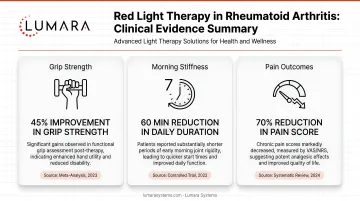
A 2024 meta-analysis of 22 studies examining low-level light therapy for rheumatoid arthritis found:
- Grip strength: Significantly improved across trials (statistically significant finding)
- Morning stiffness: Significantly reduced
- Pain: No significant reduction compared to placebo overall, though individual trials showed mixed results
The mixed pain findings likely reflect the complexity of rheumatoid arthritis - it is an autoimmune condition with variable progression, and pain in RA has multiple contributing factors. The functional improvements in grip and stiffness are the more consistent finding and are clinically meaningful for daily function.
Osteoarthritis
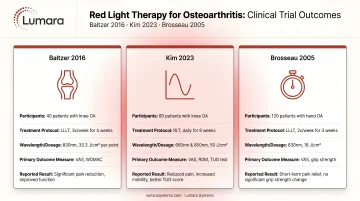
Evidence for hand osteoarthritis is more variable, with outcomes depending significantly on protocol specifics. Key trials include:
- Baltzer et al. (2016): Significant pain reduction and improved range of motion; effects persisted 8 weeks post-treatment
- Kim et al. (2023): Significant pain reduction at 4 and 6 weeks
- Brosseau et al. (2005): No significant pain or stiffness improvement; improved grip strength and joint opposition
The variability is consistent with what would be expected from an approach where dosimetry (wavelength, irradiance, session frequency) significantly affects outcomes. Protocols that closely match the parameters used in positive trials tend to produce better results.
Device Selection: Gloves vs Panels
Red Light Therapy Gloves
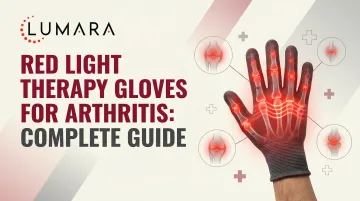
Purpose-built gloves deliver light directly to the hand surface through LED arrays embedded in the glove material. The key advantage is coverage - a well-designed glove can reach all finger joints simultaneously in a single session.
What to evaluate in a glove:
- LED distribution: Even coverage across fingers, knuckles, and palm - not just concentrated zones
- Wavelength specifics: Confirm exact nm (660nm + 850nm is the most relevant combination), not just "red light"
- Build quality: Daily hand use means frequent contact with moisture; splash-safe or water-resistant construction matters
- Regulatory status: FDA clearance (510k) is the most meaningful quality signal; FDA registration (facility listing only) is less meaningful
Flexible Pads for Hands and Joints
For users who want a device that serves hand arthritis alongside other body recovery applications (back, knee, shoulder), a flexible multi-wavelength pad offers more versatility than a dedicated glove.
Lumara's Pad is a flexible body-focused light therapy device using red, near-infrared, and far-infrared wavelengths across multiple available sizes. The 11 x 11" size is suited to hand and wrist coverage; larger sizes address broader body areas. Treatment guidance is 20-30 minutes, and it is designed for direct body-contact use.
The tradeoff vs a dedicated glove: a pad requires manual positioning over the hand area rather than a wrap-around fit, which may produce less consistent coverage across all finger joints. For users primarily targeting the back of the hand, wrist, and palm, pad positioning is straightforward. For full-finger coverage, a dedicated glove is more effective.
What Realistic Results Look Like
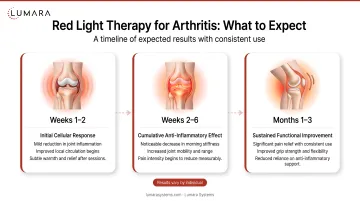
Weeks 1-2: Mild comfort improvements during and after sessions; some reduction in post-activity stiffness
Weeks 2-6: Reduced morning stiffness; improved ease of movement; many users notice improved grip flexibility in this window
Months 1-3: Improved grip strength and sustained joint flexibility; cumulative anti-inflammatory effect becomes more pronounced
Results vary significantly based on individual factors: severity and type of arthritis, protocol consistency, and whether underlying inflammatory drivers (in RA, immunosuppressant therapy status) are managed effectively.
Safety Considerations
Red light therapy is generally well-tolerated for arthritis applications. Mild transient warmth or redness at the treatment site is normal and resolves quickly.
Consult your doctor before starting if you:
- Take photosensitizing medications (certain antibiotics, some chemotherapy agents)
- Have active cancer at or near the treatment area
- Are pregnant
- Have implanted electronic devices near the treatment site
Red light therapy is used alongside, not instead of, prescribed arthritis treatments. Inform your rheumatologist or GP before adding it to your routine. For those exploring complementary warmth-based approaches, see our comparison of heat lamp and red light therapy.
Frequently Asked Questions
Does red light therapy help with hand arthritis?
Clinical evidence supports it as a complementary approach for both rheumatoid and osteoarthritis. The most consistent findings are improved grip strength and reduced morning stiffness in RA; osteoarthritis evidence is more variable. It works best alongside conventional medical care.
How long does it take to see results?
Initial improvements in comfort may appear within the first 1-2 weeks. More significant changes in stiffness, grip, and pain typically require 4-8 weeks of consistent use. Continuing for 2-3 months is recommended to assess full benefit.
Is red or near-infrared light better for arthritis?
Near-infrared (around 850nm) penetrates deeper and is more directly relevant for joint tissue. Red light (660nm) addresses surface inflammation. Dual-wavelength devices offering both are the most relevant format for hand arthritis.
How often should I use red light therapy for arthritis?
Most protocols recommend 3-5 sessions per week, 5-20 minutes per session. Daily use is well-tolerated and may accelerate initial progress. Consistency over weeks is more important than session length.
Can I use a panel instead of a glove for hand arthritis?
Yes. A flexible pad positioned over the hand and wrist can deliver therapeutic wavelengths effectively, though it requires manual positioning rather than the wrap-around fit of a glove. For users who also want to treat other body areas, a pad is more versatile.
A Practical Tool for a Difficult Condition
Hand arthritis does not have a simple fix. Red light therapy's value is in supporting the joint environment over time - reducing inflammatory load, improving circulation, and supporting tissue recovery - as part of a broader management approach.
For users who want a flexible light therapy option that covers hands alongside other recovery areas, Lumara's Pad - red, near-infrared, and far-infrared wavelengths, flexible format, multiple sizes - is built for exactly that use case.