Introduction
Bryan Johnson is one of the most documented self-experimenters in health optimization. His Blueprint Protocol involves dozens of daily interventions, and red light therapy is among the ones he consistently includes and publicly discusses.
For buyers researching red light therapy, Johnson's protocol is interesting not because of his celebrity status but because it is unusually specific: he documents what he uses, at what wavelengths, for how long, and why. This makes it a useful reference point for understanding how a serious practitioner approaches the category.
This guide covers what Johnson's protocol actually includes, what the underlying science supports, and how to apply those principles to a practical home routine.
Key Takeaways
- Bryan Johnson uses red light therapy as part of a multi-layered daily wellness protocol targeting skin, hair, muscle recovery, and cognitive performance
- His approach is distinguished by wavelength specificity and session structure - not just general "red light use"
- The science supporting red light therapy covers skin collagen, inflammation reduction, cellular energy, and tissue repair
- The most important variables for results are wavelength accuracy, irradiance, consistency, and whether the device format matches the treatment goal
- For buyers: the principles Johnson applies - verified wavelength, appropriate irradiance, consistent sessions - are more transferable than the specific brands he uses
What Bryan Johnson's Red Light Protocol Includes
Johnson's publicly documented protocol includes red light therapy as part of his broader Blueprint routine, including full-body red light sessions and a red light therapy cap used in his hair-care routine. Beyond the exact devices, the useful takeaway is his emphasis on consistency, targeted formats, and matching the device to the goal.
The Four Applications and Their Evidence Base
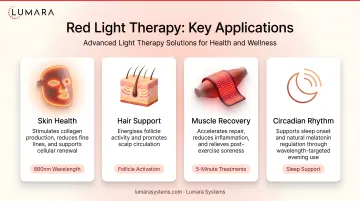
Skin and Collagen
660nm red light has the strongest evidence base for skin applications. With a properly powered red light system, some users may notice early changes in radiance or skin feel after just a few treatments, while deeper tone, texture, and collagen-related improvements build with consistent use. The mechanism involves supporting fibroblast activity - the cells responsible for collagen production.
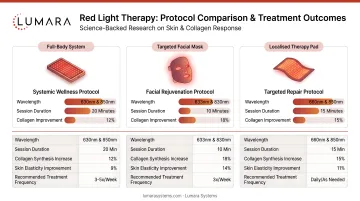
Johnson targets this specifically because skin aging is one of the most measurable and trackable aspects of his broader age-reversal focus.
Hair and Scalp
Low-level red light therapy in the 630-670nm range has published evidence for supporting hair follicle activity and slowing progression in certain hair loss conditions. Johnson incorporates scalp-targeted red light as part of his comprehensive health maintenance approach.
Muscle Recovery and Performance
Near-infrared wavelengths (830-850nm) penetrate deeper than red light and are used in exercise recovery contexts. Research shows reduced delayed onset muscle soreness (DOMS) and faster recovery of strength and performance metrics with pre- and post-exercise photobiomodulation.
Circadian and Sleep Quality
Red light in the evening does not suppress melatonin production the way blue-enriched light does. Johnson uses red light exposure as part of his evening wind-down routine, replacing blue-light sources to support circadian rhythm maintenance - one of the more evidence-backed practical applications of red light in daily life.
What Actually Determines Results
Johnson's protocol is notable for its specificity. The principles that make it effective are transferable:
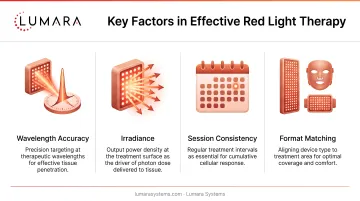
Wavelength accuracy: Each application uses the wavelength most supported by research for that specific goal. 660nm for skin and hair, 850nm for deep tissue, red light for circadian support. Generic "red light" devices that do not specify wavelength are less reliable because actual output may differ significantly from claimed output.
Irradiance at treatment distance: The amount of light energy reaching the treatment area determines whether the dose is therapeutically relevant. Higher irradiance at an appropriate distance means shorter sessions; lower irradiance requires longer sessions to deliver the same dose. Johnson uses devices at the irradiance levels that match the research protocols.
Session consistency: Red light therapy effects are cumulative. Johnson's daily protocol produces results because sessions are consistent - not because individual sessions are long or intense.
Format matching the application: A facial device has different geometry requirements than a full-body panel. Johnson uses purpose-appropriate formats for each application.
How to Apply These Principles Without Johnson's Budget
Johnson's protocol involves multiple specialized devices and significant daily time commitment. Most buyers cannot or do not want to replicate it exactly. The principles, however, scale down effectively:
Start with the application that matters most to you. Skin and facial collagen support is the most accessible entry point, with the most documented consumer evidence. A 660nm mask or panel used 4-5 times per week is a straightforward starting point.
Prioritize verified wavelength over low price. A device that claims 660nm but delivers light at 640nm or 680nm is not producing the same effect. The difference between verified and unverified wavelength output is significant.
Treat it like a skincare routine, not a treatment. The results that Johnson and the research document come from consistent daily or near-daily use over months - not periodic use.
Which Lumara Format Fits This Approach
For buyers looking to implement the core of Johnson's approach - precision 660nm red light for facial and skin wellness, with broader coverage capability - Lumara offers two relevant formats:
VISO LED Mask: 660nm, 470 micro-LEDs, triple-verified wavelength, FDA cleared. Dedicated facial mask for face-first skin routines. Best for users whose primary goal is facial skin wellness and who want the consistent LED-to-skin contact of a mask format.
Illuminate V2: 660nm, 1,800 LEDs, 1,200 cm2, 5-minute sessions, splash-safe, listed by Lumara as FDA-cleared. Panel format that works for facial use and broader body areas. Best for users who want one device that handles multiple treatment areas.
Frequently Asked Questions
What red light therapy device does Bryan Johnson use?
Johnson uses multiple devices targeting different applications: a facial device, a scalp device, and a full-body panel, each selected for the specific wavelength and irradiance relevant to that application. He documents these in his Blueprint protocol, though the specific brands change as he tests new products.
Does Bryan Johnson's red light protocol work?
The individual components of Johnson's protocol - 660nm for skin, near-infrared for muscle recovery, red light for circadian support - have evidence bases from independent research. The protocol works because it applies the right wavelengths consistently, not because of any proprietary effect.
What wavelengths does Bryan Johnson use for red light therapy?
His protocol uses 660nm red light for skin and facial applications, near-infrared (around 850nm) for deeper tissue and recovery applications, and red wavelengths in the evening for circadian support.
How long are Bryan Johnson's red light therapy sessions?
Session lengths vary by application, typically 5-20 minutes per device. His overall protocol involves multiple short sessions throughout the day rather than one long combined session.
Can I replicate Bryan Johnson's results with a single device?
You can replicate the core skin wellness benefit of his protocol with a single 660nm device used consistently. The full multi-application protocol requires multiple devices targeting different body areas and goals, but most users do not need all components simultaneously.
Is red light therapy worth it for everyday users?
For consistent, long-term use with a quality device at the right wavelength, yes. Many users begin noticing improved radiance and overall skin appearance within 1-2 weeks of consistent use, while deeper tone, texture, and collagen-related improvements build with continued use. Johnson's protocol is an extreme example, but the underlying science is accessible at consumer scale. For guidance on safe use, see red light therapy and eye safety.
The Principle Is Simple. The Execution Is What Matters.
Johnson's protocol is impressive in its specificity and commitment, but the underlying principle is straightforward: use the right wavelength for each application, at the right irradiance, consistently enough for the cumulative effect to build.
Lumara's Illuminate V2 - 660nm, 1,800 LEDs, verified wavelength, 5-minute sessions, listed by Lumara as FDA-cleared - applies those principles in a practical panel format built for daily use.