Introduction
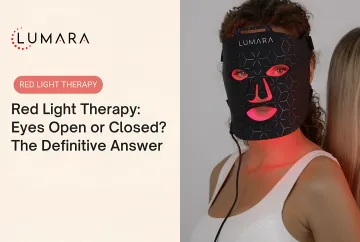
One of the most common practical questions about red light therapy: should your eyes be open or closed during a session?
The answer is straightforward: eyes should be closed, and for facial mask use or any session near the face, proper light-blocking eye protection should be used. This guide explains why, what eye protection is required, and what happens if you skip it.
Key Takeaways
- Eyes should always be closed during red light therapy sessions
- For facial masks and any device near the face, eyes-closed alone is not sufficient - light-blocking eye inserts or protective goggles are required
- The retina is sensitive to prolonged direct light exposure and has no pain receptors to signal overexposure
- Consumer-level LED devices used safely for face and body are not ophthalmically dangerous with proper protection - the risk is from misuse (unprotected direct exposure)
- Eye inserts or approved phototherapy goggles rated for the wavelength being used are the correct protection
Why Eye Protection Is Required
The Retina Has No Pain Receptors
Unlike skin, which produces pain from excessive heat or light exposure, the retina does not signal discomfort during overexposure. The retina is sensitive to bright or prolonged light exposure, and discomfort is not a reliable guide to safe exposure. That is why direct, unprotected exposure during facial red light sessions should be avoided.
This is why "it doesn't feel uncomfortable" is not a reliable safety indicator for retinal exposure.
The Cumulative Exposure Problem
Red light at 660nm and near-infrared at 850nm are non-ionizing and non-UV. They do not carry the acute burn risk of UV light. However, cumulative exposure to bright visible or near-infrared light at the retina - even at consumer device irradiance levels - carries risk over repeated sessions.
Because exposure risk depends on wavelength, irradiance, distance, and duration, eye protection is the safer default for any facial or near-eye session. Studies on photobiomodulation safety note that the eye is the most sensitive organ to light exposure.
What Eye Protection to Use
For Facial LED Masks
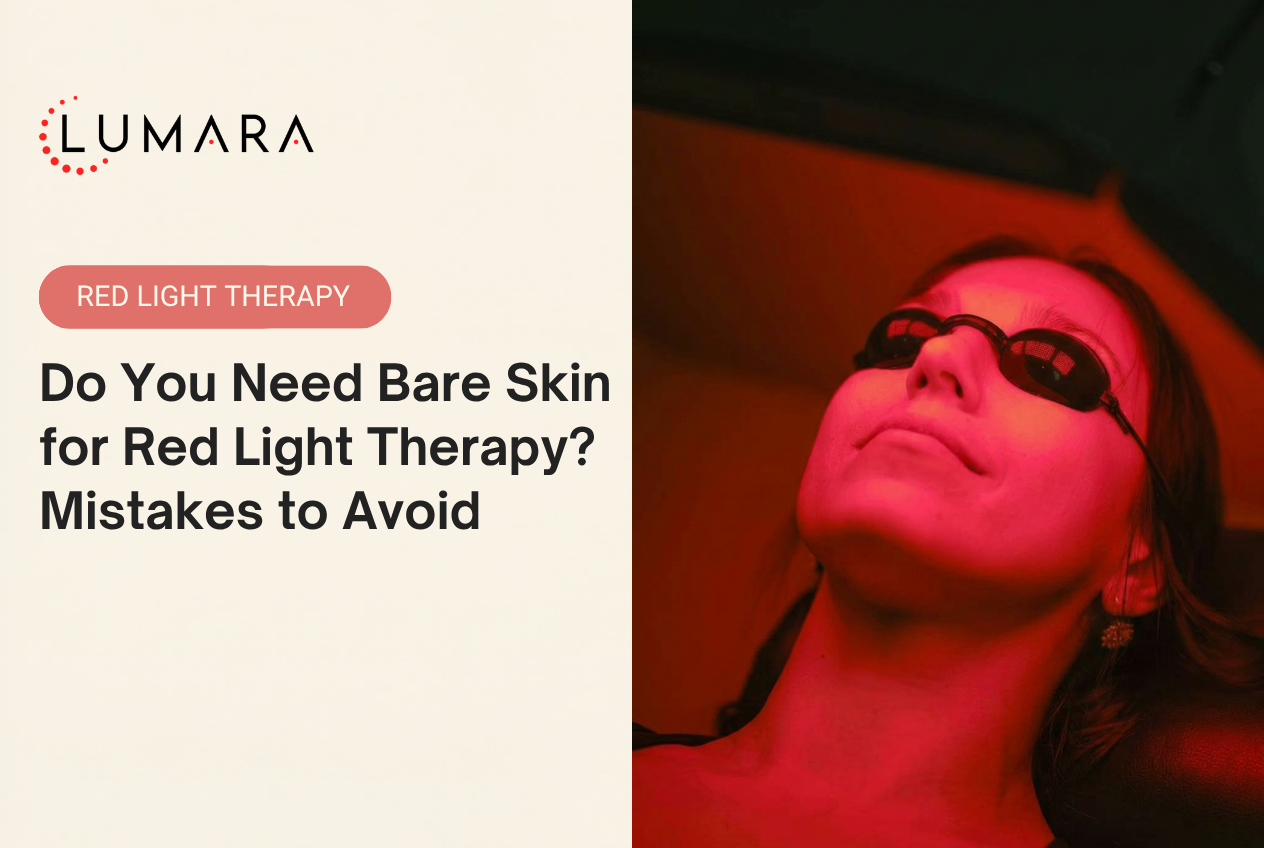
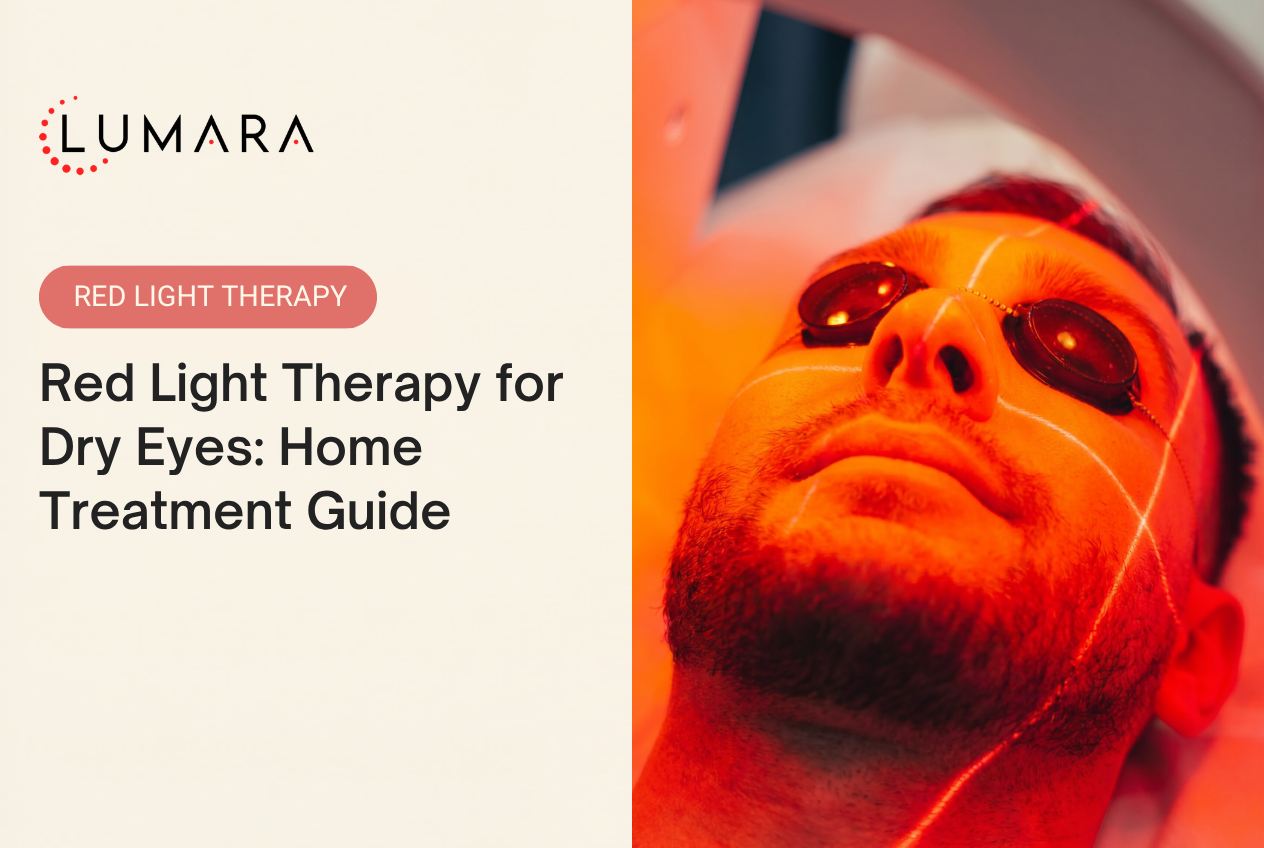
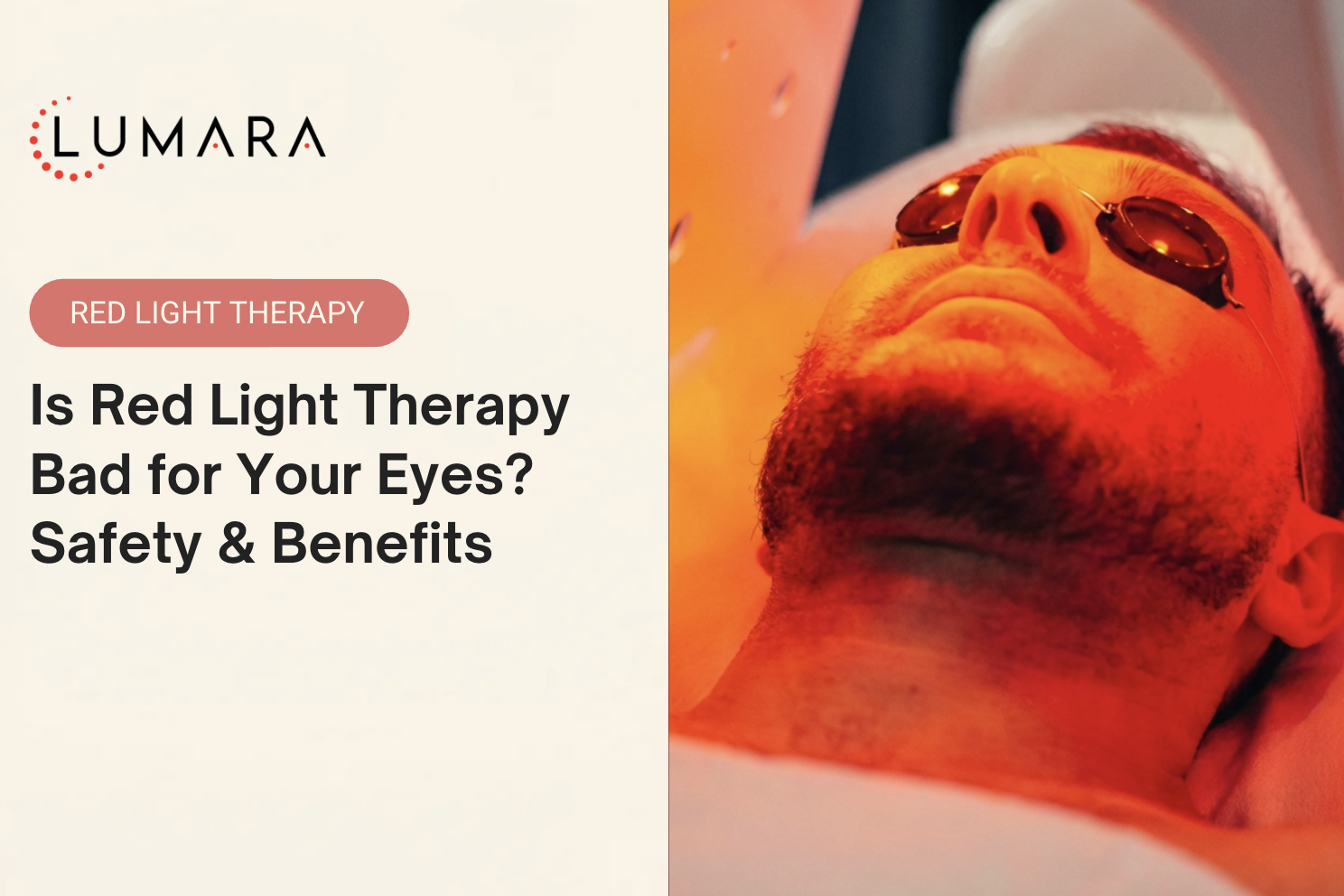
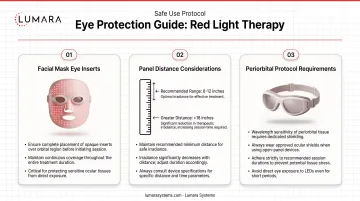
Facial LED masks should include dedicated eye inserts - opaque or light-blocking silicone or plastic inserts that fit over the eyes to physically block light from reaching the retina.
Lumara's VISO LED Mask includes eye inserts as a standard included item. These are sized and shaped for the VISO's 10" x 7" oval format and position correctly over the eye area.
Using a mask without the included eye inserts is unsafe. The closed-eyelid position alone does not block sufficient red and near-infrared light at the irradiance levels produced by facial masks.
For Panels and Pads
For body-facing panels used for back, legs, or other non-facial areas, eye exposure is typically not a concern when the device is not near the face.
For any panel session that involves the face or head being within the panel's light field:
- Position the panel so light does not reach the eye area, or
- Use appropriate phototherapy goggles
For Devices Used Around the Eye Area
For any periorbital use where a device is positioned near the eye area:
- Closed eyes with dedicated eye inserts
- Ensure the inserts block the specific wavelengths being used
- Do not use fashion or sunglasses as substitutes - they may not block all relevant wavelengths at the intensities involved
Common Misconceptions
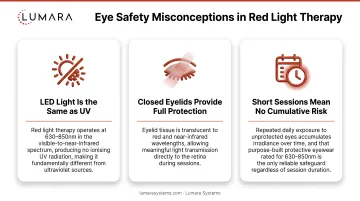
"LED red light is not harmful because it's not UV": Correct that it's not UV, but prolonged direct retinal exposure to bright red or NIR light carries its own risks independent of UV.
"Closing my eyes is enough": For casual body-area panel use where eyes are not in the light field, this is fine. For facial masks directly over the eye area, eyelids alone do not provide sufficient protection.
"I've been using it without inserts and nothing has happened": Retinal effects from cumulative exposure may not produce symptoms until damage has accumulated. The absence of immediate discomfort is not a reliable safety indicator.
"The device is low power": Consumer devices are lower power than clinical devices, but the key variable is irradiance at the retina - which depends on proximity to the device, not just device power output. Facial masks are positioned very close to the eye area.
Frequently Asked Questions
Should eyes be open or closed during red light therapy?
Always closed. For facial masks and any device positioned near the face, eyes-closed plus light-blocking eye inserts or phototherapy goggles are required.
Can red light therapy damage eyes?
Unprotected direct eye exposure during facial mask sessions carries retinal risk from cumulative exposure. With appropriate eye inserts used as directed, consumer facial LED devices are designed to be used more safely around the eye area.
What eye protection do I need for red light therapy?
For facial masks: the dedicated eye inserts included with the device. For panels near the face: distance positioning or approved phototherapy goggles. Fashion eyewear or standard sunglasses are not appropriate substitutes.
Are the eye inserts included with the VISO effective?
Yes. Lumara's VISO LED Mask includes eye inserts designed for the device's 660nm output and session parameters. Use them in every session - they are included for this reason.
What happens if I use a red light therapy mask without eye protection?
Repeated sessions without proper eye protection can accumulate retinal exposure. Because the retina has no pain receptors, damage may not be apparent until symptoms develop. Use eye inserts in every session, without exception.
The Rule Is Simple: Protect Your Eyes Every Session
Eyes should be closed during red light therapy. For any device near the face, proper eye inserts or goggles are required in every session without exception.
Lumara's VISO LED Mask - 660nm, 470 micro-LEDs, FDA cleared - includes eye inserts as standard. They are there to be used, not stored. For a comparison of home versus clinic red light therapy, see the full guide.