Introduction
Dry eye syndrome affects roughly 8% of Americans and up to 50% of the global population in some regions, making it one of the most common eye conditions worldwide. Yet most sufferers rely on artificial tears that mask symptoms without addressing the underlying problem.
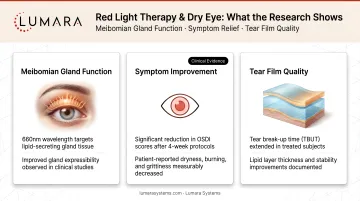
The real culprit? Meibomian gland dysfunction (MGD) drives more than 80% of dry eye cases, not a lack of tears.
Red light therapy—also called photobiomodulation or low-level light therapy (LLLT)—is gaining attention as an at-home option that targets the root cause: inflamed, blocked meibomian glands that fail to produce the oils needed for a healthy tear film.
At home, results depend on getting four things right:
- Device quality — wavelength accuracy matters more than price
- Treatment consistency — frequency and duration drive outcomes
- Proper technique — distance, eye position, and safety precautions
- Realistic expectations — what red light can and can't fix
This guide walks through each one.
TL;DR
- Red light therapy at 660nm targets meibomian glands to reduce inflammation and improve tear film quality
- Plan for 5–15 minute sessions consistently over 3–4 weeks before results become noticeable
- Device quality, wavelength accuracy, positioning, and eye safety all determine how well treatment works
- RLT works best as part of a broader dry eye routine, not as a standalone fix
- Consult an eye care professional if symptoms are severe, worsening, or not improving after consistent use
How to Use Red Light Therapy for Dry Eyes at Home
Step 1: Prepare Your Eyes and Skin
Clean your eyelids and lash line thoroughly before treatment. Residue from makeup, oils, or debris blocks light penetration and irritates the eye area. Use a gentle, preservative-free lid cleanser or warm damp cloth.
Remove contact lenses before each session. Contacts may concentrate heat or refract light in ways that irritate the eye.
Perform a brief warm compress (2–3 minutes) before treatment to begin softening meibomian gland secretions and prime the glands for deeper light penetration.
Step 2: Set Up Your Device Correctly
Before starting, confirm these three setup points:
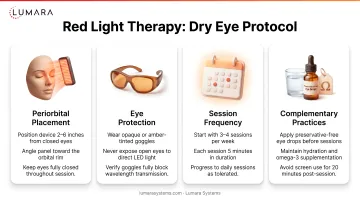
- Distance: Position the panel 6–12 inches from your closed eyelids (check your device's manual). Light intensity follows the inverse square law — double the distance and energy delivery drops by roughly 75%.
- Angle: Point the device at the upper cheekbone and lower eyelid area, not directly at the open eye. Keep your eyes closed throughout the session.
- Wavelength: Set the device to 660nm mode if adjustable — the clinically studied range for periocular tissue and meibomian gland stimulation.
Step 3: Run the Session and Express the Glands
Begin with eyes fully closed. A 5–15 minute window is sufficient for most at-home devices calibrated for periocular use. Clinical trials typically use 15-minute sessions for measurable results.
Do not move or adjust the device mid-session. Maintain consistent distance and angle so light exposure is even across both upper and lower eyelids.
After the session ends, gently massage your closed eyelids (downward sweep on upper lids, upward sweep on lower lids) for 30–60 seconds. This expresses the softened gland oils, combining the thermal and photobiomodulation effects for better results.

Step 4: Post-Treatment Care and Tracking
Apply preservative-free artificial tears immediately after treatment to lubricate the eye surface and support improved tear film stability.
Track each session using these four data points:
- Date and duration of the session
- Distance from device to eyelids
- Any symptoms noticed (dryness, irritation, improvement)
- Artificial tears used before or after
Reinsert contact lenses only after waiting at least 15–20 minutes post-session. Most users notice measurable symptom changes within 2–4 weeks of consistent sessions.
What You Need Before Starting
Starting with the right device and a clear safety checklist makes the difference between effective treatment and wasted effort — or worse, harm. Wrong wavelengths, skipped precautions, and misunderstood specifications are the most common reasons at-home protocols fail.
Equipment Requirements
Two specifications matter most when selecting a device for periocular use:
- 660nm wavelength output — broad-spectrum white light panels or devices calibrated for body use deliver incorrect wavelengths for the eye area. Panels built specifically around 660nm accuracy (such as Lumara Systems' splash-safe panels) are better suited for near-eye sessions.
- Safe irradiance for near-eye use — the device should specify mW/cm² output. Clinical trials have used 35–100 mW/cm² at the corneal plane with eyes closed.
Safety Readiness
Consult an eye care professional before starting if you have:
- A history of retinal conditions
- Photosensitivity disorders
- Recent eye surgery
- Photosensitizing medications (lithium, phenothiazine antipsychotics, certain antibiotics)
These can be contraindications for near-eye light therapy.
Ensure you understand that the eyes must remain closed during all periocular red light sessions. No at-home device should be aimed at open eyes.
Key Parameters That Affect Results
Home red light therapy for dry eyes is not "one size fits all." Outcomes depend on four controllable variables that every user needs to understand and manage.
Wavelength (nm)
660nm red light has the strongest evidence base for stimulating mitochondrial activity in periocular tissue and reducing meibomian gland inflammation. It targets cytochrome c oxidase in superficial eyelid tissues, boosting ATP production and reducing oxidative stress. Near-infrared wavelengths (800–900nm) penetrate deeper but have less studied efficacy for the eyelid area specifically — meaning an 850nm NIR-only panel may deliver energy that bypasses the target tissue entirely.

Treatment Duration and Frequency
Clinical studies suggest 2 to 4 sessions per week for 3 to 4 weeks before measurable symptom improvements appear. Both under-treatment and over-treatment are common mistakes:
- Skipping sessions interrupts the light-cell signaling cycle before cellular changes can accumulate
- Excessively long sessions don't accelerate results and may cause periocular skin irritation
- Inconsistent spacing between sessions (e.g., five days between treatments) reduces cumulative effect
Distance from the Target Area
Most home devices are calibrated for a specific distance range. Sitting too far drops therapeutic irradiance below the effective threshold; sitting too close risks overheating the eyelid skin. Because of the inverse square law, even a few inches of variance can cut delivered energy significantly. Wearable LED masks that sit directly on the face solve this by ensuring consistent energy delivery without the guesswork.
Eye Closure and Device Angle
The meibomian glands run along the upper and lower eyelid margins, so the device must be angled to cover the full eyelid — not just the brow or cheekbone. Poor positioning means the glands don't receive adequate exposure even when wavelength, duration, and distance are all correct. Downward-angled positioning toward closed lids is the target.
When Should You Use Red Light Therapy for Dry Eyes?
Red light therapy works best for people with mild-to-moderate dry eye driven by meibomian gland dysfunction (evaporative dry eye). The conditions below are where it fits most naturally into a daily routine.
Ideal Use Cases
- Chronic low-grade dry eye with symptoms like burning, grittiness, and fluctuating vision
- Dry eyes worsened by screen time
- People seeking a drug-free maintenance routine between professional treatments
- Those who have already undergone in-office procedures (IPL, LipiFlow) and want to sustain results at home
That said, some situations call for professional evaluation rather than a home device.
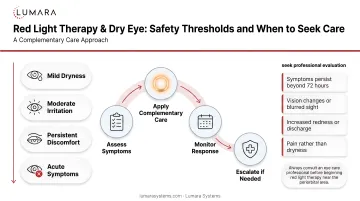
When to Pause and See a Doctor Instead
- Sudden worsening of symptoms
- Eye pain or significant vision changes
- Discharge or redness that doesn't resolve
- Dry eye associated with autoimmune disease (Sjögren's syndrome)
Each of these warrants a clinical evaluation before continuing home treatment (PMC clinical review).
Common Mistakes and How to Avoid Them
Even a well-chosen device delivers poor results if the protocol breaks down in practice. These are the most common errors — and how to sidestep them.
Choose the Right Device
Many users purchase general-purpose red light therapy panels designed for the face or body. These are not calibrated for the eyelid area and may deliver wavelengths or irradiance levels that are ineffective or unsafe near the eyes. Always choose a device specifically designed for periocular or eye-area application.
Set Realistic Expectations and a Consistent Schedule
Red light therapy works through cellular and mitochondrial mechanisms that accumulate over weeks. Users who stop after two or three sessions due to "no results" are quitting before the therapeutic window opens. Most clinical improvements appear after 3–4 weeks of consistent use.
Sporadic treatment — once every couple of weeks — doesn't allow photobiomodulation effects to build. Treat it as a daily hygiene habit, not an occasional experiment.
Quick Prep Mistakes to Avoid
These smaller errors are easy to overlook but consistently undermine results:
- Skip lid cleaning or leave contacts in: Reduces light penetration and raises irritation risk. Clean eyelids take under two minutes and make a measurable difference.
- Treat with eyes open: Eyes must stay closed throughout every session. Sunglasses and regular glasses don't provide sufficient protection for near-eye use.
- Rely on irregular timing: A sporadic schedule prevents the cumulative photobiomodulation response from building. Consistency matters more than session length.

Other Dry Eye Treatments to Pair With Red Light Therapy
Red light therapy works best as part of a layered dry eye management routine, not in isolation. These three approaches pair particularly well with it.
Warm Compresses and Lid Massage
Apply a warm compress for 5-10 minutes immediately before your RLT session to prime the meibomian glands, then follow with lid massage afterward to express the oil released by the combined heat-and-light treatment. The sequence matters: each step builds on the last.
Used alone, compresses produce weaker and shorter-lasting effects on gland function. Combining them with RLT creates a more durable result than either provides on its own.
Omega-3 Supplementation
Omega-3 fatty acids (from fish oil or flaxseed) reduce systemic inflammation and improve meibomian gland oil quality from the inside out. RLT works externally on the same glands — together, they address the condition from two directions at once.
The catch: omega-3 benefits build over weeks to months and require consistent daily intake. Think of them as the long-game complement to RLT's more direct gland stimulation.
The 20-20-20 Rule and Screen Habit Adjustments
Every 20 minutes of screen use, look at something 20 feet away for 20 seconds. This simple habit reduces blink rate suppression — the main driver of tear film evaporation during prolonged screen time.
Where this pairs well with RLT: the two work on different parts of the problem. Screen breaks address evaporative triggers but don't restore gland function; RLT targets the glands directly. Skipping either leaves a gap in the routine.
Practical ways to build the habit:
- Set a phone timer or use a browser extension that prompts breaks
- Place a sticky note at eye level as a visual reminder
- Pair the 20-second break with a full, deliberate blink to reset the tear film
Conclusion
Red light therapy at home is a clinically grounded, practical approach to dry eye relief when applied correctly. The right wavelength (660nm), consistent sessions, proper device positioning, and clean eyelid prep are the non-negotiables that separate users who see results from those who don't.
Pairing RLT with complementary habits—warm compresses, omega-3s, screen breaks—builds a more complete dry eye routine than any single treatment can deliver on its own. If symptoms persist or worsen despite consistent effort, see an eye care professional to rule out underlying conditions that home therapy can't address.
Frequently Asked Questions
Does red light therapy at home help with dry eyes?
Yes, clinical studies on LLLT/photobiomodulation show it can reduce eyelid inflammation and improve meibomian gland function. Results depend on device wavelength accuracy (660nm), session consistency, and proper technique. In-office LLLT results are well-documented, and at-home devices approximate these effects when used correctly.
What is the number one treatment for dry eyes?
There is no single universal answer — it depends on the type. For evaporative dry eye (MGD-driven), meibomian gland-targeted therapies like warm compresses, IPL, and LLLT are most effective. For aqueous-deficient dry eye, tear retention and stimulation therapies take priority. An eye care provider can identify which approach fits your case.
What is the 20 20 rule for dry eyes?
The 20-20-20 rule means every 20 minutes of screen use, you should look at something at least 20 feet away for 20 seconds. This resets blink rate and reduces tear film evaporation — making it a useful complement to RLT treatment.
How often should you do red light therapy for dry eyes at home?
Clinical recommendations typically suggest 2 to 4 sessions per week during an initial phase of 3–4 weeks, then tapering to maintenance. Following device-specific guidelines is important, as irradiance levels vary between devices.
Is red light therapy safe to use near the eyes?
Periocular red light therapy is considered safe when used with eyes closed, at a device calibrated for near-eye use, at the correct distance, and in the absence of contraindications like photosensitizing medications or retinal conditions. If any of those contraindications apply to you, check with an eye care provider before starting.
How long does it take to see results from red light therapy for dry eyes?
Most clinical studies report measurable symptom improvements after 3–4 weeks of consistent treatment. Individual results vary based on dry eye severity, device quality, and how consistently the protocol is followed.