Introduction
Red light panel or LED mask? Both deliver 660nm red light to skin. The format determines coverage geometry, LED-to-skin contact, session convenience, and what body areas you can actually treat. The choice comes down to your primary application.
Key Takeaways
- LED masks maintain consistent LED-to-skin contact across the full face; panels require maintaining a consistent distance
- Panels cover a larger area per session and can treat both facial and body areas; masks are dedicated facial devices
- The most important variable is whether your primary goal is facial skincare only, or broader coverage including body areas
- Lumara's VISO LED Mask is built for daily facial skincare routines; Illuminate V2 panel is built for broader 660nm coverage and flexible multi-area use
- Wavelength accuracy, coverage consistency, and session practicality are the decision criteria - not just format preference
- For a deeper look at how wavelength affects skin, see red light therapy wavelength and skin
How Masks Work
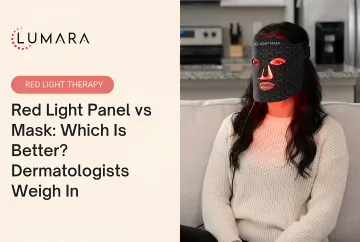
An LED face mask sits directly on the face. The LEDs are positioned across the mask surface to cover the forehead, cheeks, nose, chin, and perioral area simultaneously. Every treatment area receives light at the same time in the same session.
Key characteristics:
- Consistent LED-to-skin proximity maintained by the mask geometry
- Full-face coverage in every session without repositioning
- Fixed to the facial application - cannot be used for body areas
- Session is hands-free while wearing
Best for: Consistent daily facial skincare routines where full-face, even coverage is the priority. For documented LED mask results, see the dedicated guide.
How Panels Work
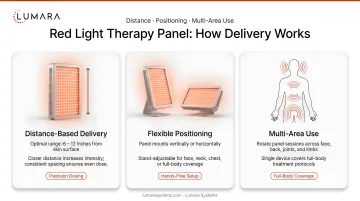
A panel is positioned at a distance from the body (typically 6-12 inches) and illuminates the treatment area from that distance. The user positions themselves in front of the panel for the session.
Key characteristics:
- Requires maintaining correct distance for consistent irradiance
- Can cover both facial and body areas by repositioning between or across sessions
- Larger coverage area per session possible with larger panels
- More flexible for multi-area use
Best for: Users who want one device for facial skincare and body applications, or broader skin coverage beyond the face. Panels that include near-infrared wavelengths also support deeper tissue applications.
The Practical Tradeoffs
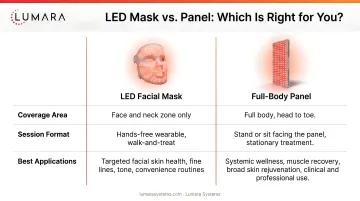
| Factor | LED Mask | Panel |
|---|---|---|
| Coverage | Full face, simultaneous | One area at a time (repositionable) |
| LED-to-skin distance | Consistent (mask geometry) | User-maintained at recommended distance |
| Body area use | Face only | Face + body areas |
| Session format | Wear the mask | Position in front of panel |
| Portability | Highly portable | Varies by panel size |
| Best for | Dedicated facial routines | Broader or multi-area coverage |
How Lumara's VISO and Illuminate V2 Map to This
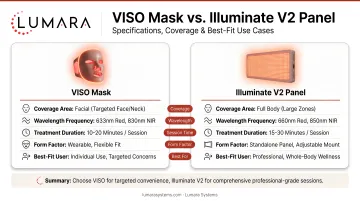
VISO LED Mask - Lumara's dedicated facial mask:
- 660nm wavelength, triple-tested
- 470 micro-LEDs
- 30 mW/cm² optical peak power
- 10" x 7" oval - full-face coverage
- Treatment guidance: 5-20 minutes
- FDA cleared, Class II medical device
- Includes eye inserts, travel bag
Best for: Consistent daily facial skincare routine where full-face even coverage is the primary goal.
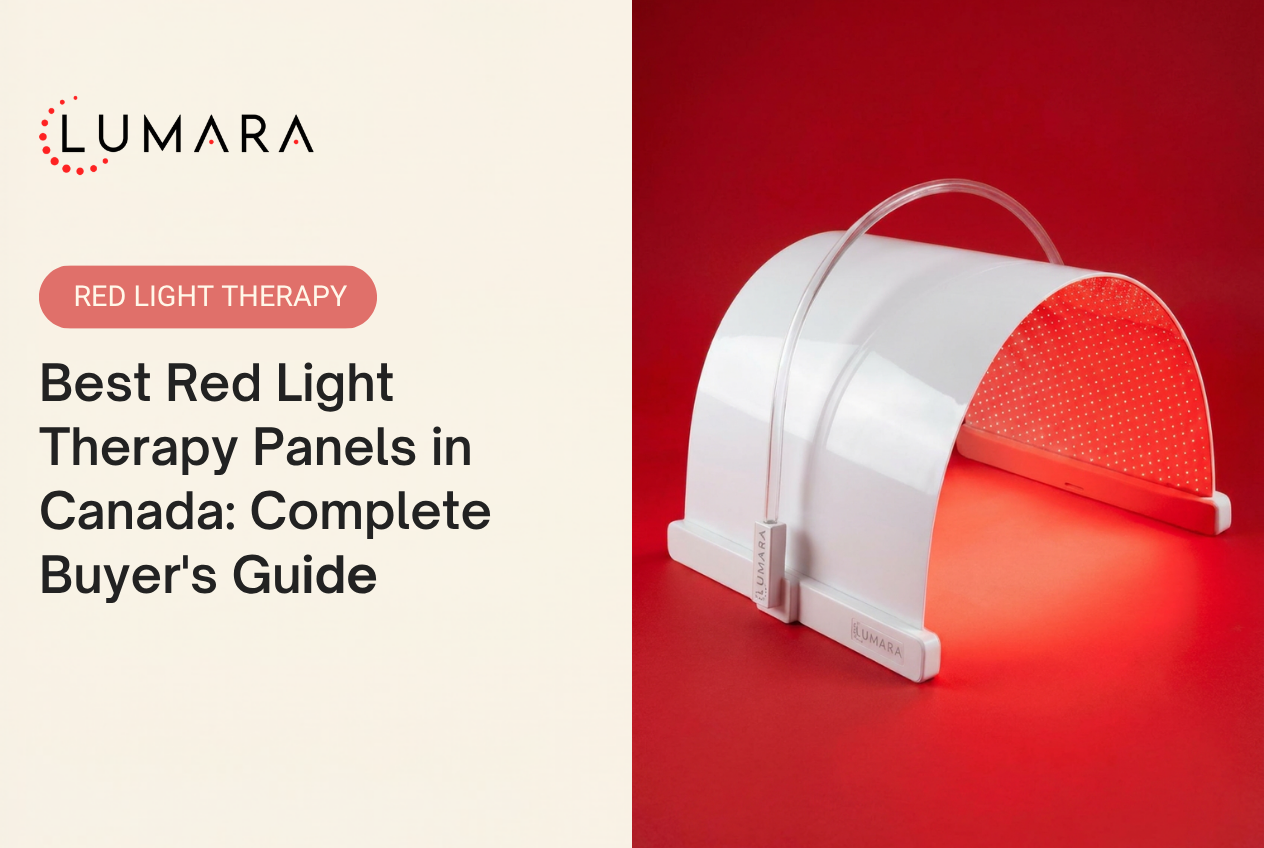
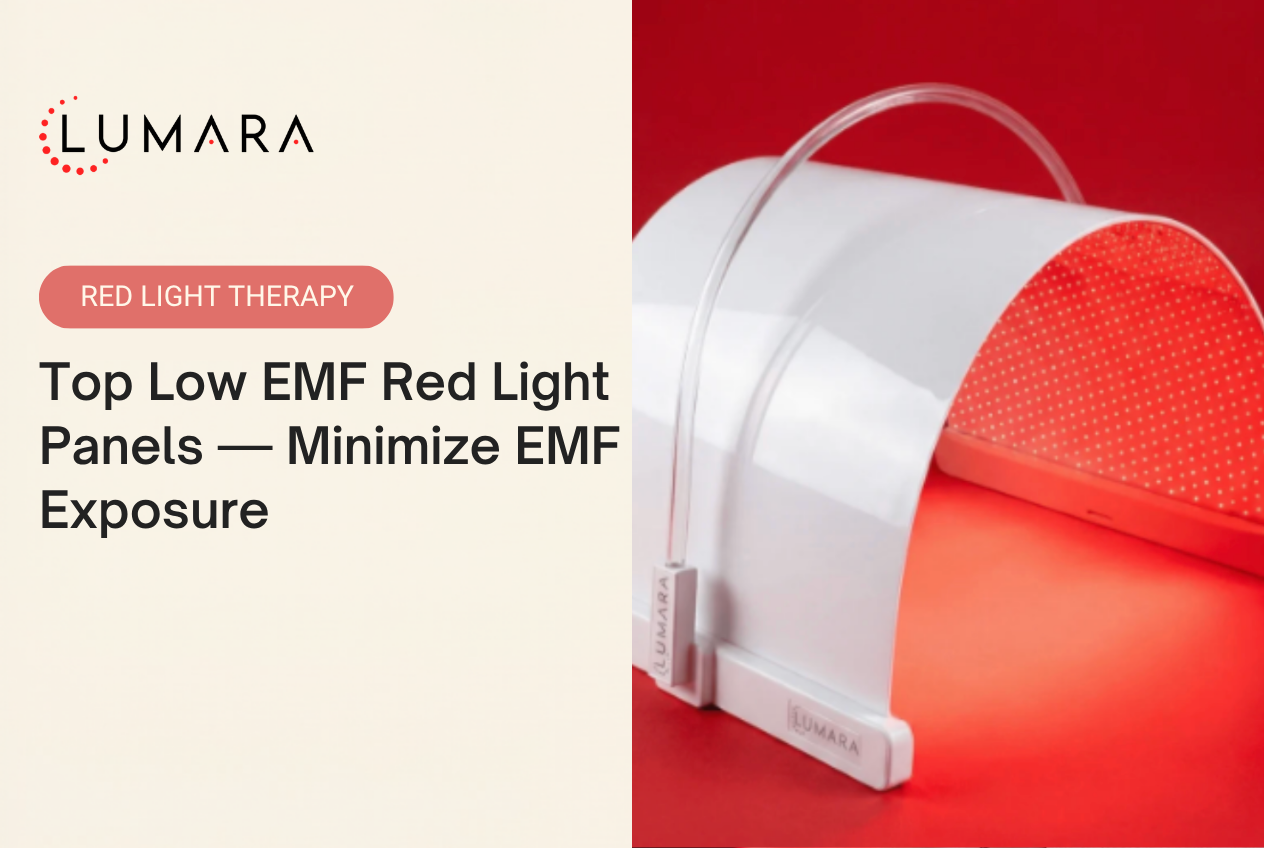
Illuminate V2 - Lumara's 660nm panel:
- 660nm wavelength, triple-tested
- 1,800 LEDs
- 1,200 cm² coverage area
- Treatment guidance: 5 minutes
- Splash-safe build
- FDA cleared
- Can be used for face and body areas
Best for: Users who want broader 660nm coverage, want to treat both facial and body areas with one device, or prefer a panel session format.
Which Format Fits Which User
Choose VISO (mask) if:
- Your primary and main goal is facial skincare
- You want the most consistent full-face LED coverage
- A dedicated facial device that fits into your morning or evening routine is what you want
- Portability and travel convenience matter
Choose Illuminate V2 (panel) if:
- You want one device that covers both facial and body areas
- Neck, chest, back, or other body areas are part of your treatment goals
- You prefer the flexibility to reposition the device across different areas
- You want a sauna-compatible format
- For users who want flexible face-and-body red light coverage, a panel is the more suitable format
Consider both if:
- Dedicated facial skincare coverage AND broader body coverage are both priorities
- VISO for daily face-first routines; Illuminate V2 for broader body sessions
Frequently Asked Questions
Is a red light panel or LED mask better for skin?
Both deliver 660nm light for skin applications. A mask maintains consistent facial coverage; a panel offers more flexibility for both facial and body use. For dedicated facial skincare, a mask offers more consistent geometry. For multi-area use, a panel is more versatile.
What is the difference between a red light mask and a panel?
A mask sits on the face, maintaining consistent LED-to-skin proximity. A panel is positioned at a distance and illuminates from outside. Masks are face-only; panels can cover face and body areas.
Can I use a red light panel on my face?
Yes. Panels used at the correct distance (typically 6-12 inches) deliver red light to the face effectively. The tradeoff versus a mask is that you must maintain consistent distance manually, and coverage may not be as geometrically even across all facial areas.
What wavelength do Lumara's VISO and Illuminate V2 use?
Both use 660nm red light, triple-tested for wavelength accuracy. The difference is format (mask vs panel) and coverage area, not wavelength.
Format Determines Fit
The right format comes down to your primary goal. For dedicated facial skincare with maximum coverage consistency: VISO. For broader coverage and multi-area flexibility: Illuminate V2. Both deliver verified 660nm at therapeutic irradiance.
For face-first routines: Explore VISO LED Mask
For broader panel coverage: Explore Lumara Illuminate V2
For a comparison of home versus clinic red light therapy, see the full guide.