Introduction
Choosing between an at-home laser device and a red light therapy panel trips up a lot of skincare shoppers. Both promise younger-looking skin, but they work in very different ways. Picking the wrong one can mean spending hundreds of dollars on a device that doesn't match your goals, schedule, or skin type.
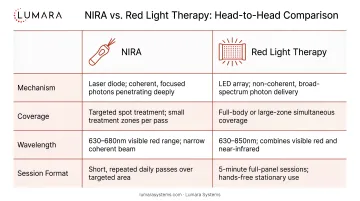
NIRA's 1450nm laser delivers targeted thermal collagen stimulation — correcting visible wrinkles through controlled dermal heating. Red light therapy uses 620–850nm LED wavelengths to boost cellular energy without heat, supporting skin health through photobiomodulation.
The two technologies solve different problems, and the right choice depends on your skin concerns, available time, and tolerance for side effects.
This guide breaks down how each technology works, compares their results and commitment requirements, and gives you a clear framework to pick the right device.
TL;DR
- NIRA is a 1450nm diode laser that heats the dermis to rebuild collagen; red light therapy uses 620–850nm LED wavelengths to boost cellular energy without heat
- NIRA delivers faster, clinically documented wrinkle reduction; RLT offers gentler, broader skin benefits with fewer risks
- NIRA results can persist 2–3 months after treatment; RLT requires ongoing sessions to maintain benefits
- Both can work together—RLT helps reduce inflammation and supports recovery between laser sessions
NIRA Laser vs. Red Light Therapy: Quick Comparison
| Feature | NIRA Laser | Red Light Therapy |
|---|---|---|
| Technology | Non-fractional laser | LED-based |
| Wavelength | 1450nm | 620–850nm |
| Primary Mechanism | Heats dermis to trigger collagen | Boosts mitochondrial ATP production |
| Treatment Time | ~5 min/day | 5–20 min/session |
| Results Timeline | 10–12 weeks | 8–12 weeks with ongoing use |
| Result Longevity | Persists 2–3 months post-routine | Diminishes if sessions stop |
| Cost Range | $359–$699 | $395–$1,699 |
| Skin-Type Suitability | Not recommended for tanned skin or pregnancy | Safe for nearly all skin types |
| Side Effect Risk | Redness/dryness if used incorrectly | Minimal to none |

Values reflect typical device ranges. Power output, wavelength precision, and FDA clearance status vary by model and directly influence what you'll experience in practice.
What is the NIRA Laser?
The NIRA Laser is an FDA-cleared, non-fractional, non-ablative at-home laser device that uses a 1450nm wavelength to deliver targeted thermal energy into the dermis—the skin layer responsible for collagen production—without damaging the outer surface.
How It Works
The laser gently heats dermal tissue above a threshold temperature that triggers heat shock proteins, which signal collagen and elastin cells to rebuild. This is distinct from ablative lasers that remove skin and fractional lasers that cause deliberate micro-injury. NIRA stimulates renewal without the downtime or pain associated with those treatments.
What the Clinical Evidence Shows
Clinical studies referenced in NIRA's FDA clearance documentation demonstrate:
- Reduces fine lines and wrinkles
- Firms skin by stimulating collagen and elastin production
- Improves texture and tone over consistent use
- Some users also see improvement in acne, hyperpigmentation, and dark circles as collagen remodels
Time Commitment and Longevity
NIRA requires less than 5 minutes per day. Clinical data shows that 68% of users who achieved a 1-point wrinkle reduction maintained some improvement for at least 3 months after stopping use—a significant advantage over treatments that require ongoing maintenance.
Who is the NIRA Laser Best For?
NIRA is best suited for individuals over 35 with moderate to significant signs of aging—particularly wrinkles, deep lines, and loss of skin firmness—who want visible correction rather than general maintenance.
That said, NIRA isn't the right fit for everyone:
- Not recommended for recently tanned skin
- Contraindicated during pregnancy
- Darker skin tones should consult a dermatologist before use, as some laser devices can increase hyperpigmentation risk
- Avoid use on skin with active conditions like psoriasis or eczema
What is Red Light Therapy?
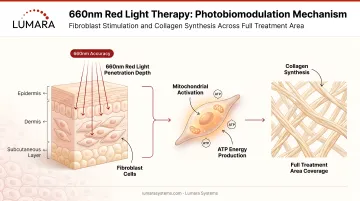
Red light therapy is a non-invasive treatment that uses specific wavelengths of visible red and near-infrared light (typically 620–850nm) to penetrate the skin and stimulate the mitochondria in cells—the organelles that produce adenosine triphosphate (ATP), the cell's primary energy source.
How It Works
Increased ATP production gives cells more energy to repair damage, produce collagen, reduce inflammation, and accelerate regeneration. Unlike lasers, RLT does not heat the dermis or create any form of tissue disruption—it works by optimizing the cell's own repair processes through photobiomodulation.
Breadth of Benefits
Research documents multiple skin benefits from RLT:
- Collagen stimulation and reduction in fine lines
- Reduced inflammation and redness
- Improved acne and scarring
- Evening of skin tone
- Enhanced absorption of skincare products
- Improved circulation
A randomized clinical trial of 137 women demonstrated a 31.6% reduction in periocular wrinkle volume after 4 weeks of 660nm LED treatment, confirming RLT's anti-aging effectiveness.
The 660nm Advantage
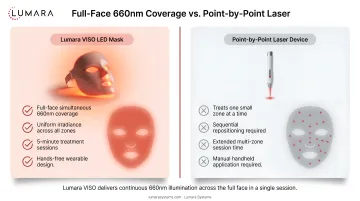
The 660nm wavelength sits at the optimal absorption point for skin-level light absorption. Precision devices that target this exact wavelength—like Lumara Systems' facial therapy panels, which deliver 660nm treatments in 5 minutes or less—are designed to maximize this cellular response for facial skin health.
Who is Red Light Therapy Best For?
RLT works across nearly all skin types and tones—including sensitive skin—making it more broadly accessible than laser-based treatments. That accessibility matters most for users with specific goals or skin concerns.
The ideal RLT user:
- Prefers a lower-risk, multi-benefit approach to skin health
- Wants to address not just wrinkles but also inflammation, texture, and tone
- Plans to complement or maintain results from a more aggressive treatment like laser
- Has sensitive skin or deeper skin tones that may not tolerate laser well

NIRA Laser vs. Red Light Therapy: Which is Better for You?
The right choice depends on five key decision factors: desired outcome (correction vs. maintenance), skin type and sensitivity, time availability, budget, and tolerance for potential side effects.
Situational Recommendations
Choose NIRA laser if:
- Your primary goal is visible wrinkle reduction and firming within 10–12 weeks
- You have moderate to advanced signs of aging and want a targeted corrective approach
- You're comfortable with the device's requirements around skin tone and sun exposure
- You want results that persist for months after stopping treatment
Choose red light therapy if:
- You want a gentler, multi-benefit approach with minimal side effect risk
- You have sensitive skin or deeper skin tones
- You're focused on ongoing skin maintenance rather than intensive correction
- You're looking to complement a laser routine with an anti-inflammation layer
Consider combining both:
Dermatologists note that RLT and laser therapy are not mutually exclusive. Clinical studies show that red LED phototherapy applied after ablative laser resurfacing can cut healing time and resolution of side effects by one-half to one-third.
If using both, use RLT after laser sessions rather than simultaneously. For those starting with red light therapy on its own, Lumara Systems panels — calibrated at 660nm with 5-minute sessions — offer a straightforward entry point before adding laser devices to the routine.
Cost-Over-Time Comparison
At-home device investment:
- NIRA Laser: $359–$699 upfront
- Premium LED masks: $395–$469
- LED panels: $549–$1,699
Professional treatment costs (for context):
- Professional 1450nm laser sessions: $150–$450 per treatment, multiple sessions required
- Professional LED facials: $25–$200 per session
At-home devices require higher upfront investment but deliver long-term value compared to ongoing clinic visits. Both NIRA and premium RLT devices occupy similar price tiers ($350–$700), so the deciding factor comes down to what your skin needs — correction, maintenance, or both.

Conclusion
NIRA laser is the stronger choice for those seeking active correction of visible wrinkles and firmness loss. Red light therapy is the better fit for those prioritizing gentle, sustainable skin health maintenance, broader benefits, or sensitivity-safe treatment. The two work best together — complementary tools, not competing ones.
What determines results isn't which technology sounds more impressive — it's how consistently you use it. Whether that's 5 minutes of targeted laser stimulation, 10–20 minutes of light-based cellular treatment, or a combination of both, the best device is the one that fits your routine and your skin goals.
Frequently Asked Questions
Is laser better than red light therapy?
Lasers like NIRA deliver faster, more targeted wrinkle correction through thermal collagen stimulation. Red light therapy offers gentler, broader skin benefits with fewer risks and wider skin-type compatibility. If active wrinkle correction is your priority, laser has the edge. For ongoing maintenance and skin health, red light therapy is the stronger fit.
Does the NIRA laser actually work?
Yes. NIRA is FDA-cleared (K163137) and backed by clinical studies showing statistically significant wrinkle reduction with consistent use over 90 days. In clinical trials, 69% of subjects achieved at least a 1-point improvement on the Fitzpatrick Wrinkle Score.
Is NIRA red light therapy?
No. NIRA uses non-fractional laser technology at 1450nm (near-infrared), whereas red light therapy uses LED-based light at 620–850nm. The two technologies work through distinct mechanisms: NIRA relies on thermal dermal heating, while RLT works through photobiomodulation.
How long does it take to see results from red light therapy vs. NIRA laser?
Both typically show visible results in 8–12 weeks of consistent use. NIRA results may appear faster for wrinkle-specific concerns, while RLT benefits such as reduced inflammation and improved tone can be noticed earlier, sometimes within 4 weeks.
Can you use red light therapy and a NIRA laser together?
Yes. The two technologies complement each other: RLT reduces post-laser inflammation and extends collagen-stimulation benefits. Use RLT after laser sessions, not during, to support healing.
Which is safer for sensitive skin—NIRA laser or red light therapy?
Red light therapy is safer for sensitive skin and all skin tones, as it creates no thermal disruption. Laser devices like NIRA require more caution with sensitive or darker skin tones and should be approached with a dermatologist's guidance.