The answer is grounded in physiology. Clinical research supports photobiomodulation's role in lymphatic function, demonstrating that specific wavelengths of light stimulate the cellular mechanisms that drive fluid movement through your lymphatic system. This isn't about surface-level skin benefits—it's about targeting the vessels, nodes, and pathways that clear waste and reduce swelling.
This guide covers the science behind how red light therapy supports lymphatic drainage, the best wavelengths and devices to use, a step-by-step protocol for targeting key body regions, and what results you can realistically expect.
TLDR
- Red light (630–660nm) penetrates skin tissue to stimulate lymphatic vessel contraction and fluid movement
- Use 10–20 minutes per area, 3–5 times weekly, with device positioned 6–12 inches from bare skin
- Work top-to-bottom: neck/collarbone → armpits → abdomen/groin → behind knees
- Reduced puffiness typically appears after 2–4 weeks of consistent sessions
- Combine with hydration, gentle movement, and light massage for best results
What Is the Lymphatic System and Why Does It Get Sluggish?
Your lymphatic system performs three essential jobs: removing waste and excess fluid from tissues, supporting immune function by clearing dead cells and toxins, and helping absorb fat-soluble nutrients from your digestive tract. Unlike your cardiovascular system, the lymphatic system has no dedicated pump—it relies entirely on breathing, muscle movement, and body motion to move fluid through its network of vessels.
When lymphatic flow slows, symptoms include:
- Tissue swelling (edema) and visible puffiness
- Persistent fatigue and sluggish energy
- Increased susceptibility to illness
- Impaired detoxification
Because one-third of resting lymphatic flow depends on skeletal muscle compression, prolonged sitting and immobility significantly impair lymph transport. Fluid pools in tissues rather than circulating back to the bloodstream — a direct consequence of reduced movement throughout the day.
That mechanical dependency is why therapies like red light, massage, and exercise can all support lymphatic function: each provides the physical or cellular stimulation the system needs to keep fluid moving.
How Red Light Therapy Supports Lymphatic Drainage
Red light photons penetrate skin tissue (roughly 1–5mm for red wavelengths, deeper for near-infrared) and are absorbed by mitochondria in lymphatic vessel cells. This triggers increased ATP production, which powers lymphatic vessel contractions. With more ATP available, lymph vessels contract more rhythmically and efficiently, moving fluid through the system with less effort.
The Nitric Oxide Pathway
Red light triggers the release of nitric oxide (NO), a signaling molecule that relaxes and dilates blood and lymph vessels. This vasodilation improves microcirculation and reduces the congestion that causes fluid to pool in tissues. When vessels are dilated and relaxed, lymphatic fluid encounters less resistance as it moves toward lymph nodes and eventually back to the bloodstream.
Inflammation and Lymphatic Compression
Inflamed tissue compresses lymph pathways, physically blocking drainage channels. A 2019 randomized controlled trial found that pre-exercise photobiomodulation at 810nm significantly reduced post-exercise IL-6 levels (p < 0.0001) — a key inflammatory marker tied to tissue swelling. By calming that inflammation, red light reopens compressed pathways and restores normal flow.
Lymphangiogenesis and Vessel Function
Research suggests red light therapy may support the creation of new lymphatic vessels by upregulating VEGFR3 (p = 0.002), a growth factor receptor critical for lymphangiogenesis. Additionally, low doses of photobiomodulation (5–10 J/cm²) induce relaxation and improve drainage in lymphatic vessels, while excessively high doses (30–70 J/cm²) can inhibit contractility—which makes dosing one of the most consequential variables in treatment outcomes.
Red Light vs. Near-Infrared
Red light (630–660nm) targets surface lymph vessels and skin-level fluid, making it ideal for facial puffiness and superficial swelling. Near-infrared (810–850nm) penetrates deeper to reach lymph nodes and larger collecting vessels, making it better suited for deeper tissue swelling in the torso and limbs. Combining both wavelengths offers the most comprehensive lymphatic support, addressing both superficial and deep drainage pathways.

Best Wavelengths and Devices for Lymphatic Drainage
The accepted "optical window" for maximum tissue penetration runs from 600nm to 1100nm, where absorption by melanin and hemoglobin is minimized. Within this range, wavelength choice determines how deep treatment reaches and which lymphatic structures respond:
Optimal wavelength ranges:
- Red light (630–660nm): Best for superficial lymphatic vessels; addresses visible puffiness and skin-level edema
- Near-infrared (810–850nm): Penetrates to deep collecting lymphatics and nodes; suited for post-workout recovery and deeper swelling
Clinical Dosages
For breast cancer-related lymphedema (BCRL), effective clinical trials commonly report energy densities between 1.5 J/cm² and 4.89 J/cm², according to a 2022 clinical review published in PMC. For postoperative swelling reduction, doses of 6 J/cm² per point have proven effective. The World Association for Photobiomodulation Therapy recommends a power density (irradiance) of 10 to 150 mW/cm² for managing lymphedema.
| Wavelength Band | Penetration Depth | Primary Lymphatic Target | Clinical Application |
|---|---|---|---|
| Red (630-660nm) | 1-5mm | Superficial lymphatic plexus (dermis) | Surface puffiness, skin-level edema |
| Near-Infrared (810-850nm) | 5-30mm | Deep collecting lymphatics, nodes | Deep tissue swelling, post-workout recovery |
What to Look for in a Device
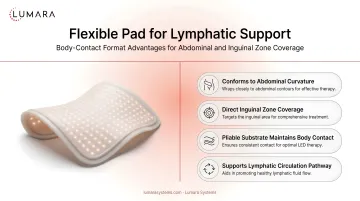
Choose devices with consistent irradiance output, dual-wavelength capability (red + NIR), adequate coverage area for the body regions you're treating, and safety features like protective eyewear. Panels or large-area devices work better than small wands when treating the torso, abdomen, and lower body.
Lumara Systems' 660nm panels are one example of this approach — designed for verified wavelength accuracy at 660nm with IP65 water-resistant construction and 5-minute treatment sessions, which suits both beginners and people building a consistent routine.
Avoid devices that:
- Lack verified wavelength accuracy
- Deliver insufficient power density for therapeutic effect
- Use consumer-grade LEDs that may not provide consistent irradiance
- Lack durability features for regular use
How to Use Red Light Therapy for Lymphatic Drainage: Step-by-Step Protocol
Preparation
Skin should be bare for maximum photon absorption—clothing blocks most light transmission. Use the device before or after a shower when skin is clean. Stay well-hydrated before and after sessions to support fluid flushing. Always wear protective goggles during face and neck treatments.
Session Duration and Frequency
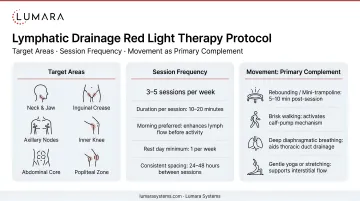
Start with 10–15 minutes per target area; more experienced users can extend to 20 minutes. Aim for 3–5 sessions per week for active lymphatic support. Once results are maintained, 2–3 weekly sessions can sustain lymphatic health. Shorter, frequent sessions outperform occasional long ones.
Device Distance
Hold or position the device 6–12 inches from bare skin. Closer proximity (6 inches) delivers deeper penetration for lymph nodes and deeper tissue; greater distance (12+ inches) offers gentler surface-level treatment suitable for sensitive areas or beginners.
Targeting Lymph Node Clusters by Region
Always treat the neck and collarbone first. The thoracic duct and right lymphatic duct empty lymph back into the bloodstream at the collarbone — the primary exit point for the entire system. Opening this pathway before targeting peripheral areas lets downstream fluid actually clear.
Follow this sequence for each session:
- Neck and collarbone — 3–5 minutes per side; clears the main drainage exit before treating any other region
- Armpits (axillary nodes) — 3–4 minutes per side; raise your arm to expose the area fully; drains the arms, chest, and upper back
- Lower abdomen and groin (inguinal nodes) — 4–5 minutes; clears the lower-body pathway before working down the legs
- Legs and ankles — 5–7 minutes per leg; work upward from ankle toward hip, following lymph flow toward the body's center

Signs Your Lymphatic System Is Draining (and When to Expect Results)
Knowing what progress looks like helps you stay consistent. Positive physical signs that lymphatic drainage is improving include:
- Reduced visible puffiness in the face, ankles, or extremities
- Skin feeling less tight or congested
- Reduced heaviness in the legs
- Improved energy levels
- Mild increase in urination as excess fluid is processed and eliminated
These changes build gradually rather than appearing overnight. A 2025 randomized clinical trial on Total Knee Arthroplasty demonstrated that daily photobiomodulation treatment measurably reduced objective swelling by Post-Operative Day 6, measured via bioimpedance compared to controls.
Realistic Timeline
Most users report noticing reduced swelling and improved fluid movement within 2–4 weeks of consistent use (3–5 sessions per week). Deeper improvements, like reduced lymphedema symptoms or stronger immune response, typically emerge after 6–8 weeks.
Lymphedema Considerations
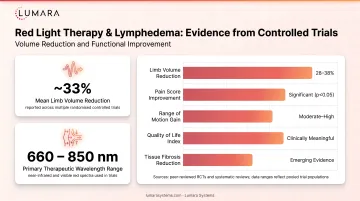
For diagnosed lymphedema (chronic lymph vessel damage causing persistent swelling), a 2026 systematic review and meta-analysis concluded that photobiomodulation therapy reduces affected limb volume (SMD = -0.78) and limb circumference (MD = -3.61 cm) in breast cancer-related lymphedema patients.
Lymphedema management should always involve a physician or lymphedema therapist — red light therapy works best as part of a supervised care plan, not in isolation.
What to Combine with Red Light Therapy for Better Results
Manual Lymphatic Drainage Massage
Gentle, light-pressure massage in the direction of lymph flow immediately before or after red light therapy can amplify drainage. The red light relaxes vessels and reduces inflammation; the massage physically moves the fluid.
Basic technique:
- Use light strokes (lighter than you think—lymph vessels are superficial)
- Always stroke toward lymph node clusters
- Start at the neck to open the central drain
- Move from peripheral areas toward the body's center
- Use slow, rhythmic movements
Hydration and Movement
Lymph flow depends on adequate fluid volume and physical movement. Drink enough water throughout the day and add light exercise between sessions. Good options include:
- Walking for 20–30 minutes to stimulate passive lymph movement
- Rebounding on a mini-trampoline, which is especially effective for lymphatic circulation
- Yoga or gentle stretching to keep fluid from pooling in extremities

What to Avoid
Some habits directly undermine what red light therapy and massage work to achieve. Avoid:
- Heavy alcohol consumption, which promotes fluid retention
- High-sodium diets that increase tissue swelling
- Prolonged sedentary periods between sessions
Consult a physician before use if you are pregnant, have a cancer history (especially lymphoma), or take photosensitive medications.
Frequently Asked Questions
Does red light therapy help with lymphatic drainage?
Yes. Clinical research supports red light therapy for lymphatic drainage by boosting cellular energy (ATP), triggering vasodilation via nitric oxide release, and reducing inflammation. Together, these effects improve fluid movement through lymphatic vessels and nodes.
Is red light therapy helpful for lymphedema?
Research shows photobiomodulation can reduce swelling and tissue hardening in lymphedema patients when used as a complementary therapy. Anyone with lymphedema should consult their healthcare provider before starting treatment.
Which LED light color helps with lymphatic drainage?
Red light (630–660nm) targets superficial lymph vessels in the skin, while near-infrared (810–850nm) reaches deeper lymph nodes and collecting vessels. A device combining both wavelengths provides the broadest lymphatic coverage.
What are signs that your lymphatic system is draining?
Common signs include:
- Reduced puffiness and swelling
- Lighter feeling in the limbs
- Skin feeling less congested
- Improved energy levels
- Mild increase in urination as the body clears processed fluid
How long does it take to see results from red light therapy for lymphatic drainage?
With consistent use (3–5 sessions per week), most users begin noticing reduced puffiness and improved fluid movement within 2–4 weeks. Deeper benefits accumulate over 6–8 weeks of regular use.
Can I combine red light therapy with lymphatic massage?
Yes, combining both is beneficial—red light relaxes and dilates vessels while gentle massage physically moves fluid. Use them in sequence (either order works) for enhanced drainage results.