Introduction
If you already use topical acne treatments, adding red or blue light therapy raises a practical question: will they work together, or will combining them cause more irritation than improvement?
The answer depends on which treatments you are combining and how you sequence them. Red light therapy at 660nm is broadly compatible with most acne treatments. Blue light therapy at 415nm is more effective for active acne but requires more careful timing alongside photosensitizing ingredients like tretinoin. This guide covers the combinations that work, the ones that require timing adjustments, and how to build a practical routine.
Key Takeaways
- Red light therapy (660nm) is compatible with most topical acne treatments when used on clean skin before product application
- Blue light (415nm) targets C. acnes bacteria and reduces inflammatory lesions - the strongest evidence in LED therapy is for combined red + blue
- Tretinoin and other retinoids increase photosensitivity - do not apply immediately before a light therapy session
- Prescription acne medications may increase light sensitivity - consult your dermatologist before combining
- The correct sequence for any light therapy: clean skin first, products after
How Red and Blue Light Address Acne Differently
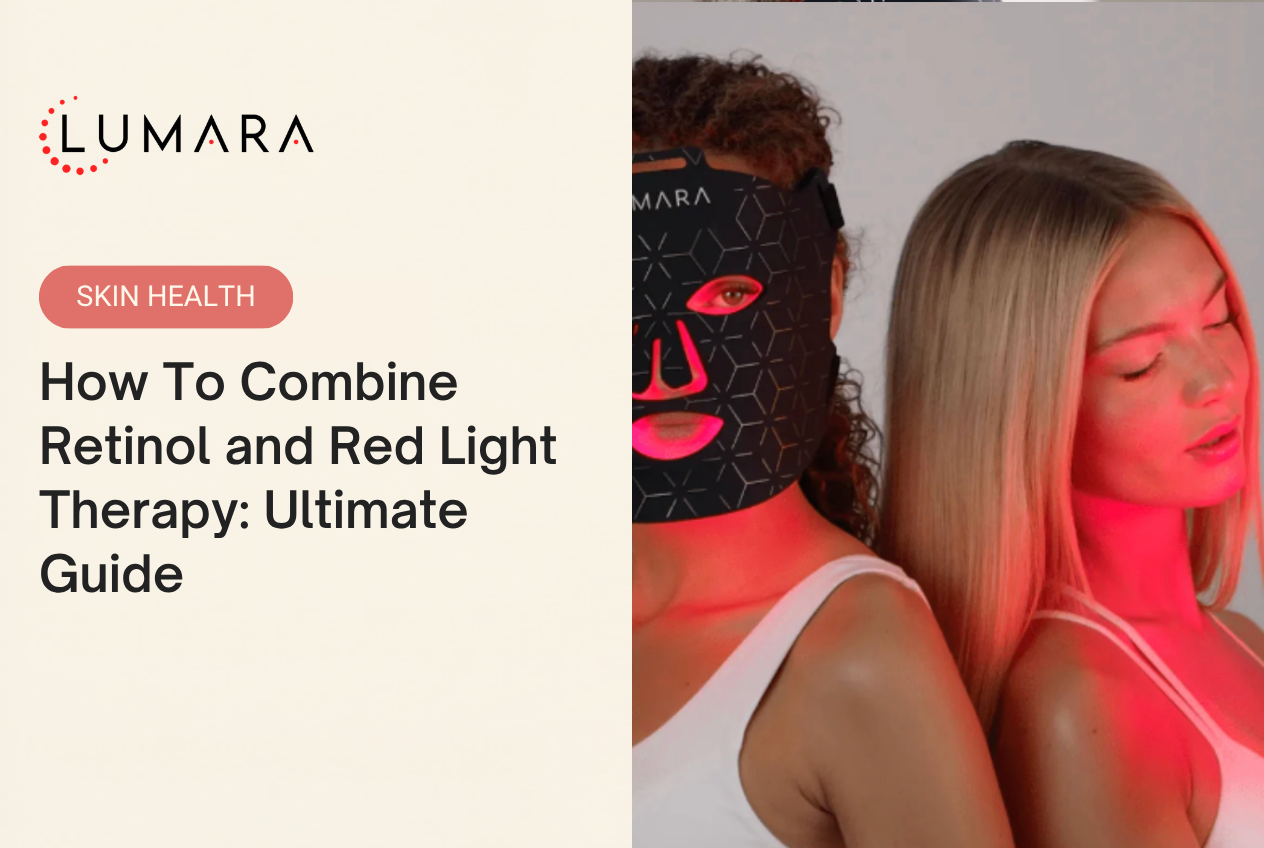
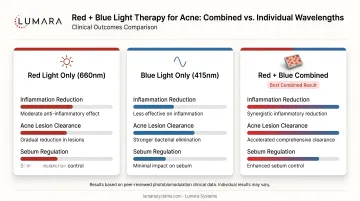
Red light (660nm) reduces inflammatory signaling in skin tissue. It supports cellular repair, reduces redness and swelling, and can help post-inflammatory marks heal faster. It does not directly kill bacteria. The mechanism operates at the mitochondria level, where absorbed photons boost cellular energy production.
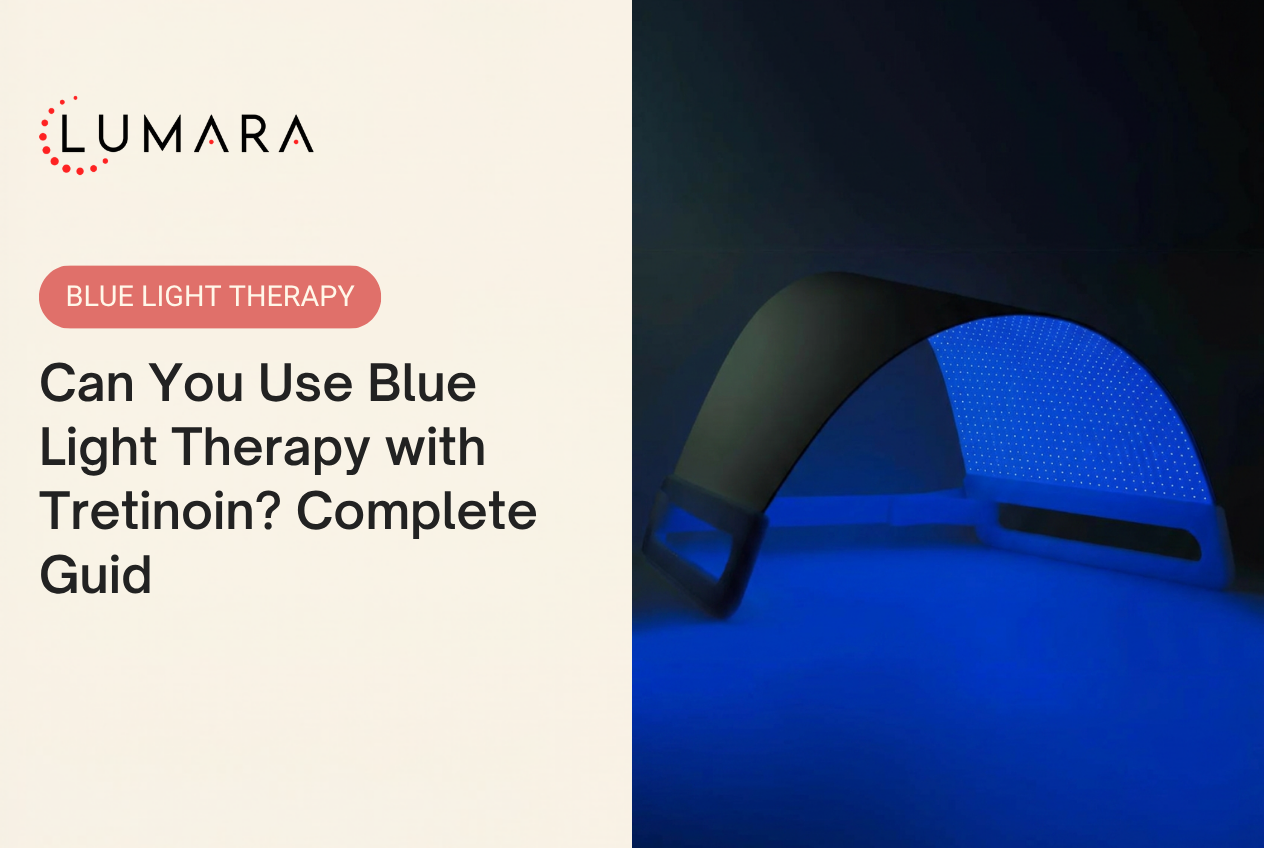
Blue light (415nm) activates porphyrins in Cutibacterium acnes, generating reactive oxygen species that disrupt bacterial cell membranes. It directly targets the bacteria driving active breakouts.
The two are mechanistically complementary - blue light addresses bacterial load; red light reduces the inflammatory response. Clinical research has found that combined red and blue LED therapy can reduce acne lesions more effectively than control treatment, likely because blue light targets acne-associated bacteria while red light helps calm inflammation. Understanding how wavelength affects skin penetration and response helps explain why these two ranges work so differently.
Combinations That Work Well
Blue Light + Red Light (Best Combination for Active Acne)
The strongest evidence-backed combination for acne. Using both in the same or sequential sessions addresses bacterial load (blue) and inflammatory response (red) simultaneously.
Lumara's Illuminate Blue (415nm) and Illuminate V2 (660nm red) can be used in the same routine - one session per wavelength per day, or on alternating days depending on your schedule and skin tolerance.
Red Light + Niacinamide
Niacinamide reduces melanin transfer to skin surface, supports barrier function, and calms redness. Compatible with red light therapy and can be applied after sessions. A practical pairing for both active acne management and post-inflammatory hyperpigmentation.
Red Light + Azelaic Acid
Azelaic acid addresses both bacterial factors and pigmentation. Compatible with red light therapy when applied after sessions. Useful for skin that experiences both inflammatory acne and discoloration.
Red Light + Benzoyl Peroxide
Compatible with appropriate timing - apply BP after the light therapy session, not before. BP can oxidize retinoids when applied together but does not interact negatively with red light therapy.
Combinations That Require Timing Adjustment
Retinoids (Tretinoin, Retinol)
Retinoids increase photosensitivity by thinning the stratum corneum. Applying a retinoid immediately before a light therapy session places sensitized skin in direct contact with light exposure, compounding irritation risk.
The fix: Use light therapy on clean skin before product application. Apply tretinoin or retinol in your evening routine, in a separate window from your light therapy session (ideally 6+ hours apart, or a morning light / evening tretinoin split schedule).
AHAs and BHAs (Glycolic, Lactic, Salicylic Acid)
Exfoliating acids thin the surface layer and increase light sensitivity. Apply after light therapy sessions, not before, and start with lower frequency when introducing them alongside a new light therapy routine.
Prescription Acne Medications
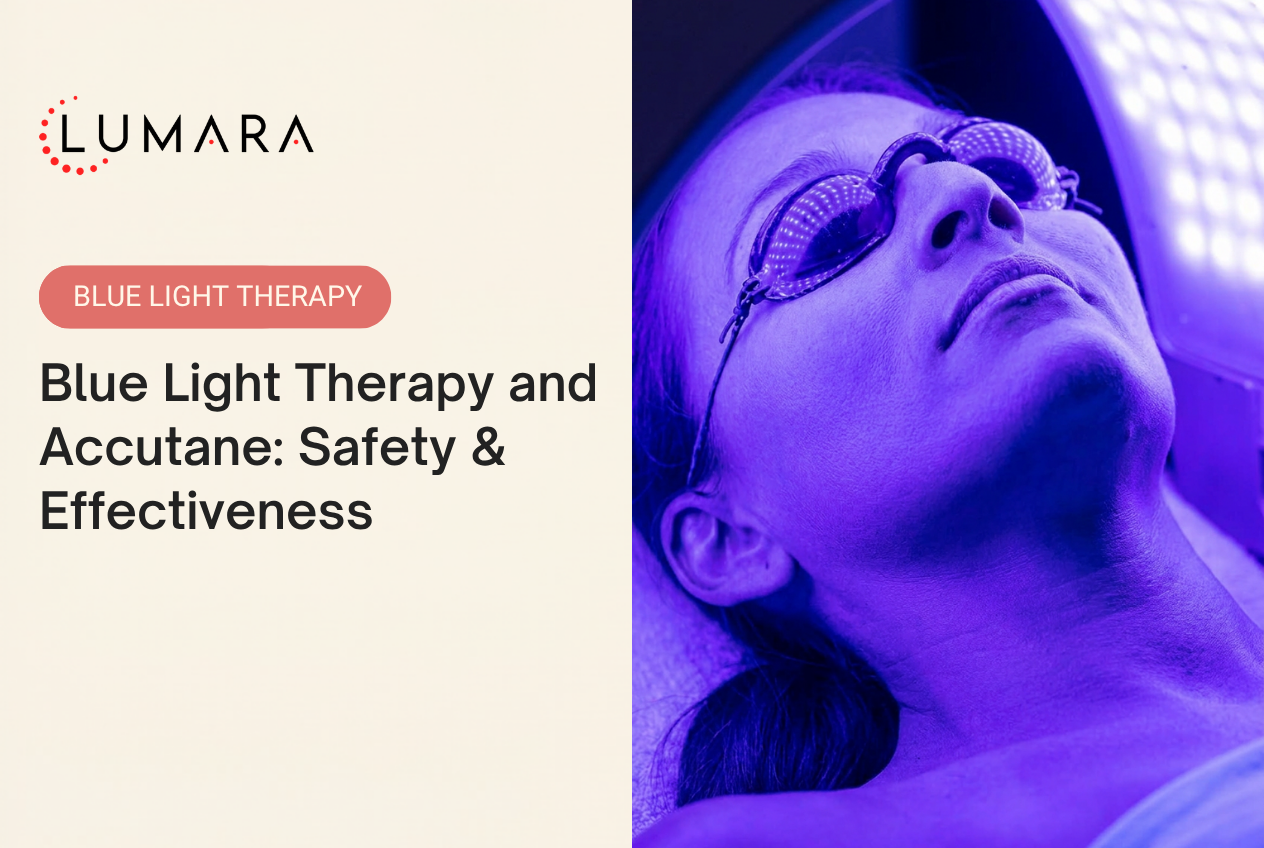
Oral isotretinoin and some antibiotic regimens can increase system-wide light sensitivity. Consult your dermatologist before combining any light therapy with prescription acne medication. This does not mean the combination is prohibited - it means medical guidance is appropriate before proceeding.
Professional Treatment Combinations
After Chemical Peels
Superficial peels: red light therapy can be reintroduced once initial skin reactivity has settled (typically 48-72 hours). Medium-to-deep peels require longer recovery windows before any light exposure - consult the provider who performed the procedure.
After Microneedling
Wait 48-72 hours after microneedling before resuming red light therapy. After this window, red light can support wound healing and reduce post-treatment redness. Do not combine same-day.
How to Sequence Your Routine
The core principle applies to any light therapy in an acne routine:
Always use light therapy on clean, product-free skin. Apply topical treatments after.
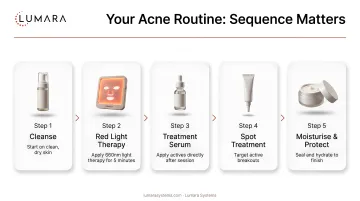
Daily routine structure:
- Cleanse thoroughly - remove all makeup, SPF, and previous product layers
- Apply light therapy session (5-20 minutes)
- Wait 10-15 minutes
- Apply water-based acne serums (niacinamide, azelaic acid)
- Moisturize
- SPF in the morning
Evening (with tretinoin):
- Cleanse
- Light therapy session (or skip if blue light was used in the morning)
- Wait, then apply tretinoin on fully dry skin
- Moisturize
Frequency Guidelines
Starting frequency for combined routines:
- Red light therapy: 4-5x per week
- Blue light therapy: 3-4x per week
- Tretinoin: 2-3 nights per week initially, increasing as tolerance builds
Adjust based on skin response. Irritation is feedback - reduce frequency before switching products.
Which Lumara Device Fits This Routine
For blue-light-first acne routines: Illuminate Blue (415nm, 1,800 LEDs, 5-minute sessions, designed for targeted blue-light acne routines) targets C. acnes bacteria with precision wavelength output.
For inflammation-focused or red-light-only routines: Illuminate V2 (660nm, 1,800 LEDs, 1,200 cm², 5 minutes, FDA cleared) for broader skin wellness and post-inflammatory support.
Both can be part of the same routine at different times of day.
Frequently Asked Questions
Can red light therapy be combined with acne treatments?
Yes. Red light therapy on clean skin before product application is compatible with most acne treatments. Photosensitizing ingredients (retinoids, AHAs) require timing separation - apply after sessions, not before.
Is red light or blue light better for acne?
Blue light (415nm) targets bacteria directly; red light (660nm) reduces inflammation. Combined, they are more effective than either alone. For active breakouts, blue light is more directly relevant; for post-inflammatory care and skin quality, red light is more appropriate.
When should I use light therapy in my acne routine?
Always on clean, product-free skin. Morning light therapy sessions followed by serums and SPF is the most practical structure. Tretinoin should be in a separate evening window.
Can I use blue light therapy while on prescription acne medications?
Some prescription medications increase photosensitivity. Consult your dermatologist before starting light therapy alongside prescription acne treatment. For users who are also pregnant, separate guidance applies - see the red light therapy during pregnancy guide.
Two Mechanisms, One Routine
Red and blue light therapy address different parts of the acne cycle. Combined correctly with your topical routine, they reinforce each other without interference.
Lumara's Illuminate Blue - 415nm, 1,800 LEDs, 5-minute sessions, designed for targeted blue-light acne routines - is built for exactly the targeted, consistent blue-light routine that works in an acne management protocol.