
Introduction
Cataract surgery is one of the most common surgical procedures performed globally, with a well-established recovery profile. Most patients resume normal activities within days. For users who already have a red light therapy routine - or are considering starting one - the question is when and whether it is safe to use after cataract surgery.
The answer requires distinguishing between direct ocular (eye-level) light exposure and external facial light therapy, and following appropriate recovery timing guidelines.
Key Takeaways
- Red light therapy devices designed for facial skincare emit light at consumer irradiance levels - they are fundamentally different from surgical or medical ophthalmic light sources
- The primary concern post-cataract surgery is protecting the healing eye from any unnecessary light or pressure exposure during the early recovery period
- Ask your ophthalmologist when it is safe to resume facial devices near the periorbital area; for many users this may be after the early follow-up period, but timing varies by individual healing and surgeon guidance
- After medical clearance, external red light therapy on the face (not directed into the eye) can be used with proper eye protection
- Never use red light therapy without eye protection - this applies both before and after cataract surgery; see our guide on eyes open vs. closed during sessions
What Cataract Surgery Involves
Cataract surgery removes the clouded natural lens of the eye and replaces it with an artificial intraocular lens (IOL). The procedure typically takes 15-30 minutes, is performed under local anesthesia, and has a well-established recovery profile.
During recovery:
- The corneal incision (typically 2-3mm) heals over 4-8 weeks
- The eye is more sensitive to light, pressure, and infection in the early weeks
- Standard restrictions include avoiding eye rubbing, swimming, and any direct eye pressure for several weeks
- Driving restrictions typically lift after 24-48 hours once visual acuity is confirmed adequate
The Safety Question for Red Light Therapy
The concern around red light therapy after cataract surgery centers on two things:
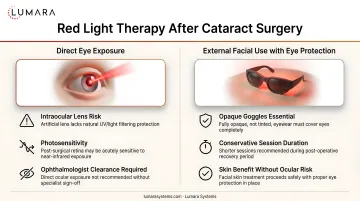
1. Direct light exposure to the operated eye: High-intensity or prolonged light exposure to the healing eye is contraindicated in the early recovery period. This applies to any light source directed at the eye - not specifically red light therapy.
2. Physical device contact near the eye: Applying a mask or device near the periorbital area in the early recovery period carries some risk of accidental pressure or contact with the healing eye.
Consumer red light therapy devices (facial masks, panels) are not ophthalmic devices and do not produce the intensity of light used in clinical ophthalmic procedures. However, the healing eye in the early post-surgical period warrants precaution regardless of the light source type.
Recommended Timing
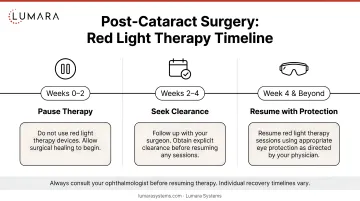
0-2 weeks post-surgery: Avoid all facial devices, including red light therapy masks. Follow your ophthalmologist's standard post-operative instructions, which will include protecting the eye from all unnecessary light exposure and pressure.
2-4 weeks: At the follow-up appointment, discuss resuming facial routines with your ophthalmologist. Most will clear patients for light facial activities once the incision is showing adequate healing.
4+ weeks: With medical clearance, facial red light therapy can typically be resumed using appropriate eye protection. The eye inserts included with LED masks (such as Lumara's VISO) are designed for exactly this purpose.
Non-negotiable rule: Always use eye protection during red light therapy sessions regardless of surgical history. Eye inserts or protective goggles should be used in every session.
After Clearance: Returning to Facial Red Light Therapy
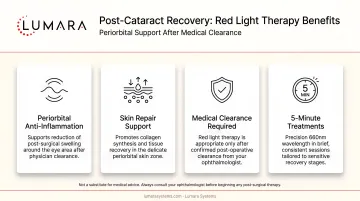
After ophthalmologist clearance, facial red light therapy should be framed as a skincare routine for the surrounding facial and periorbital skin, not as a cataract surgery recovery treatment.
Anti-inflammatory support: 660nm red light has documented anti-inflammatory effects relevant to periorbital skin. The 660nm wavelength and its skin interactions are among the most studied in photobiomodulation research.
Skin care: Cataract surgery and post-operative medications can affect periorbital skin condition. Red light therapy may support collagen and skin quality in the periorbital region as a facial skincare tool. If you experience dry eye, pain, vision changes, or irritation after surgery, ask your ophthalmologist rather than trying to manage it with a facial device.
Important caveat: These are supportive benefits for the periorbital skin and surrounding tissue - not direct ophthalmic treatments. Red light therapy is not a treatment for cataracts, IOL issues, or post-surgical ophthalmic complications. Any visual concerns post-surgery require ophthalmologist assessment. For broader context on current photobiomodulation research, see our overview of red light therapy clinical trials.
Frequently Asked Questions
Is red light therapy safe after cataract surgery?
It may be safe for some users after the eye has healed and their ophthalmologist has cleared them to resume facial devices. Do not use red light therapy near the operated eye during early recovery or without medical clearance. Always use eye protection during sessions.
When can I resume red light therapy after cataract surgery?
With ophthalmologist clearance, most patients can resume facial red light therapy at 4+ weeks post-surgery using proper eye protection. Confirm with your surgeon at your follow-up appointment.
Will red light therapy harm my new intraocular lens?
Consumer-level red light therapy devices do not produce the intensity or specificity of light that would affect a properly implanted IOL. The precaution is about protecting the healing corneal incision and eye from unnecessary light exposure in the early recovery period, not about the IOL itself.
Do I need to wear eye protection during red light therapy?
Yes, always - both before and after cataract surgery. Eye inserts or protective goggles should be used in every red light therapy session that involves periorbital or facial coverage.
Clearance First, Then Resume Normally
Cataract surgery recovery is well-established. Red light therapy can be resumed after ophthalmologist clearance, with proper eye protection in every session. After clearance, red light therapy should be used only as a facial skincare device, with eye protection and without directing light into the eye.
Lumara's VISO LED Mask includes eye inserts specifically designed for safe facial sessions - 660nm, 470 micro-LEDs, FDA cleared, full-face coverage.