Introduction
Facial rejuvenation is a broad term that covers everything from topical skincare to professional surgical procedures. The challenge most people face is not a lack of options - it is knowing which options are worth using, how to combine them, and where to start based on their specific concern and budget.
This guide organizes the most evidence-backed facial rejuvenation approaches by mechanism, evidence strength, and practical accessibility - and shows where red light therapy fits in that picture.
Key Takeaways
- Effective facial rejuvenation works at multiple levels: surface renewal, dermal structure, muscle and volume, and cellular support
- The strongest outcomes come from combining approaches that work at different depths and through different mechanisms
- Red light therapy at 660nm is one of the most accessible at-home options with a solid evidence base for collagen support and skin quality improvement
- Professional treatments offer faster or more dramatic results but require clinical access and ongoing cost
- A consistent at-home routine with the right tools will compound over months - most people underestimate how much improvement is possible at home
The Four Levels of Facial Rejuvenation
Understanding why skin ages helps explain why different treatments target different levels:
Surface level (epidermis): Dead cell accumulation, uneven texture, and pigmentation changes. Addressed by: chemical exfoliants (AHAs, BHAs), retinol-driven cell turnover, and physical exfoliation.
Dermal structure: Collagen loss, elastin degradation, and reduced extracellular matrix density. Addressed by: retinoids, red light therapy at 660nm, peptides, microneedling.
Neuromuscular: Dynamic wrinkles from muscle contraction - smile lines, frown lines, forehead lines. Addressed by: botulinum toxin injections.
Volume and fat: Mid-face volume loss, hollow under-eyes, loss of facial contour. Addressed by: dermal fillers, fat transfer, structural procedures.
The most effective rejuvenation routines address multiple levels simultaneously - not just one.
At-Home Treatments with Strong Evidence
Retinoids (Retinol / Tretinoin)
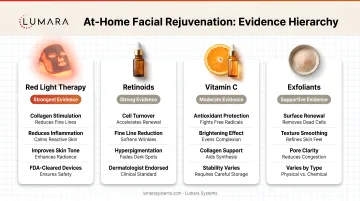
The most evidence-backed at-home topical category for facial rejuvenation. Retinoids accelerate cell turnover, stimulate collagen production, and reduce hyperpigmentation.
OTC retinol converts to retinoic acid in skin - slower but accessible. Prescription tretinoin is more potent and faster but requires dermatologist guidance.
Timeline: 12+ weeks minimum before visible improvement. Consistent night-time use with daily SPF is the protocol.
Red Light Therapy (660nm)
At 660nm, red light therapy stimulates fibroblast activity and supports collagen synthesis through photobiomodulation. Multiple controlled studies show increases in collagen density and improvements in skin texture and firmness with consistent use.
What distinguishes it from topicals: it works at the cellular level in the dermis, not through ingredient penetration. It is additive to a topical routine rather than competing with it.
For at-home facial use, the relevant format is a full-face mask with consistent LED-to-skin contact and verified 660nm output. Lumara's VISO LED Mask - 470 micro-LEDs at 30 mW/cm², triple-verified 660nm, 10" x 7" full-face coverage, FDA cleared - is the purpose-built format for this application.
Chemical Exfoliants (AHAs/BHAs)
Glycolic acid, lactic acid (AHAs), and salicylic acid (BHAs) remove dead surface cells, improve texture, and reduce pigmentation with consistent use. Best used at night, alternated with retinoids.
Vitamin C (L-Ascorbic Acid)
Dual-function: antioxidant protection against UV and pollution damage, plus co-factor for collagen synthesis. Most effective at 10-20% L-ascorbic acid concentration, pH below 3.5, in opaque packaging. Morning application is standard.
Professional Treatments: What They Offer and When They Make Sense
Botulinum Toxin (Botox, Dysport)
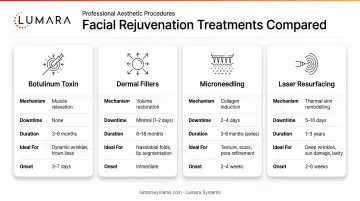
Temporarily relaxes muscles that create expression lines. Highly effective for dynamic wrinkles - forehead, glabellar (11 lines), crow's feet. Duration: 3-4 months. Does not address structural skin quality.
Red light therapy does not replicate this mechanism. The two are complementary: light therapy supports skin quality; injectables address neuromuscular wrinkle patterns.
Dermal Fillers
Restore volume in areas where fat has depleted - under-eyes, nasolabial folds, cheeks, lips. Hyaluronic acid fillers are the most common. Duration: 6-18 months depending on product and placement.
Microneedling
Creates controlled micro-injuries that trigger collagen production. More aggressive collagen induction than red light therapy. Often combined with red light therapy 48-72 hours post-procedure to support healing and reduce downtime.
Professional LED Treatments
Professional multi-wavelength LED systems (like Lumara PRO, a five-wavelength professional system with FDA clearance K200751) offer a clinical-grade version of at-home light therapy. Used in aesthetic clinics and med spas for skin rejuvenation, acne management, and multi-parameter skin protocols.
Laser Resurfacing
Ablative (CO2, Er:YAG) or non-ablative (Fraxel) lasers produce more dramatic collagen remodeling than LED therapy. More downtime, higher cost, higher risk. Appropriate for deeper concerns - significant texture issues, extensive sun damage, acne scarring. See also: red light therapy vs laser for rosacea results.
How to Build a Layered Routine
The most effective facial rejuvenation approach layers at-home consistency with strategic professional interventions:
Foundation (daily, at-home):
- Morning: Vitamin C serum, moisturizer, SPF 30+
- Evening: Red light therapy (5-20 minutes, clean skin), then retinoid, then moisturizer
Enhancement (periodic):
- Chemical exfoliant 2-3x per week (alternate with retinoid nights)
- Peptide serum for additional collagen signaling
Professional (as needed):
- Botulinum toxin every 3-4 months for dynamic wrinkles
- Fillers 1-2x/year for volume maintenance
- Microneedling or professional LED treatments for collagen boosting
The compounding principle: None of these alone produces dramatic results. Combined over months and years, they address skin aging from multiple angles simultaneously. The foundation is what determines long-term outcome - not any single professional treatment.
Which Lumara Device Fits This Routine
For at-home facial rejuvenation, the relevant device is one built for daily facial use with verified 660nm output and consistent full-face coverage.
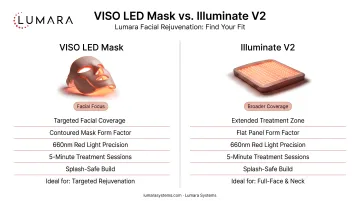
VISO LED Mask: The dedicated at-home facial device in Lumara's lineup. 660nm wavelength triple-tested for accuracy, 470 micro-LEDs at 30 mW/cm², 10" x 7" oval format covering forehead to chin. FDA cleared. 5-20 minute session guidance. Includes eye inserts. For a comparison of red light panel vs mask formats, see our full breakdown.
For users who also want panel coverage for neck, chest, and other areas beyond the face, Illuminate V2 (660nm, 1,800 LEDs, 1,200 cm², 5 minutes) covers a broader area in the same session.
Frequently Asked Questions
What is the most effective facial rejuvenation treatment?
No single treatment is most effective because different treatments address different aspects of facial aging. The most effective approach combines daily SPF and antioxidant protection, consistent retinoid use, red light therapy for cellular collagen support, and periodic professional interventions.
Does red light therapy actually rejuvenate skin?
Multiple controlled studies show red light therapy at 660nm produces measurable increases in collagen density and improvements in skin texture and firmness. It works through cellular photobiomodulation, making it additive to topical routines.
How long does facial rejuvenation take?
Some users may notice early improvements in skin radiance and overall appearance within 1-2 weeks, while deeper tone, texture, and collagen-related improvements build with consistent use. Professional treatments like Botox show results within 1-2 weeks. Collagen remodeling from microneedling or laser shows full results at 3-6 months.
Can I combine red light therapy with professional treatments?
Yes. Wait 72 hours after botulinum toxin injections before resuming light therapy. Wait 48-72 hours after microneedling. Resume normally after filler with no specific timing requirements.
What is the most accessible facial rejuvenation routine?
Daily routine: SPF and vitamin C in the morning; red light therapy (5-20 min on clean skin), retinol, and moisturizer in the evening. This combination costs $100-$300 to establish and compounds significantly over 6-12 months.
Consistency Is the Most Underrated Rejuvenation Tool
Most people overestimate what one professional treatment can do and underestimate what a consistent at-home routine compounds to over a year. The foundation matters more than the premium.
For facial skin rejuvenation routines built around daily red light therapy, Lumara's VISO LED Mask delivers the targeted 660nm red light therapy, full-face coverage, and a practical 5- to 20-minute session format that makes daily consistency achievable.