Introduction
Most people searching "red light face mask hair growth" are not asking whether red light therapy works. They are asking whether the device they already have - or are considering for their skin - can double as a hair growth tool.
The short answer: a red light face mask is not the right format for scalp treatment. But that is a format problem, not a red light problem. The right wavelength still matters, and for buyers who want one device that handles both facial skincare and targeted scalp sessions, there is a more intelligent way to approach this.
This guide covers how red light therapy works at the scalp, what makes a device effective for this application, and which format gives you the most value without buying two single-purpose products.
Key Takeaways
- Red light therapy at 630-670nm has a research basis for supporting scalp circulation and follicle activity
- A face mask's LED geometry is designed for the face - it cannot deliver consistent coverage to the scalp
- Wavelength is necessary but not sufficient: coverage, session consistency, and dose delivery matter equally
- A 660nm panel is a more flexible format: facial skincare, targeted scalp sessions, and broader red-light routines in one device
- Results from red light therapy require consistent use over several months - set realistic expectations
- Wavelength accuracy, FDA clearance status, coverage, and format practicality are the most important buying criteria
How Red Light Therapy Supports Scalp Health
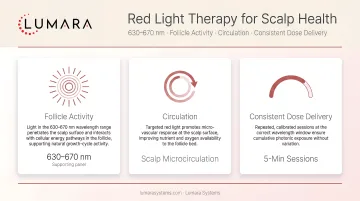
Red light therapy works because specific wavelengths of light interact with tissue in ways that support cellular activity. At the scalp, the wavelengths most commonly studied for follicle support fall in the 630-670nm range, with 650-660nm appearing most frequently in published research.
The practical implications for buyers:
- Wavelength has to be in range. A 415nm blue light device or a 525nm green light device is not relevant to hair growth applications, regardless of LED count or output claims.
- Light has to reach the follicle. Scalp coverage and consistent LED-to-tissue contact are as important as wavelength. A device that cannot reliably reach the scalp surface will not deliver a useful dose. For a closer look at how wavelength affects tissue penetration and skin outcomes, see our wavelength guide.
- The effect builds over time. Short-term use does not reveal whether red light therapy is helping. Consistent sessions over 3-6 months are the baseline for evaluating results.
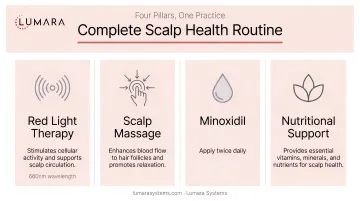
Red light also supports local circulation, which means better nutrient and oxygen delivery to follicles over time. This is why red light therapy is sometimes combined with other scalp-support approaches such as minoxidil or scalp massage - the mechanisms are different, but the goal of improving the follicle environment overlaps. For more on how red light interacts with mitochondrial function in cells, see our related guide.
Where Red Light Therapy Has Limits
Red light therapy supports follicle activity in follicles that are still biologically active. It is not relevant for hair loss caused by scarring conditions where follicle structure has been permanently damaged, or for systemic causes like nutritional deficiencies or hormonal conditions that have not been addressed at the source.
If hair loss is sudden, patchy, or linked to a known medical condition, red light therapy is best treated as one part of a broader plan rather than a standalone solution.
Why a Face Mask Does Not Work for Scalp Treatment
A red light face mask is engineered around one geometry: the face. The LED array is shaped, spaced, and angled for cheeks, forehead, chin, and perioral coverage. When placed on top of the head, the LED contact zone does not align with the scalp surface, distance from LEDs to tissue becomes inconsistent, and dose delivery is unpredictable.
The wavelength inside a quality 660nm face mask is technically relevant to follicle research. But wavelength without coverage and consistent positioning does not produce reliable results. The problem is not the light. The problem is the format.
For scalp red light treatment to be practical, the device has to be able to consistently reach the scalp surface across the intended treatment area.
The Better Format Question: Panel vs Helmet
Helmet-Style Devices: Maximum Scalp Coverage, Narrow Use Case
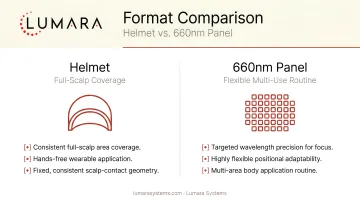
Helmet and cap formats are built around the head. Their LED arrays maintain consistent scalp contact and cover a larger surface area in a single pass. Most FDA-cleared dedicated hair growth devices use this format, and for users whose only goal is full-scalp coverage with minimal setup, it is the most efficient approach.
The tradeoff is format lock. A dedicated scalp helmet does one thing. It does not support facial skincare, broader body treatment, or any other routine. For buyers who want more than a single-purpose device, this is a real limitation.
660nm Panels: More Flexible, Built for Multi-Use Routines
A 660nm panel cannot wrap around the head the way a helmet can. For full-scalp coverage, it requires repositioning across multiple passes. For targeted thinning areas, a single positioned session is often sufficient.
Where a panel format earns its value is in flexibility. One high-output 660nm device can support facial skincare, targeted scalp sessions, and broader red-light treatment across the body - without buying separate products for each goal.
This is where Lumara's Illuminate V2 fits most naturally.
Lumara Illuminate V2: The Multi-Use 660nm Panel
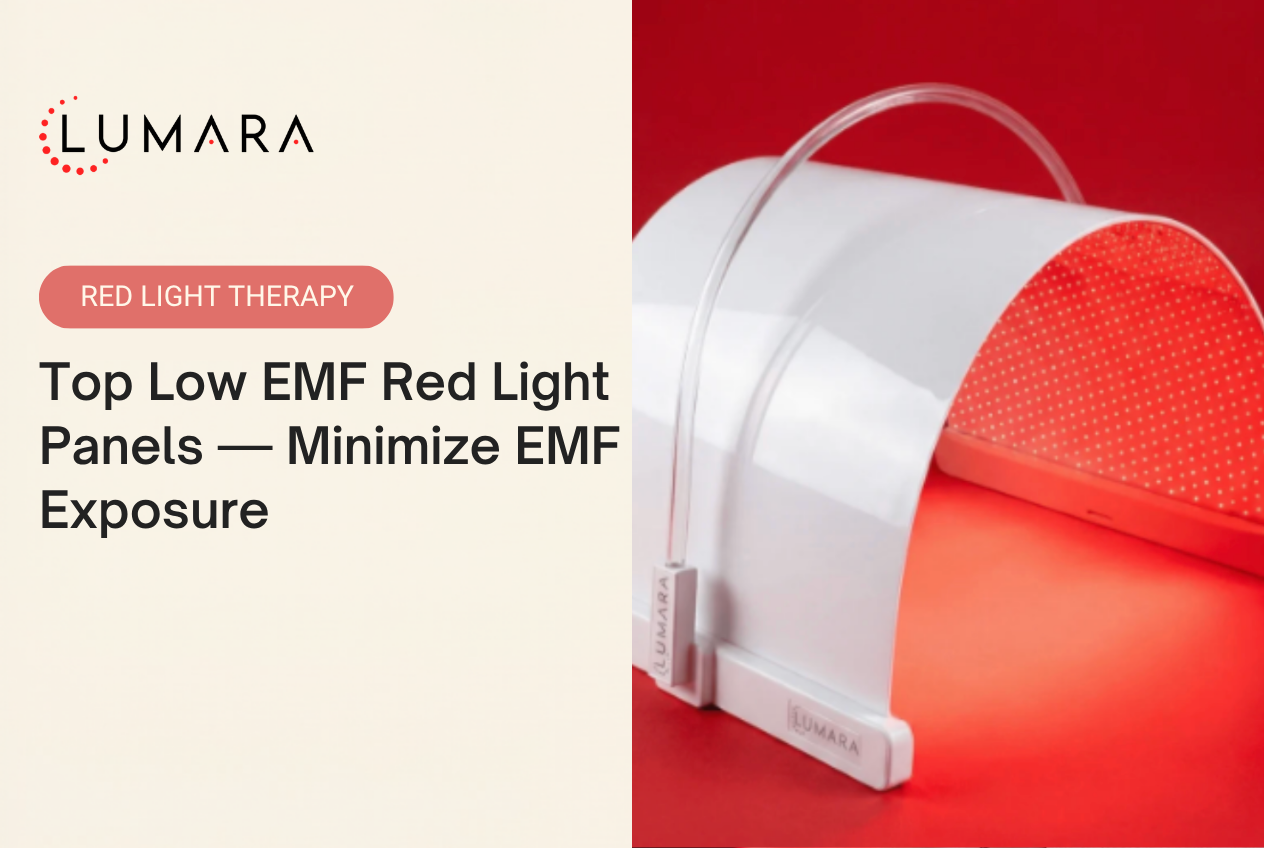
Illuminate V2 is Lumara's 660nm red light panel. It is not marketed as a dedicated scalp device, and it does not need to be. What it offers is a serious, high-output 660nm platform built for users who want one device that works across their whole routine.
| Spec | Detail |
|---|---|
| Wavelength | 660nm red light |
| LEDs | 1,800 |
| Treatment area | 1,200 cm² |
| Session time | 5 minutes |
| Energy delivery | 6,000 joules per session |
| Build | Splash-safe |
| FDA clearance | FDA cleared |
| Made in | USA |
| Eligible for | HSA/FSA |
| Warranty | 3 years |
| Lifespan | 40,000 hours claimed |
For scalp use: targeted sessions on localized thinning areas, or multiple-pass coverage of a broader scalp area. Better suited to users with specific thinning zones than to users who want a full-scalp wrap-around pass in a single session.
For facial skincare: the same 660nm wavelength supports skin wellness routines. No second device required.
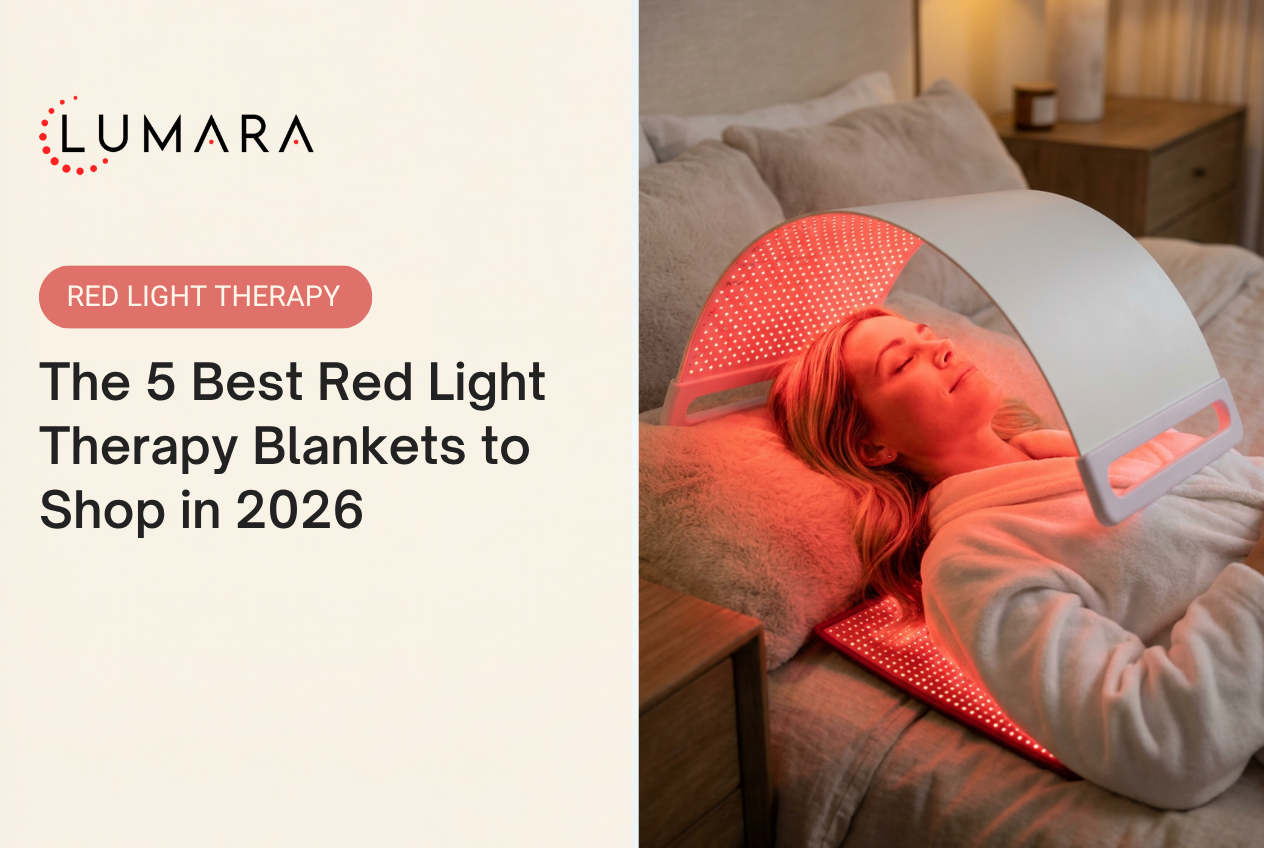
For broader use: can be positioned on the face, back, stomach, knees, feet, hands, and shoulders. The 5-minute session format makes routine consistency practical.
The 3-year warranty, 40,000-hour claimed lifespan, and HSA/FSA eligibility make it a long-term investment rather than a disposable gadget.
What to Look for in Any Red Light Device for This Goal
Wavelength Accuracy
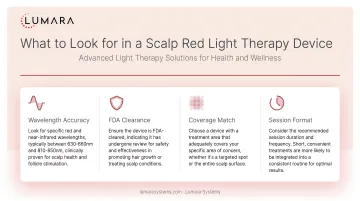
The 630-670nm range is where follicle and scalp research is concentrated. Any device claiming hair growth support should be in this range. Lower-cost devices may list a wavelength but not verify it at the LED level. Lumara's devices are built around verified wavelength specs, not marketing approximations.
FDA Clearance
FDA clearance is a quality signal that the device has gone through the FDA's clearance pathway for its stated device category. It is not a guarantee of individual results, but it meaningfully separates devices that have been through formal review from those that have not. Lumara's Illuminate V2 carries FDA clearance.
Coverage for Your Specific Goal
Full-scalp maintenance in a single session is most efficient with a helmet or cap format. For localized thinning, or for buyers who want a device that earns its place across multiple routines, a high-output panel is the more practical choice.
The right format depends on how focused versus flexible you need the device to be.
Session Format and Routine Fit
A device you actually use consistently outperforms a technically superior device you use twice a month. The Illuminate V2's 5-minute session guidance makes it easier to build and sustain a routine than devices requiring 15-20 minute sessions.
Building a Routine That Works
Consistency Is the Primary Variable
Red light therapy for scalp support requires sustained use. Most users who report meaningful results describe 3-5 sessions per week over 3-6 months before visible changes appear. Early months are about creating the right conditions at the follicle level. Visible density changes take longer.
Set a realistic expectation at the start. This is not a two-week fix. It is a routine investment.
Complementary Approaches
Red light therapy works well alongside other scalp-support approaches:
- Minoxidil: supports follicle activity through a different mechanism; commonly combined with LLLT in clinical settings
- Scalp massage: mechanical stimulation supports local circulation independently of light therapy
- Nutritional support: deficiencies in iron, zinc, biotin, or vitamin D can contribute to thinning; addressing these alongside a device routine matters
- Rosemary oil: some evidence for scalp circulation support at lower barrier than pharmaceutical options
None of these replace the others. The most consistent results come from treating scalp health as a multi-layer routine rather than relying on any single approach.
Device and Session Prep
- Use on a clean scalp without heavy styling products that could absorb or block light
- For panel sessions, maintain consistent distance and positioning to ensure comparable dose delivery across sessions
- Follow manufacturer guidance on session length and frequency
Which Lumara Format Fits Your Goal
| Goal | Best Lumara Fit |
|---|---|
| Dedicated facial skincare only | VISO LED Mask - 660nm, 470 micro-LEDs, purpose-built for the face |
| Facial skincare + targeted scalp sessions | Illuminate V2 - 660nm, 1,800 LEDs, 1,200 cm², 5-minute sessions |
| Broader skin and body red-light coverage | Illuminate V2 |
If your goal is narrowly and exclusively full-scalp wrap-around coverage in one session, a helmet-style format handles that one use case efficiently. But if you want a device that handles your skin routine, addresses targeted scalp concerns, and gives you broader red-light coverage without multiple single-purpose products, Illuminate V2 is the more intelligent investment.
Frequently Asked Questions
Does red light therapy work for hair growth?
Research supports the use of red light therapy at 630-670nm for supporting follicle activity, particularly in early-to-moderate cases of thinning hair with active follicles. It is not effective for all hair loss types. Consistent use over 3-6 months is needed to evaluate whether it is helping in a given case.
Can a red light face mask be used for hair growth?
Not effectively. A face mask's LED geometry is designed for facial coverage. When placed on the scalp, consistent LED-to-tissue contact is not maintained, and dose delivery becomes unpredictable. The wavelength may be relevant, but the format is not suited to the scalp.
What is the right device format for scalp red light therapy?
Helmet and cap formats offer the most efficient full-scalp coverage in a single session. Panel formats are better suited to targeted sessions and multi-use routines. The right choice depends on whether your priority is scalp-only coverage or a more flexible red-light platform.
How long does red light therapy take to show results for hair?
Most users who see meaningful results report consistent use over 3-6 months at 3-5 sessions per week. Scalp condition and shedding patterns may improve earlier, but visible density changes typically take longer.
Is red light therapy FDA cleared for hair growth?
Several dedicated hair growth devices carry FDA clearance as Class II medical devices. FDA clearance indicates the device has gone through the FDA's clearance pathway for its stated category - it is a quality signal, not a guarantee of individual results.
How often should I use red light therapy on my scalp?
Most protocols recommend 3-5 sessions per week, with session length depending on the device. The Illuminate V2's 5-minute guidance makes this easier to sustain as part of a daily routine.
Are there risks to using red light therapy on the scalp?
Red light therapy at the wavelengths and power levels used in consumer devices is generally considered safe, with most users reporting no adverse effects. Following manufacturer guidelines on session length and device positioning minimizes any risk of sensitivity.
The Right Format Makes the Difference
Red light therapy at 660nm has a genuine research basis for supporting scalp health. A face mask is not the right tool for it - not because of the wavelength, but because of the geometry.
For buyers who want the most efficient full-scalp coverage in a single session and nothing else, a helmet-style format handles that use case. For buyers who want one high-output 660nm device that supports their skin routine, addresses targeted scalp concerns, and covers broader treatment areas without buying multiple single-purpose products, Lumara's Illuminate V2 is the more intelligent choice.
660nm wavelength. 1,800 LEDs. 1,200 cm² coverage. 5-minute sessions. Splash-safe build. FDA cleared. Made in the USA. 3-year warranty. If you are weighing cost versus capability, our guide on why red light panels are priced the way they are breaks down what drives the price difference across formats.