Red Light Therapy for Canker Sores: Does It Work?Anyone who's endured a canker sore knows the sharp, persistent sting that comes with every sip of coffee, bite of food, or even casual conversation. These small oral ulcers punch far above their weight when it comes to pain. While standard treatments like numbing gels and salt water rinses offer temporary relief, they do little to speed actual healing—leaving sufferers stuck in a 7-to-14-day waiting game.

Enter red light therapy, a treatment showing clinical promise for accelerating canker sore recovery. This article examines the biological mechanisms behind red light therapy's effects on oral tissue, the research supporting its use, and practical guidance for home treatment protocols.

TLDR: Key Takeaways

  • Canker sores typically heal in 7–14 days without treatment
  • Clinical studies show red light therapy (630–680nm) cuts healing time by 2–6x
  • Pain relief often begins within 24 hours of first treatment
  • Sessions require just 5–10 minutes per day
  • The therapy is non-invasive with no reported adverse effects

What Are Canker Sores—and Why Do They Hurt So Much?

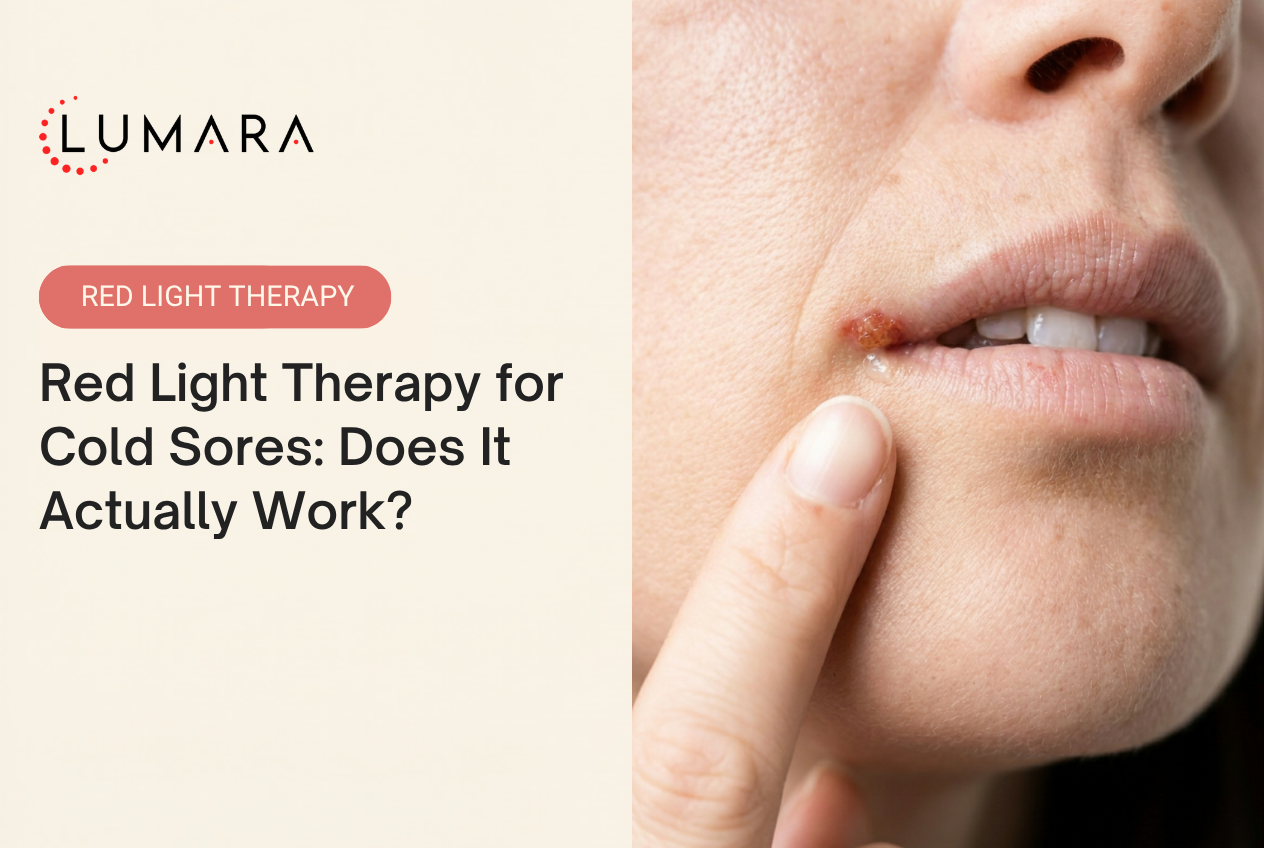
Canker sores, medically known as aphthous ulcers, are small, shallow lesions that form on the soft tissue inside your mouth. They appear as white or yellow centers surrounded by an angry red border, showing up on the inner cheeks, lips, tongue, or gum line.

Three Distinct Types:

TypePrevalenceSizeHealing TimeScarring
Minor80% of casesUnder 5mmUp to 2 weeksNo
Major10% of casesOver 10mm5–10 weeksUsually
Herpetiform1–10% of cases2–3mm (up to 100 at once)1–2 weeksRare

Recurrent aphthous stomatitis affects up to 25% of the global population, with minor ulcers representing the most common subtype.

Common Triggers and Root Causes

Unlike cold sores—which are viral and contagious—canker sores have no single cause. Common triggers include:

  • Local mouth trauma from dental work, aggressive brushing, or accidental cheek biting
  • Emotional stress and hormonal fluctuations
  • Nutritional deficiencies in vitamin B12, folate, or iron
  • Food sensitivities to acidic or spicy foods
  • Underlying immune conditions including celiac disease, Crohn's disease, and Behçet disease

Most over-the-counter treatments only dull the pain temporarily—they don't speed healing or prevent the next sore from forming. That gap is exactly what draws people toward alternatives like red light therapy.

How Red Light Therapy Works on Oral Tissue

Red light therapy—also called photobiomodulation (PBM) or low-level light therapy—uses specific wavelengths of red or near-infrared light to trigger biological responses at the cellular level. The process involves no heat, no UV radiation, and no tissue damage.

The Cellular Energy Boost

The primary mechanism centers on mitochondria, the energy factories inside your cells. Red light in the 630–680nm range is absorbed by cytochrome c oxidase, an enzyme in the mitochondrial respiratory chain. This absorption:

  • Increases ATP (adenosine triphosphate) production
  • Provides damaged cells with more energy for repair
  • Accelerates tissue regeneration

In effect, red light gives injured oral tissue the energy it needs to repair itself faster.

Anti-Inflammatory Action

Red light therapy inhibits pro-inflammatory molecules, specifically prostaglandin E2 (PGE2) and interleukin-1 beta (IL-1β). These mediators drive the pain and swelling associated with canker sores. By reducing their production, red light therapy addresses both the inflammation and the pain sensation.

This explains why many patients report pain relief within hours of treatment—the anti-inflammatory effect occurs quickly, even before visible healing begins.

Improved Blood Flow

Beyond reducing inflammation, red light also causes local vasodilation—widening blood vessels in the treated area. This increased circulation delivers:

  • More oxygen to damaged tissue
  • Essential nutrients for repair
  • Improved removal of cellular waste products
  • Faster clearance of the inflammatory byproducts discussed above

Why Oral Tissue Responds Particularly Well

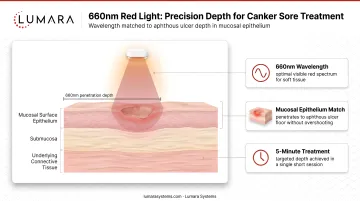
The mucous membranes inside your mouth are thin and highly vascularized (rich in blood vessels). Red light penetrates 1–3mm into soft tissue, making superficial oral lesions ideal targets. Unlike deeper tissues that require near-infrared wavelengths, canker sores sit exactly where red light delivers maximum therapeutic effect.

Three mechanisms of red light therapy on oral tissue healing infographic

What Clinical Research Says About Red Light Therapy and Canker Sores

The clinical case for low-level laser therapy (LLLT) treating oral ulcers is stronger than most people realize. More than two decades of peer-reviewed research point to the same conclusion: faster healing and meaningful pain relief, often within 24–48 hours of a single treatment.

Key Clinical Trials

Neiburger Study (2009) — A clinical study of 69 patients treated intraoral ulcers with a single 30-second exposure to 680nm red laser light. Results showed:

  • 88% of lesions reached comfortable pain levels within 2 days
  • Over 90% reported pain-free status within 24 hours
  • Healing rate increased 2–6x compared to untreated controls
  • Average healing time: 5–10 days versus 14+ days for untreated sores

Aggarwal et al. (2014) — A sham-controlled, split-mouth study of 30 patients using 810nm diode laser therapy. Findings included:

  • Immediate complete pain relief in 28 of 30 patients
  • Healing time: 3.05 days (laser) versus 8.90 days (sham control)
  • Statistical significance: p<0.001

Akerzoul et al. (2018) — A case study using 915nm diode laser documented:

  • Immediate pain relief after treatment
  • Complete remission within 5 days

Meta-Analysis Confirms Effectiveness

A 2025 systematic review of 21 randomized controlled trials (810 total patients) concluded that LLLT significantly reduced pain immediately and at days 1–3, while substantially shortening healing time for minor recurrent aphthous ulcers. The analysis examined wavelengths ranging from 645nm to 976nm.

Clinical trial results comparing red light therapy versus untreated canker sore healing times

Safety Profile

Efficacy is only part of the picture — tolerability matters too. A 2016 systematic review of 10 RCTs reported no adverse reactions or clinical complications following laser phototherapy for aphthous stomatitis, confirming a consistently clean safety record across all reviewed trials.

How to Use Red Light Therapy for Canker Sores at Home

Home treatment follows the same principles as clinical protocols. Get these four variables right and you'll see results comparable to what studies report.

Recommended Protocol:

  1. Wavelength: 630–680nm red light (660nm sits at peak tissue absorption for oral tissue)
  2. Frequency: Once daily or up to 5 times per week
  3. Duration: 5–10 minutes per session
  4. Timing: Start treatment as soon as the sore appears
  5. Continue until: The sore has fully healed

Safe Positioning for Oral Treatment

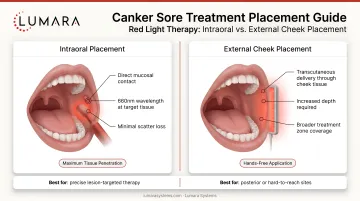
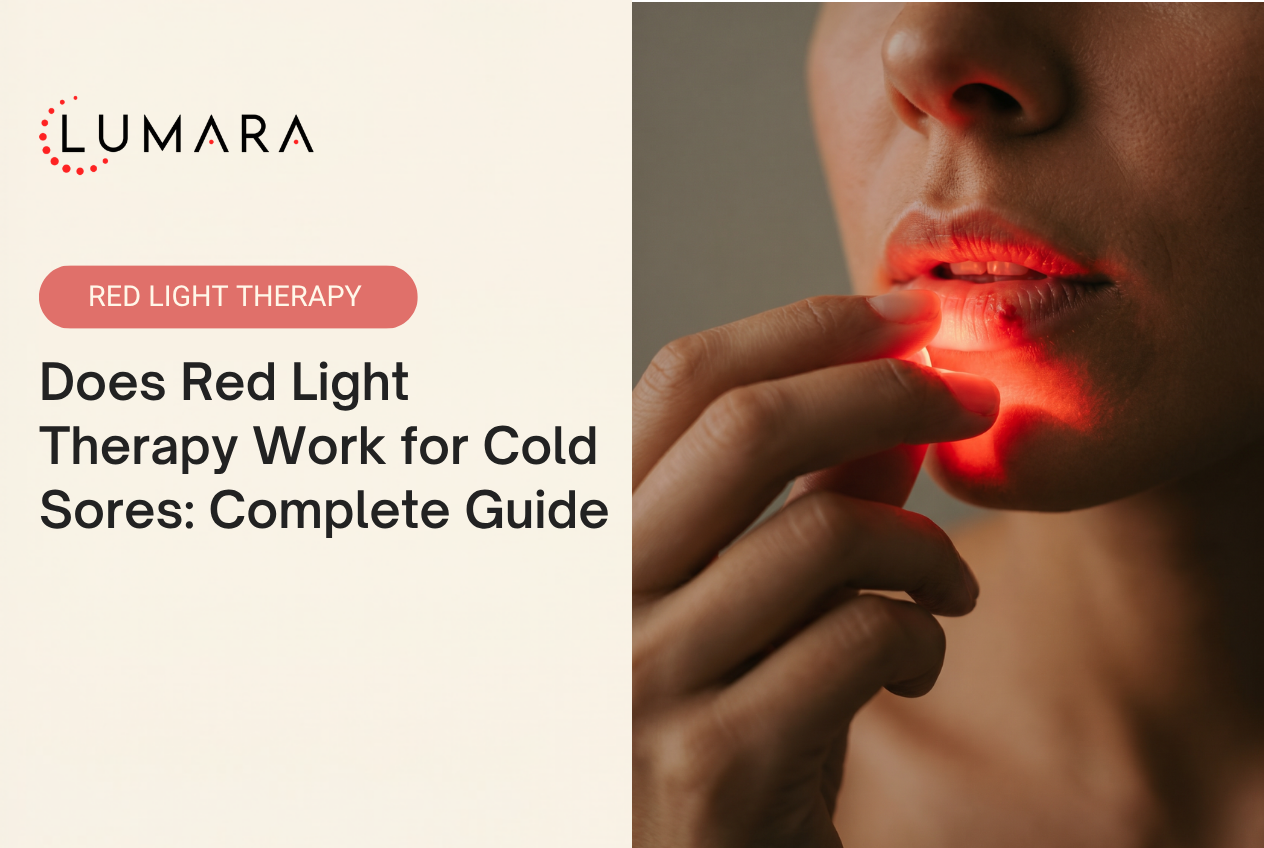
  • Direct the light toward the inside of your open mouth
  • Hold the device steady over the ulcerated area
  • Position the device 1–3 inches from the treatment area for effective light delivery
  • Never stare directly into the LEDs
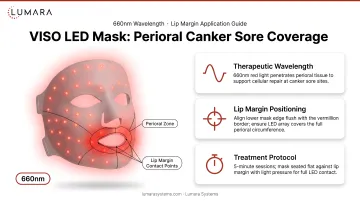
  • Consider eye protection if treating sores near the lips

Setting Realistic Expectations

Red light therapy does not prevent future canker sores or cure the underlying causes. However, clinical evidence strongly supports:

  • Faster pain relief (often within 24 hours)
  • Shortened healing duration (days instead of weeks)
  • No reported side effects at standard treatment doses

Earlier treatment consistently produces faster outcomes — starting at the first sign of a sore gives you the best shot at relief within 24–48 hours.

Choosing the Right Red Light Therapy Device for Canker Sore Relief

Wavelength: The Most Critical Specification

Look for devices emitting in the 630–680nm range. This is where clinical research for oral tissue healing is concentrated. While near-infrared wavelengths (810–1064nm) penetrate deeper, 660nm delivers concentrated energy to surface mucosal tissue—exactly where canker sores form.

Other Important Device Features

Beyond wavelength, three additional specs matter when evaluating a device:

  • Irradiance of 10–50 mW/cm²: Clinical guidelines for intraoral applications recommend this range—enough power for a therapeutic effect without overheating tissue
  • Compact, positionable form factor: Panel designs that allow easy angling toward the face and mouth work well for oral applications
  • Water-resistant construction: Practical safety for use near the oral cavity

Lumara Systems red light therapy panel device positioned for oral canker sore treatment

Lumara Systems' Precision Wavelength Technology

If you want a device that meets all of these criteria out of the box, Lumara Systems' panels are built around exactly this specification set. They deliver red light at precisely 660nm—the therapeutic wavelength validated in clinical research for surface tissue healing—and include:

  • FDA-registered Class II medical device status
  • 5-minute treatment protocols
  • Splash-safe construction for practical oral-area use
  • Professional-grade LED spacing and quality control

The 660nm accuracy matters because devices that stray outside the 630–680nm range may deliver subtherapeutic results—and Lumara's wavelength verification process ensures consistent therapeutic output across panels.

Avoid Low-Quality Alternatives

Devices with unverified wavelength output or those lacking certification may emit light across a broad, ineffective spectrum. Check for:

  • Specific wavelength documentation (not just "red light")
  • FDA registration or certification
  • Third-party testing verification
  • Clear irradiance specifications

Frequently Asked Questions

Does red light therapy help heal canker sores?

Yes. Clinical studies show that red light therapy reduces canker sore pain and accelerates healing compared to no treatment. Some patients experience pain relief within 24 hours of a single session, with healing times cut from 7–14 days down to just a few days.

Can I use red light therapy in my mouth?

Yes. Red light therapy can be safely directed toward the inside of your mouth. The treatment is painless and non-invasive, though you should avoid staring directly into the LEDs and consider eye protection during treatment.

What heals a canker sore the fastest?

Red light therapy has the strongest clinical support for fast healing, with studies showing recovery times 2–6x shorter than untreated sores. Pair it with good oral hygiene and avoiding irritating foods for best results.

How long does red light therapy take to work on a canker sore?

Pain relief may begin within hours to 24 hours of the first session. Visible healing improvement typically appears within 1–3 days, compared to 7–14 days for untreated sores.

What wavelength is best for treating canker sores with red light therapy?

The 630–680nm range is most supported by clinical research for oral mucosal tissue, with 660nm being the most clinically studied wavelength for canker sore and surface wound healing.

How often should I use red light therapy for canker sores?

Daily treatment or up to 5 sessions per week is recommended, with each session lasting 5–10 minutes. Start as early as possible after the sore appears for the most significant benefit.