Introduction
Accutane (isotretinoin) is one of the most effective treatments for severe acne - and one of the most aggressive in terms of skin sensitization. The question of combining blue light therapy with Accutane is important because isotretinoin significantly increases photosensitivity, making the timing and sequencing of any light therapy critical.
The short answer: do not use blue light therapy during active Accutane treatment. Wait until isotretinoin is completely out of your system after finishing, then proceed carefully.
Key Takeaways
- Isotretinoin significantly increases skin photosensitivity - this applies to UV and to visible light exposure at relevant intensities
- Blue light therapy at 415nm during active Accutane treatment carries heightened risk of skin irritation, inflammation, and potential barrier damage
- Do not restart blue light therapy after Accutane without your dermatologist's clearance. Some clinicians still recommend a cautious waiting period, especially if the skin is dry, irritated, or healing poorly, but timing should depend on your dose, skin response, and the type and intensity of device being used.
- After the waiting period, blue light therapy at 415nm can be used as part of ongoing acne management
- Always consult your dermatologist before resuming any skincare device or procedure after Accutane
What Accutane Does to Skin
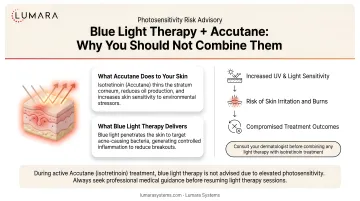
Isotretinoin works by dramatically reducing sebaceous gland activity, which addresses the oil production that drives cystic acne. The side effects relevant to light therapy:
Increased photosensitivity: Accutane thins and sensitizes the skin significantly. The same light exposure that would be safe on normal skin can cause disproportionate inflammation and damage on isotretinoin-sensitized skin.
Compromised barrier function: Accutane commonly causes dryness, peeling, and barrier disruption as side effects. Introducing additional skin stressors - including light therapy - during this compromised state can worsen barrier damage.
Delayed healing: Wound healing is often slower during Accutane treatment. Any skin treatment that creates stress or micro-damage during this period has more potential for complications.
Why Blue Light Therapy Should Not Be Used During Accutane
Blue light at 415nm sits at the visible short-wavelength end of the spectrum. For context on how red light therapy wavelength differs, see the dedicated guide. During normal circumstances, blue light is used safely for acne management because it targets porphyrins in Cutibacterium acnes bacteria at the skin surface.
During Accutane treatment, the same exposure carries elevated risk because:
- Heightened inflammatory response: Sensitized skin is more reactive - the light exposure that produces a mild treatment effect in normal skin can produce an exaggerated inflammatory response
- Barrier disruption compounding: Accutane already compromises the skin barrier; adding light stress can worsen this
- Lack of safety data for this combination: No established safety protocol exists for blue light therapy during isotretinoin treatment
This is not a theoretical concern - dermatologists consistently advise against introducing new skin treatments during Accutane because of unpredictable skin behavior under the drug's influence.
When to Restart After Accutane
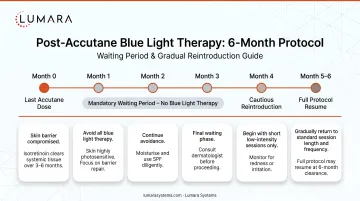
The Standard Waiting Period
Do not restart blue light therapy after Accutane without your dermatologist's clearance. Some clinicians still recommend a cautious waiting period, especially if the skin is dry, irritated, or healing poorly, but timing should depend on your dose, skin response, and the type and intensity of device being used.
The reason: isotretinoin has a long half-life and its effects on skin sensitization, barrier function, and healing capacity persist for months after the last dose. The skin needs time to normalize before introducing any additional treatment stress.
Some dermatologists recommend waiting longer for more aggressive procedures (ablative laser resurfacing, deep chemical peels). For blue light LED therapy, the appropriate window varies by individual - your dermatologist's guidance based on your specific course and skin response is the right benchmark.
Important: Always confirm the timing with your own prescribing dermatologist - they know your course duration, dosage, and skin response, which affects the recommendation.
Resuming Blue Light Therapy After the Waiting Period
After the appropriate waiting period and with dermatologist clearance, blue light therapy at 415nm can be a useful component of ongoing acne management:
- Targets residual C. acnes bacterial activity
- Non-pharmaceutical approach for long-term maintenance
- Can help prevent recurrence during the post-Accutane remission period
Start with shorter sessions (3-5 minutes) at lower frequency (2-3x/week) when first reintroducing, and assess skin tolerance before increasing. For guidance on combining blue light therapy with topical retinoids post-Accutane, see the related article.
What Blue Light Therapy Does for Acne Management
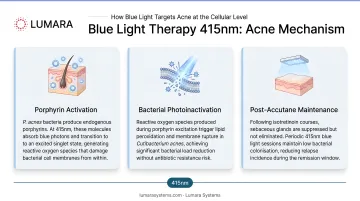
Blue light at 415nm activates porphyrins in Cutibacterium acnes, the primary bacteria driving inflammatory acne. This creates reactive oxygen species that disrupt bacterial cell membranes, reducing bacterial load on the skin.
Used consistently after completing Accutane (with appropriate waiting), blue light therapy can:
- Support long-term bacterial control
- Reduce re-colonization by C. acnes during the post-Accutane period
- Serve as a non-pharmaceutical maintenance approach
It is not a replacement for Accutane when acne is severe or treatment-resistant - it is a maintenance tool that works best when the inflammatory burden has been reduced by Accutane treatment. For more on combining red light therapy with other acne treatments during maintenance, see the related guide.
Frequently Asked Questions
Can I use blue light therapy while on Accutane?
No. Isotretinoin significantly increases skin photosensitivity, and the risk of inflammation and skin damage from light therapy during active Accutane treatment is too high. Wait until after completing Accutane and the appropriate recovery period.
When can I start blue light therapy after Accutane?
Do not restart blue light therapy after Accutane without your dermatologist's clearance. Some clinicians still recommend a cautious waiting period, especially if the skin is dry, irritated, or healing poorly, but timing should depend on your dose, skin response, and the type and intensity of device being used.
Is blue light therapy safe after Accutane?
After the appropriate waiting period and with dermatologist clearance, yes. Timing should depend on your dose, skin response, and the type and intensity of device being used. Start with shorter, less frequent sessions initially to assess tolerance.
Does blue light therapy work for acne after Accutane?
Blue light therapy can support ongoing acne management after Accutane by targeting the bacterial component of acne. It is useful as a maintenance tool rather than a replacement for Accutane's treatment of severe acne.
Can I use red light therapy during Accutane?
The same photosensitivity concerns apply to red light therapy during Accutane. Most dermatologists recommend avoiding all light therapy (red and blue) during active isotretinoin treatment and waiting the appropriate post-treatment period.
After the Wait, Blue Light Therapy Is a Smart Maintenance Tool
The waiting period after Accutane exists for a reason - the skin needs time to normalize before additional treatment stress. After that period, blue light therapy at 415nm is a practical, non-pharmaceutical option for maintaining the bacterial control that Accutane achieved.
Lumara's Illuminate Blue - 415nm, 1,800 LEDs, 6,000 joules in 5 minutes, FDA-registered, Made in USA - is built for consistent acne-focused blue light routines. If you are considering red light therapy after Accutane as well, ask your dermatologist when your skin barrier is ready and which device settings are appropriate.