Introduction
Blue light therapy and tretinoin both address acne-related skin concerns. Blue light targets surface bacteria (Cutibacterium acnes) through photochemical activation. Tretinoin accelerates cell turnover and unclogs pores through retinoid receptor mechanisms.
The combination is effective - but sequencing matters. Tretinoin increases photosensitivity by thinning the outermost skin layer, making skin more reactive to light exposure. Used incorrectly, the combination increases irritation, redness, and barrier disruption. Used correctly, it targets acne from two angles without compounding sensitivity.
Key Takeaways
- Blue light therapy and tretinoin are compatible when sequenced correctly
- Never apply tretinoin immediately before a blue light session - the combined photosensitivity effect can significantly increase irritation risk
- The correct sequence: blue light therapy on clean skin, then tretinoin afterward in your evening routine
- Allow at least 4 weeks of stable tretinoin use before introducing blue light therapy
- Daily SPF is required - both treatments increase UV sensitivity
Why Sequencing Matters
Tretinoin works by accelerating the rate at which skin cells turn over. This produces faster renewal but also temporarily reduces the thickness of the stratum corneum (the outermost protective layer), making skin more reactive to external inputs including light.
Blue light at 415nm penetrates approximately 0.07-1mm into skin - directly into the sensitized layer. The two are not chemically incompatible, but applying tretinoin before blue light exposure places sensitized, compromised skin into direct contact with a light source. The result is compounded inflammation rather than synergistic treatment.
The practical fix is straightforward: separate them in time and always apply tretinoin after light therapy, not before.
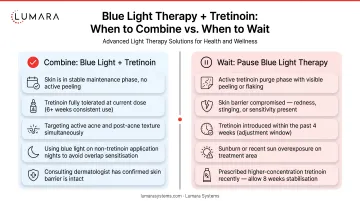
When This Combination Is Appropriate
Use this combination when:
- You have been using tretinoin consistently for at least 4 weeks with stable tolerance
- Skin is not actively peeling, raw, or severely reactive
- Sessions are consistently separated by at least 6-8 hours
- Blue light is used in the morning or early evening; tretinoin at night
Do not combine yet if:
- You are in the first 4-6 weeks of tretinoin (the initial adjustment/purge phase)
- Skin is visibly irritated from tretinoin adaptation
- You have not yet built consistent tolerance to either treatment independently
Step-by-Step Protocol
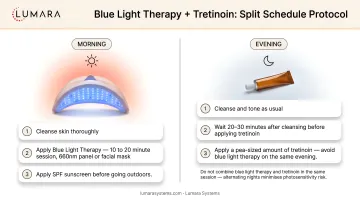
Morning/early evening:
- Cleanse with a gentle, fragrance-free cleanser
- Pat skin completely dry - no residual product
- Apply blue light therapy according to your device's recommended session time. For Lumara Illuminate Blue, that means a 5-minute session on clean, bare skin.
- Wait 10-15 minutes after the session
- Continue normal morning skincare (moisturizer, SPF)
Evening:
- Cleanse to remove SPF and daytime products
- Allow skin to dry completely (20-30 minutes)
- Apply tretinoin
- Moisturize after tretinoin has absorbed
The key principle: Blue light therapy on clean skin before product application. Tretinoin in a completely separate window - ideally the same evening but separated by hours, or the following morning's equivalent.
What Not to Layer With Tretinoin
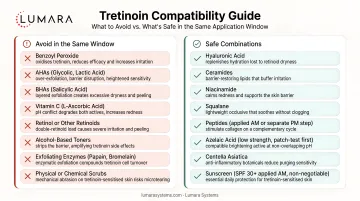
Tretinoin is not compatible with several common acne ingredients in the same application window:
- Benzoyl peroxide: Can oxidize tretinoin and compound dryness; use at separate times (BP morning, tretinoin evening)
- AHAs and BHAs (glycolic, lactic, salicylic acid): Compound barrier disruption; avoid during retinization phase, use on alternating nights once tolerance is established
- High-concentration vitamin C (L-ascorbic acid): Low pH formulas conflict with tretinoin's optimal pH; use vitamin C in the morning, tretinoin at night
Compatible alongside tretinoin:
- Niacinamide (can offset redness and support barrier)
- Hyaluronic acid (applied first to damp skin)
- Gentle, fragrance-free moisturizers
- Peptide serums (in separate windows)
Building a Sustainable Routine
Frequency starting point:
- Blue light therapy: 3 sessions per week
- Tretinoin: 2-3 nights per week
Increase frequency based on skin tolerance over 4-6 weeks. Scale back one treatment at a time if irritation appears.
Monitoring: Mild initial dryness and occasional sensitivity are normal during adaptation. Persistent inflammation, severe peeling, or pain are signals to reduce frequency or temporarily separate the protocols further.
SPF: Required every morning without exception. Both tretinoin and blue light therapy increase UV sensitivity.
Lumara Illuminate Blue for This Protocol
For blue light therapy in an acne or acne-adjacent skincare routine, Lumara's Illuminate Blue is the relevant device. It delivers 415nm blue light - the most studied wavelength for bacterial photoinactivation - across 1,800 LEDs in 5-minute sessions.
| Spec | Detail |
|---|---|
| Wavelength | 415nm blue light |
| LEDs | 1,800 |
| Session time | 5 minutes |
| Energy delivery | 6,000 joules per session |
| FDA status | verify current FDA status before publication |
| Made in | USA |
| Eligible for | HSA/FSA |
| Warranty | 3 years |
The 5-minute session format is practical for daily morning use before the rest of your routine. 415nm specifically targets the porphyrins in C. acnes - not a broad-spectrum "blue light" approximation.
Frequently Asked Questions
Can you use blue light therapy with tretinoin?
Yes, with correct sequencing. Blue light therapy on clean skin first; tretinoin afterward in a separate window. Never apply tretinoin before a blue light session. Allow 4+ weeks of stable tretinoin use before introducing blue light.
Should blue light therapy come before or after tretinoin?
Always before. Apply blue light to clean, product-free skin. Apply tretinoin later in your routine after blue light has been used and skin has settled (10-15 minutes minimum).
How often can I use both when starting out?
Start with blue light 3x/week and tretinoin 2-3 nights/week. Increase gradually based on skin tolerance. Do not start both at maximum frequency simultaneously.
Is red light therapy safer with tretinoin than blue light?
Red light at 660nm has a lower photosensitivity concern than blue light because it penetrates deeper and does not interact with the sensitized surface layer the same way. Red light can be used alongside tretinoin more flexibly, while blue light requires stricter timing separation.
What happens if I use tretinoin before blue light therapy?
Tretinoin's photosensitizing effect means the sensitized skin surface is more reactive to light exposure. Combining them in the wrong order increases the risk of irritation, redness, and burning. The error is timing, not chemical incompatibility - correct the sequence rather than abandoning the combination.
Two Effective Treatments, One Clear Protocol
Blue light therapy and tretinoin address different aspects of acne through different mechanisms. Combined correctly, they work better together than either alone. The protocol is simple: separate them in time, keep blue light on clean skin before product application, and let tretinoin do its work in its own window.
Lumara's Illuminate Blue - 415nm, 1,800 LEDs, 5-minute sessions - is built for exactly the morning light therapy routine that makes this protocol work.