Introduction
Green tea serum is a well-regarded skincare ingredient - antioxidant-rich, anti-inflammatory, and broadly compatible with most skin types. Red light therapy at 660nm supports collagen synthesis and cellular skin renewal at the dermal level. The question most users ask is whether using them together adds more than either alone.
It does - but the mechanism is different from what most people expect. This guide covers how each works, why they are genuinely additive, and how to incorporate both without over-complicating your routine.
Key Takeaways
- Green tea serum's primary benefits (antioxidant protection, anti-inflammatory support) operate at the skin surface
- Red light therapy at 660nm operates at the cellular/dermal level through photobiomodulation - a fundamentally different mechanism
- Because they work at different depths and through different pathways, they are additive rather than redundant
- The correct sequence is red light therapy on clean skin, then green tea serum after
- Neither competes with the other: green tea does not block red light therapy; red light therapy does not degrade green tea active compounds
How Green Tea Serum Works
Green tea serums derive their benefits from polyphenols - primarily catechins, with EGCG (epigallocatechin gallate) being the most bioactive for skin.
Applied topically, EGCG:
- Scavenges free radicals generated by UV and pollution exposure
- Inhibits pro-inflammatory signaling pathways
- Provides some protection against UV-induced oxidative DNA damage
- May inhibit matrix metalloproteinases (enzymes that break down collagen)
Green tea serum is most effective as part of a daytime routine where antioxidant protection is most relevant. It works at the epidermis and upper dermis - the layers most exposed to environmental stress.
How Red Light Therapy Works
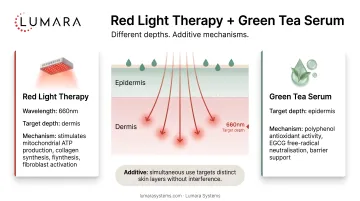
Red light at 660nm does not interact with the skin through chemical delivery. It interacts through photonic energy absorbed by cellular machinery - specifically mitochondria in dermal cells. This photobiomodulation process:
- Supports ATP (cellular energy) production in fibroblasts
- Stimulates collagen synthesis in the dermis
- Reduces pro-inflammatory cytokine levels at the cellular level
- Supports skin recovery and renewal processes
This mechanism happens at the cellular level in the dermis - below where green tea serum is primarily active. The two approaches are operating at different layers through different mechanisms.
Why the Combination Is Additive
The most effective skincare routines address skin at multiple levels simultaneously:
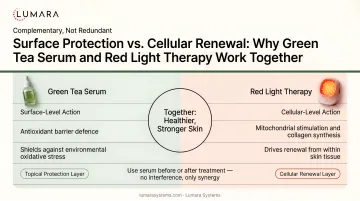
Surface protection (green tea serum): Reduces oxidative damage from UV and environmental stressors that would otherwise accelerate collagen breakdown and cause pigmentation changes.
Cellular renewal support (red light therapy): Drives collagen synthesis and cellular energy at the dermal level - the structural improvement layer that topical antioxidants alone cannot reach.
Green tea serum protects skin from new damage. Red light therapy supports the rebuilding of skin quality over time. Neither does what the other does.
How to Use Them Together
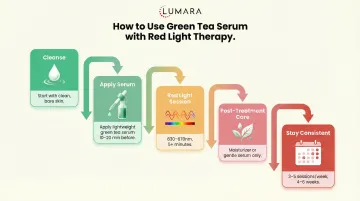
Key sequencing rule: Red light therapy on clean, product-free skin. Green tea serum applied after the session.
Evening routine (red light therapy as primary focus):
- Cleanse thoroughly - remove all makeup, sunscreen, previous products
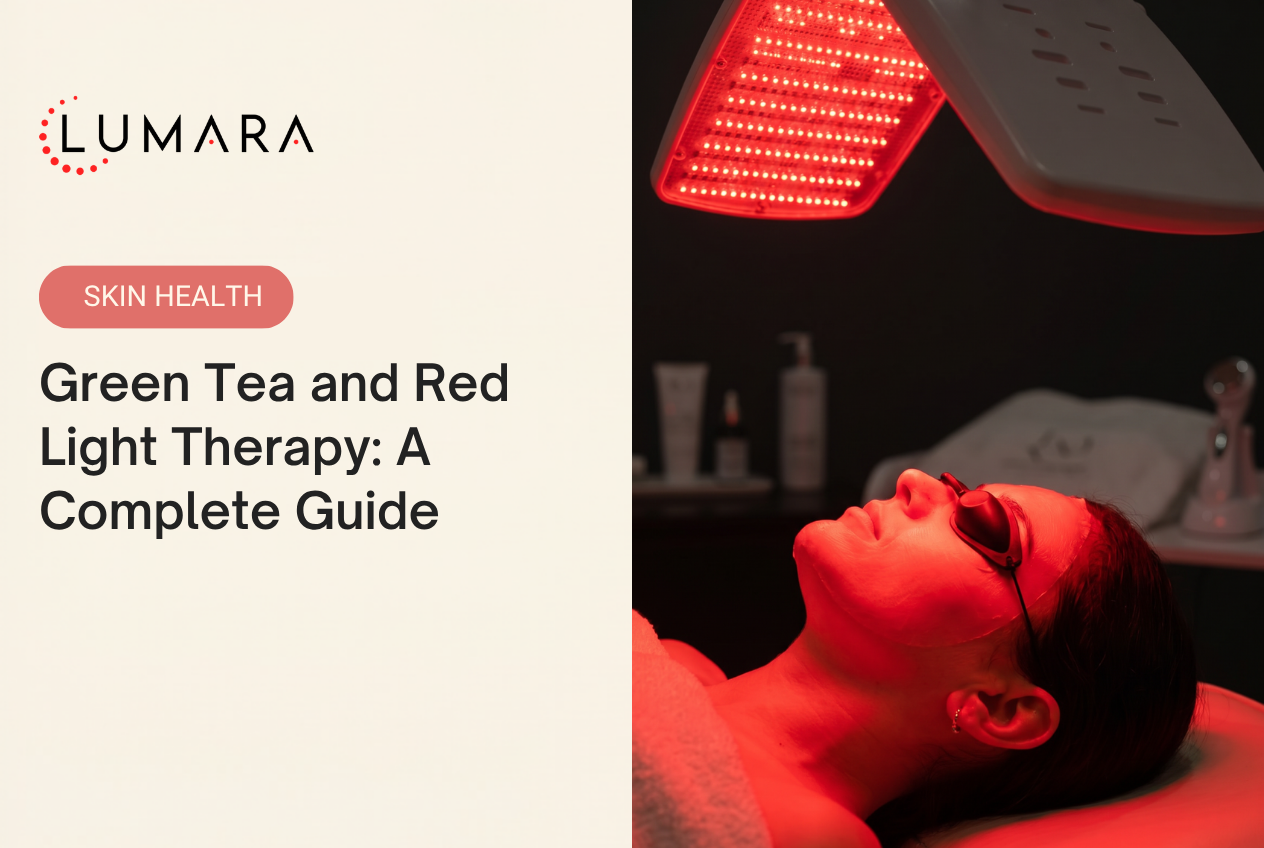
- Apply red light therapy session (5-20 minutes)
- Wait 10-15 minutes for skin to settle
- Apply green tea serum
- Follow with moisturizer and any other PM actives
Morning routine (green tea serum as antioxidant layer):
- Cleanse
- Apply green tea serum
- Moisturizer
- SPF 30+
Why not apply green tea before red light therapy?
There is no safety concern with green tea under a mask - it does not create photosensitivity. But clean skin for red light therapy is simply better practice: it ensures maximum light penetration and removes any uncertainty about product-light interactions. Apply after to benefit from post-session cellular activity. For more on compatible skincare products with red light therapy, including what to avoid, see our dedicated guide. Users combining red light therapy with retinol should review the specific sequencing considerations for that pairing.
What to Look for in a Green Tea Serum
Not all green tea serums deliver meaningful EGCG concentrations. Look for:
- EGCG or Camellia sinensis extract listed near the top of the ingredient list
- Opaque or airless packaging to limit oxidation
- No fragrance or alcohol that would compound skin irritation
- Compatible pH with other actives in your routine
Frequently Asked Questions
Can I use green tea serum before or after red light therapy?
After. Apply red light therapy to completely clean skin, then apply green tea serum after the session and a brief settling period. This gives the best results for both.
Does green tea serum interfere with red light therapy?
No. Green tea does not block the wavelengths used in red light therapy and does not create photosensitivity concerns. There is no interference - clean skin is simply best practice for light therapy sessions.
Is green tea serum good for anti-aging?
Green tea serum supports anti-aging through antioxidant protection - reducing the oxidative damage that accelerates collagen breakdown. It is most effective as a surface protection layer, not as a standalone collagen stimulator.
What does the combination of green tea and red light therapy target?
Green tea addresses UV oxidative damage and surface inflammation. Red light therapy at 660nm addresses dermal collagen synthesis and cellular renewal. The combination covers skin protection at the surface and structural improvement at the cellular level.
Complementary Tools for a Better Routine
Green tea serum and red light therapy are genuinely additive when used correctly. One protects the skin from damage at the surface; the other supports rebuilding at the cellular level.
For the red light therapy component, Lumara's VISO LED Mask - 660nm, 470 micro-LEDs, full-face coverage, FDA cleared - delivers the consistent wavelength and irradiance that makes this combination work. Pairing it with a green tea serum routine supports both surface protection and deeper skin rejuvenation therapy over time.