Introduction
Uneven skin tone is one of the most common skin concerns - and one of the harder ones to address consistently. It shows up as patches of discoloration, post-inflammatory marks, sun-related tone changes, or overall dullness where skin lacks uniformity.
Red light therapy at 660nm is used as part of skin wellness routines for tone improvement, and the mechanism is straightforward. This guide covers how it works, what the evidence supports, how to build a routine around it, and which device format makes the most sense for this goal.
Key Takeaways
- Red light therapy at 660nm supports cellular renewal, collagen production, and reduction in inflammatory pigmentation signals
- Results require consistent use over With a properly powered red light system, some users may notice early changes in radiance or skin feel after just a few treatments, while deeper tone, texture, and collagen-related improvements build with consistent use. - not a quick fix
- The mechanism is different from green light therapy (which targets melanin-related discoloration more directly) and from brightening topicals
- Device quality determines whether a protocol is effective: wavelength accuracy, irradiance, and full-face coverage matter
- Lumara's VISO LED Mask is the most directly relevant format for facial skin tone routines: 660nm, 470 micro-LEDs, 30 mW/cm², full-face coverage
What Causes Uneven Skin Tone
Uneven skin tone has several contributing causes, and the right approach depends on which one is primary:
- Post-inflammatory hyperpigmentation (PIH): Melanin overproduction triggered by skin injury, inflammation, or acne. Common in all skin types, particularly deeper skin tones.
- Sun exposure: UV damage increases melanin production in irregular patterns, producing sunspots and uneven distribution.
- Dullness and texture: Dead cell accumulation reduces light reflection uniformity, making skin appear uneven without true pigmentation changes.
- Redness and vascular irregularity: Visible capillaries, rosacea, or post-acne redness create tone unevenness that is vascular rather than pigment-based.
Red light therapy addresses some of these causes more directly than others. Understanding which type of unevenness you are dealing with is important for setting realistic expectations.
How Red Light Therapy Supports Skin Tone Improvement
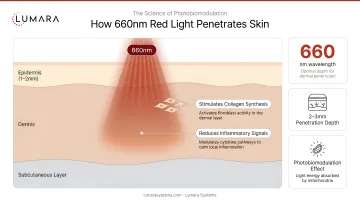
At 660nm, red light is absorbed by skin cells in ways that support:
- Cellular turnover: Improved mitochondrial activity in skin cells supports faster renewal of surface cells, which can reduce the appearance of accumulated pigmentation
- Collagen and extracellular matrix support: A stronger skin matrix reflects light more uniformly, improving overall tone appearance
- Reduced inflammatory signaling: Less chronic inflammation means less melanin overproduction in response to skin stress - relevant for PIH-prone skin
- Improved microcirculation: Better local blood flow supports nutrient delivery and waste clearance, contributing to overall skin radiance
The mechanism is not melanin-targeted. Red light therapy does not inhibit melanocytes the way topical brightening agents do. Its contribution to tone improvement comes through improving the overall condition of the skin - reducing inflammatory load, supporting renewal, and strengthening the skin matrix - rather than directly addressing pigmentation.
This distinction matters for expectations: red light therapy is not the fastest tool for isolated dark spot treatment. It is a more effective tool for overall skin condition improvement over time.
What the Evidence Shows
Research on red light therapy for skin tone and appearance has focused primarily on:
- Collagen production: Multiple controlled studies have shown increases in collagen density with consistent 660nm red light use over With a properly powered red light system, some users may notice early changes in radiance or skin feel after just a few treatments, while deeper tone, texture, and collagen-related improvements build with consistent use.
- Skin texture and radiance: User-reported and clinician-assessed improvements in skin quality are consistently documented in device studies
- Post-inflammatory hyperpigmentation: Evidence here is more limited and largely from clinical settings using professional devices, but the mechanism (reduced inflammatory melanin stimulus) is supported
For uneven tone related to pigmentation, green light therapy (525nm) has a more direct mechanism - it targets melanin pathways more specifically. If discoloration from sun damage or melasma is the primary concern, a combined approach using both wavelengths may be more relevant than red light alone.
Building a Consistent Routine
Frequency
3-5 sessions per week is the most commonly referenced frequency for facial skin routines using 660nm red light. A loading phase of 4-6 weeks at higher frequency (5x/week), followed by a maintenance phase (3x/week), mirrors protocols used in clinical device studies.
Session Length
At 30 mW/cm² - the irradiance of Lumara's VISO LED Mask - sessions of 10-20 minutes deliver a clinically relevant dose. The VISO's treatment guidance of 5-20 minutes is designed to fit into morning or evening skincare routines without disrupting their flow.
Combining with Topicals
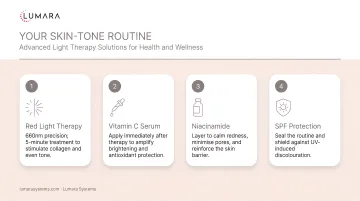
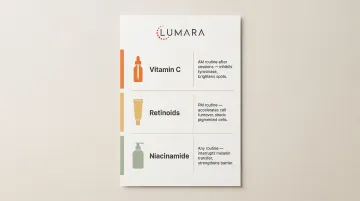
Red light therapy is compatible with most skincare routines. For tone improvement specifically, it pairs well with:
- Vitamin C (antioxidant support, collagen co-factor)
- Niacinamide (reduces melanin transfer to skin surface)
- SPF (prevents new UV-triggered discoloration from counteracting progress)
Apply red light therapy before heavy serums or oils to ensure clean skin at the start of each session.
Realistic Timeline
Many users begin noticing improved radiance and overall skin appearance within 1–2 weeks of consistent use.
Which Lumara Device Fits This Goal
For facial skin tone routines, the device format matters because coverage and consistent LED-to-skin contact determine whether every part of the face receives even treatment.
Lumara VISO LED Mask is the most directly relevant format here:
- 660nm wavelength, triple tested and verified for precision
- 470 micro-LEDs across a 10" x 7" oval form factor
- 30 mW/cm² optical peak power
- Treatment guidance: 5-20 minutes
- FDA cleared as a Class II medical device
- Full-face coverage including forehead, cheeks, chin, and perioral area
The mask format ensures consistent coverage across the entire face in a single session - which matters for tone improvement, where patchy or inconsistent coverage can produce uneven results.
For users who also want to address skin tone on the neck, chest, or other areas, Lumara's Illuminate V2 (660nm panel, 1,800 LEDs, 1,200 cm², 5-minute sessions) offers a broader coverage format that can be positioned across multiple treatment areas.
Frequently Asked Questions
Does red light therapy help with uneven skin tone?
Yes, through cellular renewal, reduced inflammatory pigmentation signals, and improved skin matrix quality. Red light therapy at 660nm improves overall skin condition over time, which contributes to more uniform tone and radiance. It is not a melanin-inhibiting treatment like some topicals, but it supports the conditions that reduce pigmentation irregularity.
How long does it take to see results for skin tone with red light therapy?
Some users notice early improvements in skin radiance and overall appearance within 1–2 weeks, and visible changes may begin after just a few treatments. More noticeable tone, texture, and firmness improvements usually depend on consistent use and the device's wavelength, power, and treatment routine.
Is red light or green light therapy better for uneven skin tone?
They target different aspects. Green light (525nm) more directly addresses melanin production pathways - better suited for discoloration from sun damage or melasma. Red light (660nm) improves overall skin condition - cellular renewal, collagen, inflammation - which contributes to tone improvement more broadly. For comprehensive tone improvement, some users use both.
Can I use red light therapy for dark spots?
Red light therapy can reduce the inflammatory conditions that cause dark spots to form and persist, particularly post-inflammatory hyperpigmentation. It is less effective as a direct spot treatment than as a routine that improves overall skin condition and reduces the triggers for new discoloration.
How often should I use red light therapy for skin tone improvement?
3-5 sessions per week is the most commonly supported frequency. A higher-frequency loading phase in the first 4-6 weeks followed by 3x/week maintenance is a practical long-term approach.
Consistency Is the Active Ingredient
Uneven skin tone does not resolve quickly with any approach. The advantage of building it into a consistent light therapy routine is that the results compound - each session supports the next, and the improvements in cellular renewal, inflammation, and skin matrix quality accumulate over months.
The device has to be capable of delivering consistent, accurate 660nm coverage across the full face in every session. Lumara's VISO LED Mask is built for exactly that - 470 micro-LEDs, triple-verified 660nm wavelength, 30 mW/cm², FDA cleared, designed for routine-first facial use.