Introduction
Sciatic pain - pain radiating from the lower back along the path of the sciatic nerve through the buttock, thigh, and potentially into the lower leg - has multiple potential causes: disc herniation pressing on nerve roots, piriformis syndrome, spinal stenosis, or other structural factors. Red light therapy addresses the tissue inflammation and neural irritation that contribute to symptoms, not the structural cause.
This is an important distinction. Red light therapy is a valuable complementary tool for sciatic pain management. It is not a structural intervention and works best alongside appropriate medical assessment and physical therapy.
Key Takeaways
- Red and near-infrared light therapy reduces neurogenic and tissue inflammation along the sciatic nerve pathway, which can reduce symptom intensity
- Near-infrared (810-850nm) provides the depth penetration relevant for paraspinal tissue and deeper nerve structures
- The most common treatment areas are the lower back (L4-S1 nerve roots), piriformis/buttock, and posterior thigh
- Protocol: 20-30 minutes per area, 3-5x per week, alongside physical therapy and appropriate medical management
- A flexible pad that can be positioned against the lower back and posterior thigh is more practical than a panel for sciatic applications
How Red Light Therapy Applies to Sciatic Pain
Sciatic pain involves two tissue types that red and NIR light therapy addresses:
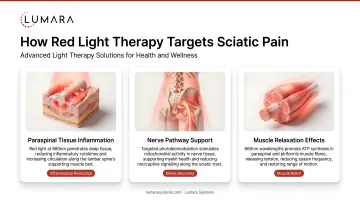
Paraspinal and disc-adjacent tissue: The inflammatory environment around a herniated disc or irritated nerve root is a primary pain driver. Near-infrared light reduces pro-inflammatory cytokines in this tissue and supports better tissue environment around the affected nerve root.
Peripheral nerve pathway: Along the sciatic nerve's path (posterior thigh, calf), neural inflammation and tightened surrounding tissue contribute to symptom radiating pain. Red and NIR light supports reduced inflammatory signaling along this pathway.
Muscle and soft tissue: The piriformis muscle (a common sciatic pain contributor in piriformis syndrome) and paraspinal muscles respond to photobiomodulation's anti-inflammatory and circulation-improvement effects - reducing secondary muscle-driven nerve compression.
What the Research Shows
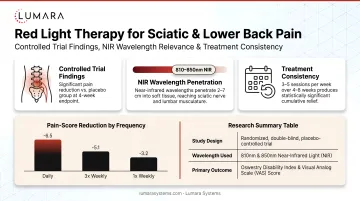
Research on photobiomodulation for low back pain and sciatica shows:
- Controlled trials demonstrate significant pain score reductions in treated versus control groups
- Effects build over weeks of consistent treatment
- Near-infrared wavelengths are consistently more relevant for back and lower extremity pain applications due to tissue depth
The strongest evidence is for low back pain broadly; sciatic-specific research is smaller in volume but consistent with these findings.
Protocol
Treatment Areas
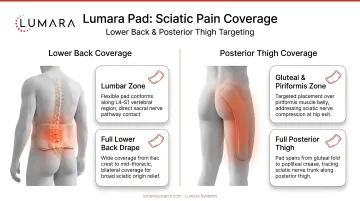
Lower back (L4-S1 region): The primary nerve root area. Position the device over the lower back, centered over the spine and extending bilaterally to the paraspinal muscles.
Piriformis and buttock: For sciatic symptoms with a piriformis component. Apply directly to the buttock area.
Posterior thigh: For symptoms extending down the leg. Large pads covering the full posterior thigh address sciatic nerve pathway inflammation along this route.
Session Guidance
- Duration: 20-30 minutes per treatment area
- Frequency: 3-5 sessions per week
- Positioning: Direct contact with the skin over the treatment area during a lying position
- Timeline: Consistent use over 4-8 weeks before expecting sustained improvement
Alongside Medical Management
Red light therapy works best as part of a comprehensive approach:
- Physical therapy for the underlying structural cause
- Stretching and movement for piriformis and paraspinal muscle relaxation
- Medical management for severe or worsening symptoms (disc herniation, stenosis)
The photobiomodulation mechanism - mitochondrial activation via cytochrome c oxidase - reduces cellular energy deficit in compressed nerve and surrounding tissue, supporting the repair environment alongside these interventions.
Do not rely on light therapy alone for significant or progressive sciatic symptoms. Any worsening of neurological symptoms (weakness, bladder/bowel changes) requires immediate medical evaluation.
Why Device Format Matters for Sciatica
The Lower Back and Leg Challenge
The lower back and posterior thigh are difficult areas for panels positioned at a distance:
- The lower back is often concave and does not maintain consistent panel proximity
- The posterior thigh requires lying face-down with the device behind the leg - awkward to maintain
- Sessions covering both the lower back and posterior thigh require significant repositioning
Why Flexible Pads Work Better
A flexible pad placed directly against the lower back, buttock, or posterior thigh:
- Maintains consistent LED-to-skin contact along the contour of the body
- Can be held in position with light pressure during a lying or seated session
- Allows face-down lying positions for posterior thigh and buttock coverage
Lumara's Pad in 12x30" or 20x30" covers the lower back and upper buttock in a single session. The 8x17" or 11x24" sizes work for the posterior thigh in a separate session.
Frequently Asked Questions
Does red light therapy help sciatic pain?
Yes, as a complementary tool. Red and near-infrared light therapy reduces tissue inflammation along the sciatic nerve pathway and in paraspinal tissue, which can reduce pain intensity. It addresses inflammation, not the structural cause.
What wavelength is best for sciatic pain?
Near-infrared (810-850nm) for deep paraspinal tissue and nerve-adjacent structures. Red light (660nm) for anti-inflammatory surface effects. Devices with both wavelengths are more comprehensive for this application.
How often should I use red light therapy for sciatica?
3-5 sessions per week, 20-30 minutes per treatment area. Consistent use over 4-8 weeks before expecting sustained improvement.
Can red light therapy replace physical therapy for sciatica?
No. Physical therapy addresses the mechanical and structural factors contributing to sciatic symptoms - something light therapy cannot do. Red light therapy is most valuable as a supplement to PT, not a replacement.
What size pad is best for lower back sciatica?
The 12x30" or 20x30" Lumara Pad covers the lower back and upper buttock effectively. The 8x17" or 11x24" sizes work for the posterior thigh.
Inflammation Support Alongside Appropriate Medical Care
Red light therapy for sciatic pain is a legitimate complement to physical therapy and medical management. It addresses the tissue inflammation component of sciatic symptoms consistently and with good evidence.
Lumara's Pad - flexible format, red/NIR/FIR wavelengths, multiple sizes, 3-year warranty - provides the direct-contact lower back and leg coverage that sciatic pain sessions require.