
Note: Lumara devices are designed for human red light therapy and are not veterinary medical devices. This guide is informational only and should not replace advice from a licensed veterinarian.

Introduction
Red light therapy - also called photobiomodulation (PBM) - is used in veterinary rehabilitation for dogs with arthritis, post-surgical recovery, and soft tissue injuries. The mechanism is the same as in human applications: photons absorbed by mitochondria may support cellular energy production and anti-inflammatory responses. But dogs are not the same use case as humans. Fur density, coat color, animal anatomy, treatment compliance, and device design all change how photobiomodulation is applied and what results are realistic.
This guide is intended as an educational resource for dog owners exploring whether red light therapy may be worth discussing with their veterinarian. It covers the current evidence, the practical challenges of treating through fur, what device features matter for canine applications, and when veterinary guidance is especially important. If you are also considering at-home red light therapy for yourself, many of the same principles around device selection and session consistency apply.
Key Takeaways
- Red light therapy at 660nm and near-infrared at 850nm has been studied in veterinary contexts for dogs with osteoarthritis, post-surgical recovery, and soft tissue injuries
- Fur significantly attenuates light before it reaches tissue - device selection and session technique must account for this
- Clinical studies suggest reduced pain scores and lower NSAID requirements in treated dogs versus controls, though results vary
- Near-infrared (850nm) may be more relevant for deep joint applications; red (660nm) may support surface tissue and inflammation
- Veterinary-specific devices are generally more appropriate for canine use than human red light therapy devices
- Always consult your veterinarian before starting any treatment protocol, especially for dogs with cancer, pregnancy, active infections, or seizure disorders
What the Evidence Suggests
Research on photobiomodulation for canine conditions is primarily focused on osteoarthritis and post-surgical recovery. The findings are promising but should be interpreted cautiously.
Osteoarthritis: Clinical trial data suggests PBM may help reduce pain scores and improve joint mobility in dogs with osteoarthritis. Some studies have found that treated dogs required lower NSAID doses compared to controls - a clinically meaningful finding given the gastrointestinal and renal risks of long-term NSAID use in dogs. However, study sizes are often small and protocols vary.
Post-surgical recovery: Red and near-infrared light therapy has been studied for wound healing, reduced post-operative swelling, and improved tissue recovery in veterinary settings. Results have generally been positive, though they are influenced by device quality, wavelength, and consistency of use.
Soft tissue injuries: Evidence from both human and animal research suggests photobiomodulation may support muscle and tendon recovery by reducing inflammation and supporting cellular repair. Veterinary rehabilitation programs may use PBM as part of a broader recovery plan.
Where evidence is limited or absent: Red light therapy is not a treatment for structural damage requiring surgical repair, severe joint degeneration, or conditions where the underlying medical cause has not been addressed. It should not be considered a replacement for veterinary diagnosis or prescribed treatment.
The Fur Problem - and How to Address It
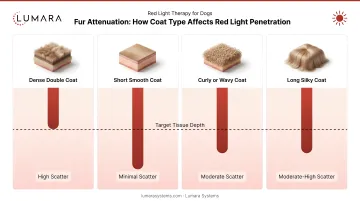
This is the most important practical difference between using red light therapy on dogs versus humans. Canine coats absorb and scatter significant proportions of therapeutic light before it reaches skin tissue.
Studies suggest dense or dark coats can block a substantial percentage of therapeutic light at skin level. White and thin coats still reduce light transmission considerably compared to bare skin application. This means dosing assumptions from human protocols cannot be transferred directly to canine use.
Practical approaches:
- Part the fur manually before and during sessions to create a clearer path to skin
- Shave the treatment area for dogs with thick or dark coats - most practical for chronic conditions requiring ongoing treatment
- Optical comb attachments on purpose-built veterinary devices help deliver light through fur more effectively
- Adjust session duration to partially compensate for fur attenuation, though this cannot fully offset heavy coat density
Device selection matters here: devices designed specifically for veterinary use often address fur penetration through attachment design, optical combs, or superpulsed technology calibrated for animal application.
Why Near-Infrared Matters More for Dogs
Red light at 660nm penetrates surface tissue and may support inflammation and wound healing at shallower depths - see the guide on red light therapy wavelength and skin for more detail on how depth of penetration varies. Near-infrared at 850nm penetrates more deeply into tissue, making it more relevant for joint conditions, deeper muscle injuries, and post-surgical recovery in areas with more surrounding tissue.
For dogs with arthritis or joint concerns, near-infrared is generally considered the more clinically relevant wavelength. Devices that only emit 660nm red light may be insufficient for deep joint applications in dogs.
Dual-wavelength devices - combining 660nm and 850nm - cover a broader range of potential applications and are more commonly recommended in veterinary rehabilitation contexts. For a deeper look at the difference between infrared and red light therapy, including how each wavelength interacts with tissue at different depths, that guide covers the mechanism in more detail.
Which Device Format Is Appropriate for Dogs?
For dog-focused therapeutic use, veterinary-specific red and near-infrared devices are generally the most appropriate option - particularly for arthritis, mobility issues, post-surgical recovery, or deep-tissue concerns. These devices may include animal-specific protocols, contact probe designs, optical combs, or wavelength combinations intended for use through fur and around animal anatomy.
Human red light therapy devices are not automatically appropriate for pet use. They are designed for human skin, human anatomy, and human compliance patterns. Dogs have different coat characteristics, different target tissue depths, and different behavioral responses to treatment sessions.
If you are considering adapting any device for animal use, speak with your veterinarian first. They can advise on whether the device's wavelength, output, and session format are appropriate for your dog's specific condition, and whether red light therapy is a reasonable adjunct to any existing treatment plan.
When to Discuss Red Light Therapy with Your Vet
Red light therapy may be worth raising with your veterinarian in these situations:
- Your dog has been diagnosed with osteoarthritis and is already on a management plan
- Your dog is recovering from soft tissue surgery and a rehabilitation plan is in place
- Your dog shows signs of muscle soreness or stiffness related to activity
- Your veterinarian is already using or recommending photobiomodulation as part of a rehabilitation program
Red light therapy is generally not a first-line treatment and should not be used as a substitute for veterinary diagnosis. If your dog is showing new signs of pain, lameness, swelling, or behavioral changes, the priority is a veterinary examination - not starting a light therapy protocol.
Red flags where veterinary care should come first:
- New or sudden onset of lameness or pain
- Suspected fracture, dislocation, or internal injury
- Active infection, open wound, or post-surgical complication
- Known or suspected tumor in the treatment area
- Pregnancy
- Uncontrolled seizure disorder
How to Set Up a Home Session
If your veterinarian has approved a home red light therapy protocol and you have an appropriate device, the following guidance may be helpful.
Session setup:
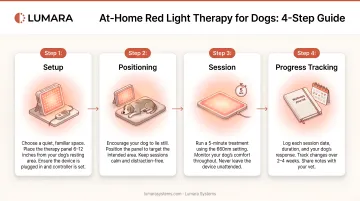
- Choose a calm, familiar environment where the dog is relaxed
- Part or shave fur in the treatment area where possible
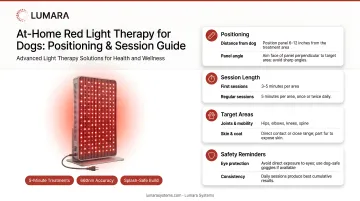
- Position the device at the manufacturer's recommended distance, or use direct contact if the device is designed for contact application
- Keep the dog calm and still throughout the session - short sessions are better tolerated than long ones
- Never direct light into the dog's eyes - cover the face with a cloth if treating nearby areas (see guidance on eyes open or closed during red light therapy for context on why eye protection matters)
General session guidelines:
- Duration: 5-15 minutes per session depending on the device and treatment area
- Frequency: Daily or as recommended by your veterinarian for the specific condition
- Assessment period: Allow 4-8 weeks of consistent use before assessing whether the approach is supporting improvement
What to track over time:
Use objective behavioral markers rather than subjective impressions:
- Time to rise from a lying position
- Tolerance for stairs or inclines
- Gait quality and evenness
- Post-activity stiffness
- Willingness to engage in normal activity
Keep a simple weekly log. Gradual changes are easier to identify in written notes than from memory.
Safety Considerations
Red light therapy is non-invasive and generally well-tolerated by dogs. Most animals do not react negatively to sessions. That said, precautions apply:
- Do not treat directly over a suspected or confirmed tumor without explicit veterinary approval
- Do not use on pregnant dogs
- Avoid use in dogs with uncontrolled seizure disorders
- Consult your veterinarian before starting if the dog is on medications or has an active diagnosed condition
- Stop sessions if the dog shows signs of distress, increased discomfort, or adverse skin reaction
Frequently Asked Questions
Does red light therapy work for dogs?
Peer-reviewed studies suggest photobiomodulation may help reduce pain and support mobility in dogs with osteoarthritis and in post-surgical recovery. Results depend on device quality, wavelength, fur penetration, diagnosis, and consistency of use. It is not a guaranteed treatment and should be used under veterinary guidance.
What wavelength is best for dogs?
Near-infrared (850nm) is generally more relevant for joint and deep tissue applications. Red (660nm) may support surface tissue and inflammation. Dual-wavelength devices are more comprehensive. For dogs with joint conditions, a device that includes 850nm near-infrared is important.
How often should I use red light therapy on my dog?
Follow your veterinarian's recommendation. General guidance suggests daily or near-daily sessions for acute conditions and 3-5 sessions per week for chronic management. Duration and frequency should match the device's protocol and the dog's tolerance.
Is red light therapy safe for dogs?
It is generally considered safe and non-invasive when used appropriately. Precautions apply for dogs with suspected tumors, pregnancy, seizure disorders, or active infections. Always consult your veterinarian before starting.
How do I manage fur during sessions?
Manually part the fur to expose skin where possible. For dogs with thick or dark coats, shaving the treatment area provides the most consistent light delivery. Devices with optical comb attachments may also help. Higher-output devices partially compensate for fur attenuation but cannot fully substitute for direct skin access.
Should I use a human red light therapy device on my dog?
Human devices are not designed for veterinary use. They may lack the wavelengths, output, or contact design appropriate for canine anatomy and coat characteristics. Speak with your veterinarian before adapting any human device for animal use.
Conclusion
Red light therapy may be a useful supportive tool in veterinary rehabilitation, but dogs are not the same use case as humans. Fur density, treatment depth, specific diagnosis, and device design all matter. If you are considering red light therapy for your dog, start with your veterinarian, use a device appropriate for animal care, and track objective changes in mobility, comfort, and daily behavior over time.
The evidence base for canine photobiomodulation is growing, but it is not yet definitive. Used thoughtfully, under veterinary guidance, and with realistic expectations, it may be a reasonable addition to a broader management plan for dogs with chronic pain, mobility challenges, or recovery needs.
If you are looking for a red light therapy device for your own wellness routine - not for pet use - Lumara offers human-focused red light therapy panels designed for personal use. Explore Lumara's devices for human red light therapy.