Red Light Therapy vs SAD Lamps: Complete Comparison

Introduction

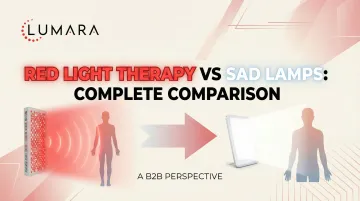
Most people searching for "light therapy" don't realize they're looking at two completely different technologies. SAD lamps and red light therapy share a name but nothing else—they work through distinct biological mechanisms. One targets the brain through visual pathways; the other targets cells through tissue absorption.

This distinction matters. Using the wrong device for your goal—say, expecting red light to treat seasonal depression, or hoping a SAD lamp will improve your skin—will yield little to no result. This guide breaks down exactly how each works, what the research supports, and which one fits your situation.

TL;DR

  • SAD lamps deliver 10,000 lux of bright white light through your eyes—the clinically validated treatment for Seasonal Affective Disorder
  • Red light therapy uses 630–660nm wavelengths to trigger cellular changes like ATP production and tissue repair
  • Red light is ineffective for SAD, ranking at or below placebo in seasonal depression research
  • Red light therapy supports year-round wellness: skin health, muscle recovery, and inflammation reduction
  • The two therapies serve different purposes and work well together

Red Light Therapy vs SAD Lamps: Quick Comparison

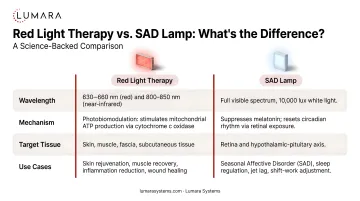
FeatureSAD LampsRed Light Therapy
Primary PurposeSeasonal depression, mood, circadian resetSkin health, inflammation, muscle recovery, cellular repair
Light TypeBroad-spectrum white light, 5,000–6,500K, 10,000 luxRed (630–660nm) and near-infrared (750–1,400nm) wavelengths
MechanismVisual pathway: suppresses melatonin, regulates mood and wakefulnessSkin absorption: mitochondria convert light into cellular energy (ATP)
Treatment Protocol20–30 min each morning, eyes open, 16–24 inches away5–20 min per session, flexible timing, direct skin exposure
Cost Range$40–$170 (entry to mid-range)$249–$1,699 (entry to mid-range)

SAD lamps versus red light therapy side-by-side feature comparison infographic

What Are SAD Lamps?

SAD lamps—also called light boxes, bright light therapy lamps, or happy lights—are devices designed to deliver high-intensity broad-spectrum light that mimics outdoor daylight. They're primarily used to treat Seasonal Affective Disorder (SAD), a subtype of depression triggered by reduced sunlight exposure. SAD is most common in fall and winter, and more prevalent at higher latitudes where daylight hours shrink dramatically.

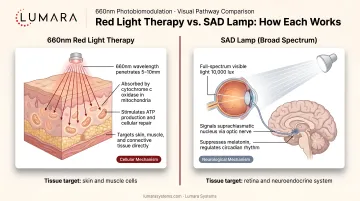
SAD lamps work through the eyes and visual pathway. Bright light—especially wavelengths in the blue and white spectrum—suppresses melatonin production and prompts the brain to regulate serotonin and circadian rhythms.

Timing matters here: morning use is essential because it aligns with the body's natural wake signal. Using a SAD lamp at night would disrupt sleep rather than improve it.

The clinical evidence for SAD lamp effectiveness is robust. A 2025 network meta-analysis by Wan et al., covering 17 randomized controlled trials and 773 patients, found that white light ranked highest for treating SAD (SUCRA score ~80%), while red light performed at or below placebo levels (SUCRA ~8–21%).

Important usage guidelines from the Mayo Clinic include:

  • 10,000 lux intensity
  • 20–30 minutes daily
  • Within the first hour of waking
  • Positioned 16–24 inches from face
  • Eyes open, but not looking directly at the light

Note that SAD lamps are not FDA-regulated for SAD treatment, so quality and UV filtering matter when choosing a device.

Use Cases for SAD Lamps

Who benefits most from SAD lamps?

  • People in high-latitude or overcast regions with limited winter daylight
  • Those with clinically diagnosed SAD or subclinical "winter blues"
  • Shift workers with disrupted circadian rhythms
  • Anyone seeking to reset their sleep-wake cycle

A clinical diagnosis isn't required to benefit. Anyone who feels low-energy or sluggish in darker months can use a SAD lamp to supplement morning light exposure and support their body's natural wake signal.

What Is Red Light Therapy?

Red light therapy (also called photobiomodulation, or PBM) is a treatment that uses LED panels to deliver specific wavelengths of red and near-infrared light directly to the skin and underlying tissue. Unlike SAD lamps, red light therapy does not work through the eyes. It works by penetrating the skin and being absorbed by mitochondria inside cells. Wavelength precision is critical: not all red light devices are equal, and therapeutic benefit is tied to delivering the right nanometer range.

The cellular mechanism centers on energy production. Red light wavelengths (630–660nm) are absorbed by cytochrome c oxidase in the mitochondria, which stimulates ATP (adenosine triphosphate) production (essentially the energy currency of cells). This energy boost drives benefits including faster tissue repair, reduced oxidative stress, and lower inflammation.

Near-infrared wavelengths penetrate deeper into muscle and joint tissue, adding recovery benefits beyond what surface-level red light achieves.

Primary health applications supported by research include:

  • Skin health: Collagen production, wound healing, reduction in fine lines
  • Inflammation management: Reduced oxidative stress and cellular inflammation
  • Muscle recovery: Improved performance and faster recovery from exercise-induced fatigue
  • Joint pain relief: Mixed evidence, but some studies show pain reduction
  • Sleep quality support: Emerging research suggests near-infrared exposure may improve sleep

Red light therapy five key health benefits with cellular mechanism icons infographic

While some early research explores red light's role in mood, it is not an established treatment for SAD and should not be used as a substitute for bright light therapy.

Wavelength precision directly affects results. Devices tuned to a clinically relevant 660nm wavelength ensure light energy is absorbed by the right chromophores in the cell. Lumara's panels are calibrated to this 660nm target, and their 5-minute treatment protocol delivers a therapeutic dose efficiently, making it easier to use daily.

Use Cases for Red Light Therapy

Ideal use cases for red light therapy include:

  • People focused on skin rejuvenation and anti-aging
  • Athletes and active individuals managing recovery and inflammation
  • Those dealing with minor joint or muscle pain
  • Anyone looking to support overall cellular health as a year-round wellness practice

Red light therapy can be used in the morning, evening, or any time of day—it does not have the circadian-sensitive timing requirements of SAD lamp use, making it easier to fit into varied routines.

Red Light Therapy vs SAD Lamps: Which Is Better for Your Goals?

Both devices work. The problem is that they solve different problems entirely, and using the wrong one for your goal leads to disappointment. The right question isn't which is better — it's which one matches what you're trying to achieve.

For Seasonal Depression and Circadian Rhythm Disruption

SAD lamps are the clinically validated choice. The Wan et al. (2025) meta-analysis found that white light outperformed all other visible wavelengths for SAD, while red light was consistently the lowest performer. If your primary concern is winter mood, low energy, or sleep disruption tied to reduced daylight, a SAD lamp is the evidence-backed option.

For Skin Health, Inflammation, Muscle Recovery, and Cellular Wellness

Red light therapy is purpose-built for this. These benefits are cellular and physiological — they require wavelength-specific light to penetrate tissue at depth, which a SAD lamp's broad-spectrum white light cannot deliver at therapeutic levels.

Situational guide:

  • Choose a SAD lamp if: Your goal is seasonal mood support or circadian reset
  • Choose red light therapy if: Your goals include skin health, tissue repair, or year-round cellular wellness

Can I Use Both?

Yes, and many people do. SAD lamps and red light therapy address non-overlapping needs. A SAD lamp in the morning handles circadian signaling; red light therapy at any time of day covers cellular benefits. The two routines don't interfere with each other — they stack.

Conclusion

SAD lamps and red light therapy are not rivals—they're purpose-built for different outcomes. One targets the brain through light signals in the eye; the other targets cells through tissue absorption. The right choice depends entirely on what you're trying to fix.

  • Seasonal mood changes or winter fatigue? A SAD lamp is the science-backed starting point.
  • Skin health, faster recovery, or daily cellular support? Red light therapy—particularly with precision wavelength devices like those from Lumara Systems—delivers a wider range of documented benefits.

Most people find they don't need to choose one over the other. SAD lamps and red light therapy address separate biological pathways, which means using both is a legitimate option for anyone managing both mood and physical recovery goals.

Frequently Asked Questions

Are SAD lamps the same as red light therapy?

No, they are fundamentally different. SAD lamps use broad-spectrum white light at high intensity to work through the eyes and regulate circadian rhythms, while red light therapy uses specific red/NIR wavelengths absorbed by skin and cells for physiological benefits like tissue repair and energy production.

Is red light therapy better than the sun?

Red light therapy delivers specific therapeutic wavelengths without UV radiation or excessive heat, making it useful for targeted cellular benefits. However, sunlight provides a full spectrum of benefits including vitamin D synthesis and circadian regulation that red light therapy alone does not replicate.

Do you get vitamin D from SAD lamps?

No, SAD lamps do not produce UV light (which is required for vitamin D synthesis), and are specifically designed to filter UV out. For vitamin D, sunlight exposure or supplementation is required.

Does red light help heal scabs?

Red light therapy has been studied for wound healing and tissue repair. It stimulates cellular energy production and reduces inflammation, supporting the skin's natural recovery process. However, it should not replace medical treatment for open wounds or infections.

Can I use a SAD lamp and red light therapy together?

Yes, the two therapies target different biological pathways and can be used together without conflict. A common approach: use the SAD lamp in the morning for circadian support and red light therapy separately for cellular and skin benefits.

How long does it take to see results from SAD lamp therapy?

Many users report mood and energy improvements within 1–2 weeks of consistent daily use, though some may notice changes sooner. Consistency, specifically using it at the same time each morning, is the most important factor in effectiveness.